
Skipping These 5 Annual Health Checkups Could Be Dangerous
Most people visit the doctor only when something feels wrong. A sharp pain, a bad cough, or sudden weakness sends us looking for help. But many serious health problems don’t start with clear warning signs. High blood pressure, diabetes, heart disease, and even some cancers can grow quietly for years.
That’s where preventive health checkups come in.
Preventive health checkups are regular medical tests and screenings done to catch problems early — before symptoms appear. These yearly checkups help you understand what’s happening inside your body, even when you feel fine on the outside.
Table of Contents
Why Preventive Health Checkups Matter
Preventive health checkups are not just for sick people. They are for anyone who wants to stay healthy, active, and independent for as long as possible.
Here’s why they matter:
- Early detection saves lives
Many serious diseases are easier to treat when found early. - Many illnesses have no early symptoms
Conditions like high blood pressure, high cholesterol, and diabetes often develop silently. - Lower healthcare costs over time
Treating a problem early is usually cheaper than treating advanced disease. - Track changes in your body
Yearly tests help doctors notice trends, not just one-time results. - Peace of mind
Knowing your numbers helps reduce anxiety about your health.
Preventive health checkups shift healthcare from “fixing problems” to preventing them.
1. Blood Pressure Check
A blood pressure check is one of the simplest and most important preventive health checkups.
Why High Blood Pressure Is Dangerous
High blood pressure (also called hypertension) puts extra strain on your heart and blood vessels. Over time, it can lead to:
- Heart attacks
- Strokes
- Kidney disease
- Vision problems
The scary part? Many people with high blood pressure feel completely normal.
Who Should Check It Yearly?
- Adults of all ages
- People with a family history of heart disease
- Those who are overweight or inactive
- Smokers and people under high stress
Even young adults should have their blood pressure checked at least once a year.
Understanding Blood Pressure Readings
Blood pressure is measured using two numbers:
- Top number (systolic): pressure when the heart beats
- Bottom number (diastolic): pressure when the heart rests
| Blood Pressure Level | Reading (mmHg) |
|---|---|
| Normal | Below 120/80 |
| Elevated | 120–129 / <80 |
| High | 130/80 or more |
If your readings are high, lifestyle changes or medication may be needed.
2. Blood Sugar Test
A blood sugar test checks how much glucose (sugar) is in your blood. It plays a key role in preventing diabetes.
Why Blood Sugar Testing Matters
High blood sugar levels can damage:
- Blood vessels
- Nerves
- Kidneys
- Eyes
Diabetes often develops slowly, and many people don’t realize they have it until complications begin.
Who Is at Higher Risk?
You may be at higher risk if you:
- Have a family history of diabetes
- Are overweight or inactive
- Eat a high-sugar or processed-food diet
- Had diabetes during pregnancy
- Are over age 35–40
How Often Is Testing Needed?
- Low risk: once every year or two
- High risk: yearly or as advised by your doctor
Common tests include:
- Fasting blood sugar
- HbA1c (average blood sugar over 3 months)
Early detection allows you to reverse or control blood sugar through diet, exercise, and medication if needed.
3. Cholesterol Screening
Cholesterol screening is another key part of preventive health checkups, especially for heart health.
Understanding LDL and HDL
Cholesterol travels in your blood in two main forms:
- LDL (Low-Density Lipoprotein): “bad” cholesterol
- Can build up in arteries
- Increases heart attack and stroke risk
- HDL (High-Density Lipoprotein): “good” cholesterol
- Helps remove excess cholesterol
- Protects your heart
How Cholesterol Affects Heart Health
High cholesterol can lead to:
- Blocked arteries
- Reduced blood flow
- Heart disease
Like high blood pressure, high cholesterol often has no symptoms.
Why Early Detection Matters
Finding cholesterol problems early allows you to:
- Improve diet
- Increase physical activity
- Manage weight
- Start medication if needed
Most adults should check cholesterol levels at least once a year, especially after age 35–40.
4. Body Mass Index (BMI) & Weight Check
A BMI and weight check helps assess whether your weight is in a healthy range.
How BMI Is Calculated
BMI is calculated using:
- Your height
- Your weight
It places you into categories:
- Underweight
- Normal weight
- Overweight
- Obese
While BMI is not perfect, it gives a useful overview.
Why Weight Trends Matter More Than One Number
A single weight measurement doesn’t tell the whole story. Doctors look at:
- Weight gain over time
- Waist size
- Muscle vs fat
Sudden or steady weight gain can signal:
- Hormonal problems
- Poor diet habits
- Increased disease risk
Link Between BMI and Chronic Disease
Unhealthy weight is linked to:
- Type 2 diabetes
- Heart disease
- Joint problems
- Sleep apnea
Tracking BMI yearly helps catch unhealthy patterns early.
5. Cancer Screening Tests
Cancer screenings are among the most important preventive health checkups because they can detect cancer before symptoms appear.
Common Cancer Screenings
Breast Exams & Mammograms
- Recommended for women, especially after age 40
- Helps detect breast cancer early
Cervical Screening (Pap Test)
- Detects changes that may lead to cervical cancer
- Usually recommended every few years, depending on age
Colon Screening
- Includes stool tests or colonoscopy
- Often recommended after age 45–50
Prostate Exams (for Men)
- PSA blood test or physical exam
- Screening depends on age and risk factors
Age and Risk Matter
Screening frequency depends on:
- Age
- Family history
- Lifestyle factors
- Personal medical history
Talk with your doctor to create a screening plan that fits you.
Additional Health Checkups to Consider
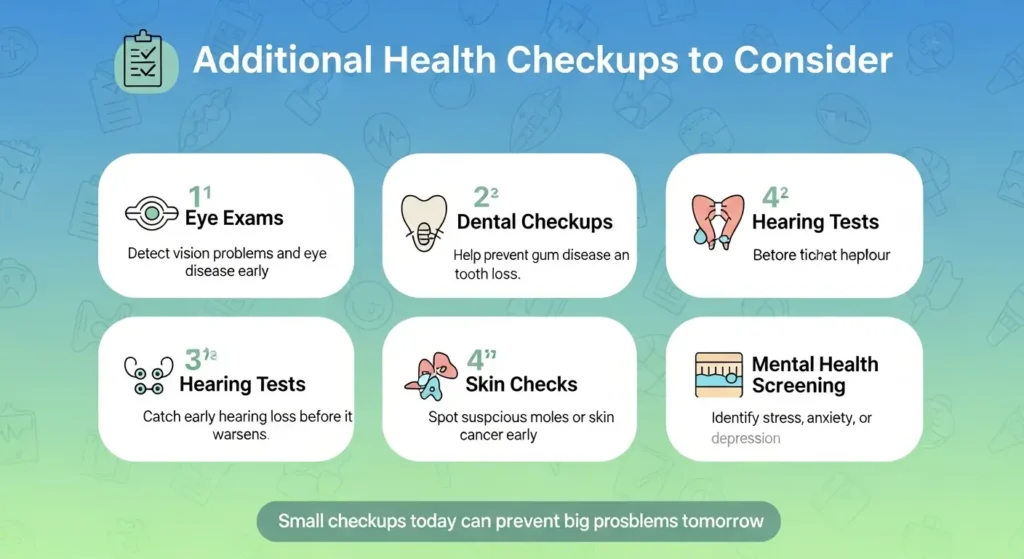
Besides the main five, these additional preventive health checkups can support overall wellness:
- Eye exams – detect vision problems and eye disease
- Dental checkups – prevent gum disease and tooth loss
- Hearing tests – catch early hearing loss
- Skin checks – spot suspicious moles or skin cancer
- Mental health screening – identify stress, anxiety, or depression
These checkups improve quality of life, not just lifespan.
Who Should Be Extra Careful About Annual Checkups?
Some people benefit even more from regular preventive health checkups.
You should be extra careful if you:
- Have a family history of chronic disease
- Smoke or use tobacco
- Are overweight or obese
- Live a high-stress lifestyle
- Are over age 40
For these groups, yearly checkups are not optional — they are essential.
How to Prepare for a Preventive Health Checkup
Preparing ahead makes your appointment more useful.
Follow These Steps:
- Write down symptoms or concerns
Even small changes matter. - List all medications and supplements
Include vitamins and herbal products. - Know your family health history
Mention heart disease, diabetes, cancer, or stroke. - Fast if required
Some blood tests need fasting. - Ask questions
Don’t be shy — this is your health.
Good preparation helps your doctor give better advice.
Conclusion
Preventive health checkups are one of the most powerful tools you have to protect your long-term health. They help detect problems early, reduce future medical costs, and give you control over your well-being.
You don’t need to wait until something goes wrong.
Small steps taken once a year can prevent major illness later.
Your future health starts with the choices you make today — and one annual checkup can make all the difference.
FAQ: Preventive Health Checkups
What are preventive health checkups?
Preventive health checkups are routine medical tests and screenings done to detect health problems early, even when you feel well. They focus on prevention rather than treating symptoms.
How often should preventive checkups be done?
Most basic preventive health checkups should be done once a year. However, some tests may be needed more or less often depending on your age, sex, family history, and personal risk factors.
Are annual checkups really necessary?
Yes. Annual checkups help detect silent conditions such as high blood pressure, diabetes, and certain cancers early, when treatment is usually simpler and more effective.
What blood tests are done yearly?
Common yearly blood tests include blood sugar, cholesterol levels, complete blood count (CBC), and liver and kidney function tests. Your doctor may add others based on your health needs.
Do preventive checkups help detect cancer early?
Yes. Many cancers can be detected early through regular screenings such as blood tests, imaging, and age-appropriate exams. Early detection greatly improves treatment success and survival rates.
Can insurance cover preventive screenings?
Many insurance plans cover preventive health checkups fully or partially. Coverage depends on your insurance provider, policy details, and location, so it’s best to check directly with your insurer.
Disclaimer
The information on HealthHintz is provided for educational and informational purposes only and should not be considered medical advice. Always consult a qualified healthcare professional before making any medical or health-related decisions, starting a new treatment, or changing your existing health plan.