

MTHFR Mutation Symptoms: What to Know
You eat well, you take your vitamins, and you try your best to stay healthy—yet you still feel tired, anxious, or foggy. You might wonder why you’re struggling when you’re doing everything right. For some people, the reason may be hidden in their genes, in something called an MTHFR mutation.
This common genetic variation can affect how your body processes certain essential nutrients, especially folate and vitamin B12. Understanding if you have it can be the key to finally feeling your best. This guide will gently explain what the MTHFR gene explained means, the common MTHFR gene mutation symptoms to look for, and how you can support your body naturally.
Table of Contents
What Is the MTHFR Gene?
The MTHFR gene provides instructions for making an enzyme called methylenetetrahydrofolate reductase. That’s a mouthful, so let’s simplify it. Think of the MTHFR enzyme as a key that helps your body convert folate (also known as vitamin B9) from food into its active form, called methylfolate. Your body can only use this active form.
If you have an MTHFR mutation, it means this gene has a variation that makes the enzyme less efficient. As a result, your body’s ability to convert folate slows down. This can lead to lower levels of active folate and other B vitamins, and it can cause methylation problems. Methylation is a critical process that affects your energy, mood, detoxification, and even your DNA.
Common MTHFR Gene Variants
There are two main variations, or mutations, of the MTHFR gene that have been widely studied.
| Variant | Also Known As | Effect on Folate Processing |
|---|---|---|
| C677T | MTHFR C677T | Can reduce the enzyme’s activity by 30% to 70%, depending on whether you have one or two copies of the mutation. |
| A1298C | MTHFR A1298C | Causes a milder reduction in enzyme function compared to C677T. |
| Compound Heterozygous | C677T + A1298C | Having one copy of each variant can also significantly reduce enzyme function. |
What Happens When Methylation Slows Down?
Methylation is like a master switch in your body, turning on and off countless processes every second. When it slows down due to an MTHFR mutation, it can impact many areas of your health.
Methylation is essential for:
- Energy production: Converting B vitamins into usable energy.
- Mood and brain function: Making neurotransmitters like serotonin, dopamine, and melatonin.
- Detoxification: Helping your body get rid of heavy metals and other toxins.
- Hormone balance: Breaking down and clearing out excess hormones like estrogen.
- DNA repair: Protecting your cells from damage.
When this fundamental process isn’t working at its best, you can start to experience a wide range of symptoms across multiple body systems.
MTHFR Mutation Symptoms You Should Know
Because methylation is so far-reaching, the MTHFR gene mutation symptoms can be vague and varied. They often overlap with other conditions, which is why it can be hard to pinpoint the cause.
Physical Symptoms
- Constant fatigue or low energy: Feeling tired no matter how much you sleep.
- Headaches or migraines: Some people with MTHFR are more prone to chronic headaches.
- Muscle pain or weakness: Unexplained aches and pains in your muscles or joints.
- Pale skin or anemia: A common sign of a folate deficiency or B12 deficiency.
- Tingling in hands or feet: This can be a sign of nerve issues related to a B12 deficiency.
- Digestive problems: Some people have trouble digesting foods fortified with synthetic folic acid.
Mental and Emotional Symptoms
- Brain fog or poor concentration: Feeling like you can’t think clearly or remember things easily.
- Depression or anxiety: Low levels of active folate can affect the production of mood-regulating neurotransmitters.
- Mood swings or irritability: Feeling emotionally unstable without a clear reason.
- Sleep issues: Difficulty falling asleep or staying asleep, which can be linked to melatonin production.
Hormonal and Reproductive Symptoms
- Severe PMS or irregular periods: Methylation is needed for healthy hormone detoxification.
- Recurrent miscarriages or fertility struggles: Proper methylation is critical for healthy cell division and fetal development, making MTHFR and pregnancy a key area of concern.
- Pregnancy complications: An increased risk for issues like preeclampsia or neural tube defects if folate levels are not properly managed.
- Low libido: Hormonal imbalances can affect your sex drive.
Possible Health Conditions Linked to MTHFR Mutation
It’s important to know that having an MTHFR mutation does not mean you will definitely develop a health condition. It simply means you may have an increased risk for certain issues, especially if your mutation is unmanaged and combined with poor diet or high stress.
Common Related Issues
- High homocysteine levels: This is one of the most well-known risks. Homocysteine is an amino acid that, when elevated, can increase the risk for heart disease and blood clots. Proper methylation helps convert homocysteine into a harmless substance.
- Folate or B12 deficiency: Even if you eat foods with these vitamins, your body might not be able to use them efficiently.
- Depression and other mood disorders: The link between methylation and brain chemistry is strong.
- Chronic fatigue and brain fog: These are often direct results of poor energy production and neurotransmitter balance.
- Pregnancy complications: The link between MTHFR and pregnancy is a significant reason why many women get tested.
When to Get Tested
MTHFR testing is completely optional, but it might provide valuable answers if you are experiencing persistent, unexplained symptoms. You might consider getting tested if you have:
- Chronic fatigue, anxiety, or brain fog that hasn’t responded to other treatments.
- A history of recurrent miscarriages or unexplained fertility problems.
- A confirmed B12 deficiency or folate deficiency (anemia).
- High homocysteine levels found on a blood test.
- A close family member with a known MTHFR mutation or a history of blood clots or heart disease at a young age.
A simple blood test or a genetic test from a saliva sample can tell you if you have the C677T or A1298C variant.
How to Support Your Body If You Have MTHFR Mutation
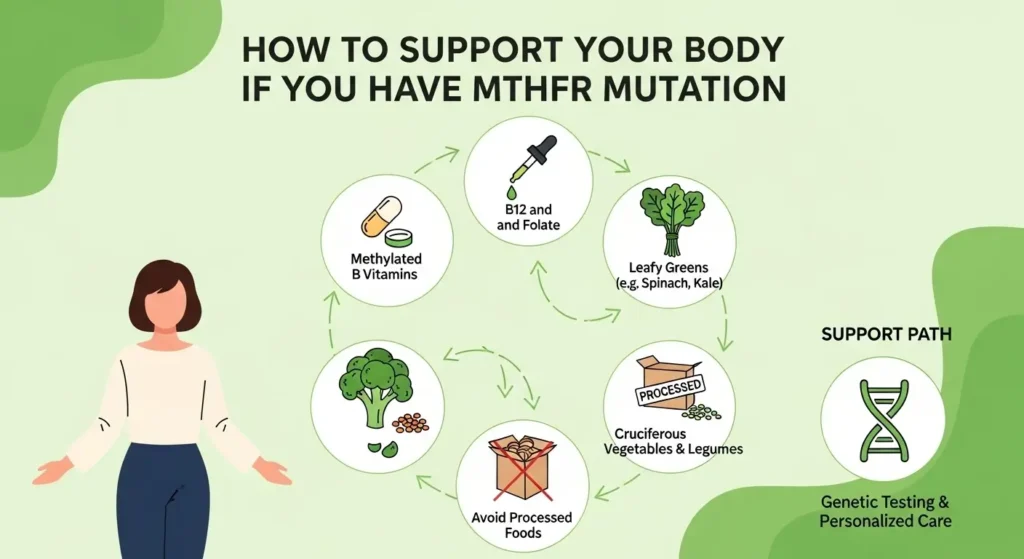
If you find out you have an MTHFR mutation, don’t panic. Knowledge is power, and there are many natural ways to support your body. This is often considered the best MTHFR treatment approach.
1. Choose the Right Vitamins
This is the most important step. Because your body has trouble converting synthetic vitamins, you need to give it the active forms.
- Use L-methylfolate, NOT folic acid. Folic acid is the synthetic form of folate found in fortified foods and many cheap supplements. People with MTHFR can’t convert it well, and it can even build up in the body. Look for supplements that contain L-methylfolate or 5-MTHF.
- Choose methylcobalamin for B12. This is the active form of B12.
- Look for supplements that also contain B6 (as P-5-P) and B2 (riboflavin), as these act as cofactors to help methylation work better.
2. Eat Folate-Rich Foods
Your body can more easily use the natural folate found in whole foods.
- Focus on leafy greens: Spinach, kale, romaine lettuce, and Swiss chard are packed with natural folate.
- Eat more legumes and vegetables: Lentils, asparagus, and broccoli are excellent sources.
- Limit processed foods: Packaged and fortified foods often contain synthetic folic acid, which you want to avoid.
Folate-Rich Foods for MTHFR Support
| Food Type | Examples | Key Benefit |
|---|---|---|
| Leafy Greens | Spinach, kale, arugula | Excellent sources of natural folate. |
| Legumes | Lentils, chickpeas, black beans | Provide both folate and other B vitamins. |
| Fruits & Veggies | Avocado, oranges, broccoli, asparagus | Offer folate along with antioxidants. |
| Whole Foods | Eggs (especially the yolk), salmon, beef liver | Contain important methylation nutrients like choline and B12. |
3. Support Your Detox Pathways
Since methylation is tied to detoxification, supporting your body’s natural cleansing systems is helpful.
- Drink plenty of filtered water.
- Eat a high-fiber diet to ensure regular bowel movements.
- Get enough sleep and move your body regularly to encourage sweating.
- Limit alcohol, as it can strain your liver and deplete B vitamins.
4. Manage Stress
Chronic stress can drain your B vitamins and make methylation even less efficient.
- Practice relaxation techniques like deep breathing, meditation, or gentle yoga.
- Spend time in nature and make time for hobbies you enjoy.
When to Talk to a Doctor
It’s a good idea to work with a healthcare professional who understands MTHFR. Talk to a doctor or a registered dietitian if:
- You have ongoing fatigue, mood changes, or fertility issues.
- You are pregnant or planning to become pregnant.
- You have confirmed high homocysteine levels or unexplained anemia.
A knowledgeable practitioner can help you create a personalized plan with the right doses of supplements and dietary changes that fit your body’s unique needs.
FAQs About MTHFR Mutation Symptoms
What does MTHFR stand for?
The MTHFR gene explained simply is that MTHFR stands for methylenetetrahydrofolate reductase. It’s an enzyme that plays a crucial role in processing folate and in the process of methylation.
Is the MTHFR mutation dangerous?
An MTHFR mutation itself is not dangerous. It is simply a genetic variation. It only becomes a potential health concern if it leads to problems like a folate deficiency, B12 deficiency, or high homocysteine levels.
Can MTHFR cause depression or anxiety?
It can be a contributing factor. The methylation problems caused by MTHFR can lead to an imbalance of neurotransmitters like serotonin and dopamine, which are essential for a stable mood.
Can I fix an MTHFR mutation with diet?
You cannot “fix” the gene itself, but you can absolutely bypass the problem it creates. By providing your body with active, methylated vitamins and eating a diet rich in natural folate, you can give your body what it needs to thrive.
Should I get tested for MTHFR?
MTHFR testing can be very useful if you have chronic symptoms like fatigue or anxiety, a history of MTHFR and pregnancy issues like recurrent miscarriages, or a family history of related health problems.
Conclusion
Having an MTHFR mutation doesn’t have to define your health. Think of it as learning your body’s unique instruction manual. With the right nutrition, targeted supplements, and supportive lifestyle habits, you can work around the genetic hiccup, support your body’s methylation process, and feel vibrant, clear, and energetic again.
Disclaimer
The information on HealthHintz is provided for educational and informational purposes only and should not be considered medical advice. Always consult a qualified healthcare professional before making any medical or health-related decisions, starting a new treatment, or changing your existing health plan.