Estrogen Dominance Symptoms You Shouldn’t Ignore
Have you ever felt bloated, moody, and just plain tired, even when you’re doing everything “right”? You might go to the doctor, run some tests, and hear that everything looks normal. But you know your body, and you know something feels off. This frustrating experience is incredibly common, and it could be a sign of a hormonal imbalance known as estrogen dominance.
It’s not “all in your head.” Your body might be sending you important signals that it needs support. In this guide, we’ll gently walk you through the symptoms of estrogen dominance, explore what causes it, and share simple, natural ways you can help bring your hormones back into balance.
Table of Contents
What Is Estrogen Dominance?
In simple terms, estrogen dominance happens when your body has too much estrogen in relation to its partner hormone, progesterone. Think of estrogen vs progesterone as a seesaw. For you to feel your best, they need to be balanced. When estrogen is too high or progesterone is too low, the seesaw becomes lopsided, leading to a wide range of uncomfortable symptoms.
Both of these female hormones are essential for a healthy menstrual cycle, stable mood, and good energy levels. But when estrogen starts to run the show, it can throw your whole system out of whack. This hormonal imbalance can happen at any age—it can be the reason behind severe PMS symptoms, a difficult transition into perimenopause, or challenging menopausal symptoms.
Common Causes of Estrogen Dominance
Several factors in our modern lives can contribute to having high estrogen in women.
- Chronic stress: When you’re constantly stressed, your body produces more cortisol (the stress hormone). To do this, it “steals” progesterone, leaving estrogen levels relatively higher.
- Hormonal birth control or hormone therapy: Some forms of contraception and hormone replacement therapy can introduce synthetic estrogens into your body.
- Poor liver detoxification: Your liver is responsible for breaking down and getting rid of excess estrogen. If it’s overloaded, it can’t do its job properly, leading to an estrogen detox issue.
- Exposure to xenoestrogens: These are man-made chemicals found in plastics, pesticides, cosmetics, and cleaning supplies that mimic estrogen in the body.
- Excess body fat: Fat cells can produce and store estrogen, so carrying extra weight can contribute to higher levels.
- Poor gut health: A healthy gut helps eliminate excess estrogen. If you’re constipated or have an imbalanced gut microbiome, estrogen can be reabsorbed back into your system.
- Thyroid problems: Your thyroid and your sex hormones are closely linked. An underactive thyroid can contribute to estrogen dominance.
Estrogen Dominance Symptoms You Shouldn’t Ignore
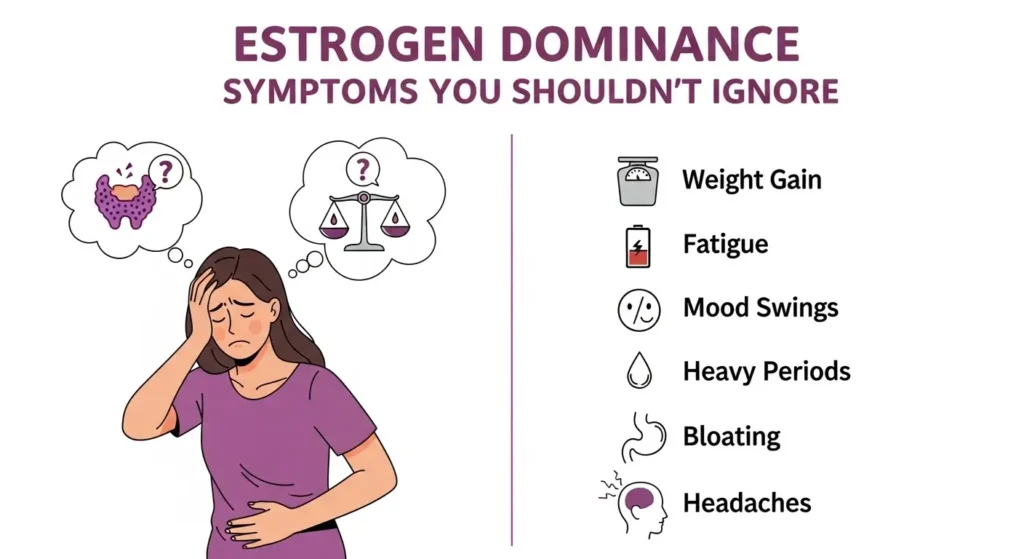
Because estrogen affects so many parts of your body, the signs of hormonal imbalance can be widespread, affecting you both physically and mentally.
Physical Symptoms
- Bloating and water retention: Feeling puffy, especially in your belly, hands, and feet.
- Breast tenderness or swelling: Your breasts might feel sore, heavy, or lumpy, particularly before your period.
- Weight gain: Stubborn weight gain, especially around the hips, thighs, and midsection.
- Headaches or migraines: Many women experience hormone-related headaches, often before their period.
- Irregular or heavy periods: This can include very heavy bleeding, clots, or cycles that are shorter or longer than usual.
- Fatigue: A deep, persistent tiredness that doesn’t go away, even with enough sleep.
- Hair loss or thinning: You might notice more hair shedding in the shower or on your brush.
Emotional and Mental Symptoms
- Mood swings: Feeling happy one minute and irritable or weepy the next.
- Anxiety or depression: Anxious thoughts, feelings of panic, or a low, depressive mood are common.
- Irritability or “brain fog”: Feeling short-tempered, forgetful, or having trouble concentrating.
- Trouble sleeping: Difficulty falling asleep or staying asleep, especially in the week before your period.
- Low sex drive: A noticeable drop in your libido.
Common Symptoms and Their Hormonal Links
| Symptom | Possible Hormonal Cause | Related Hormones |
|---|---|---|
| Bloating, Swelling | Water retention due to high estrogen, sluggish liver. | Estrogen |
| Mood Swings, Anxiety | Low progesterone to balance estrogen’s effects on the brain. | Estrogen / Progesterone |
| Headaches | Fluctuating estrogen levels affecting blood vessels in the brain. | Estrogen |
| Fatigue | High estrogen can disrupt thyroid function and energy production. | Estrogen Dominance |
How Estrogen Dominance Affects Your Body
When estrogen is too high, it can create a ripple effect across your body’s systems.
- Reproductive System: It can lead to painful, heavy, or irregular periods, PMS, and conditions like fibroids or endometriosis.
- Digestive System: It may slow down your gut motility, leading to bloating and constipation, which further worsens the problem by preventing estrogen detox.
- Skin: It can trigger hormonal acne, particularly along the jawline, or dark patches on the skin known as melasma.
- Thyroid: Excess estrogen can block the thyroid hormone from working properly, leading to symptoms of an underactive thyroid like fatigue and weight gain.
- Mood: It directly impacts brain chemicals like serotonin and dopamine, which can trigger anxiety, irritability, and depression.
The good news is that understanding these connections is the first step toward feeling better. Learning how to balance hormones can often help you reverse these issues naturally.
How to Balance Estrogen Naturally
Bringing your hormones back into balance doesn’t have to be complicated. Small, consistent changes to your diet and lifestyle can make a huge difference.
1. Eat Hormone-Friendly Foods
Your diet is one of the most powerful tools you have. Focus on whole, unprocessed foods that support your body’s natural detoxification processes.
| Food Type | Examples | How It Helps |
|---|---|---|
| Cruciferous Veggies | Broccoli, cauliflower, kale, cabbage, Brussels sprouts. | They contain a compound called indole-3-carbinol, which helps your liver with estrogen detox. |
| Fiber-Rich Foods | Oats, flaxseeds, apples, beans, lentils, psyllium husk. | Fiber binds to excess estrogen in your gut and helps carry it out of the body. Aim for 25-30 grams per day. |
| Healthy Fats | Avocado, olive oil, salmon, walnuts, chia seeds. | These fats are the building blocks for healthy hormones and help reduce inflammation. |
| Herbs & Teas | Green tea, turmeric, milk thistle. | These support liver health, which is essential for breaking down hormones. |
2. Manage Stress
Chronic stress is a major enemy of hormone balance because it depletes progesterone.
- Practice mindfulness: Just 5-10 minutes of deep breathing, meditation, or gentle yoga each day can lower cortisol levels.
- Prioritize sleep: Aim for 7-9 hours of quality sleep per night. Your body does most of its hormonal repair work while you sleep.
- Make time for joy: Engage in hobbies and activities that make you feel happy and relaxed.
3. Support Your Liver
A happy liver is essential for healthy hormones.
- Stay hydrated: Drink plenty of filtered water throughout the day.
- Limit alcohol and caffeine: Both can put a strain on your liver.
- Eat liver-loving foods: Foods rich in B vitamins (leafy greens, eggs) and antioxidants (berries, beets) support liver function.
4. Avoid Xenoestrogens
Reduce your exposure to these hormone-disrupting chemicals.
- Switch to glass or stainless steel: Avoid storing or heating food in plastic containers.
- Choose natural personal care products: Look for products that are free of parabens, phthalates, and synthetic fragrances.
- Filter your drinking water: A good quality water filter can remove many common hormone disruptors.
When to See a Doctor
While lifestyle changes are powerful, it’s important to seek medical advice if your symptoms are severe or persistent.
- If your periods are extremely heavy, painful, or irregular.
- If mood changes, fatigue, or unexplained weight gain are affecting your quality of life.
- If your symptoms persist for more than two or three cycles despite making lifestyle changes.
A doctor or a naturopath can run hormone tests (often done through saliva, urine, or blood) to get a clear picture of your levels. They can then recommend targeted supplements, herbs, or bioidentical hormone therapy if needed.
FAQs About Estrogen Dominance
Can estrogen dominance cause anxiety or depression?
Yes, absolutely. The symptoms of estrogen dominance frequently include mood issues. Fluctuating estrogen levels can disrupt the delicate balance of neurotransmitters in your brain, leading to increased feelings of anxiety, panic, or depression.
Does estrogen dominance cause weight gain?
It can. High estrogen in women encourages the body to store fat, particularly around the hips, thighs, and belly. It can also cause water retention, which adds to a feeling of puffiness and weight gain.
Can I fix estrogen dominance naturally?
For many women, yes. Learning how to balance hormones through a healthy diet, stress management, liver support, and reducing exposure to xenoestrogens can significantly improve or even resolve symptoms.
What is the best diet for hormone balance?
The best diet is one rich in whole foods, with plenty of fiber from vegetables, fruits, and whole grains. Including cruciferous vegetables for estrogen detox and healthy fats for hormone production is also key.
Does estrogen dominance affect fertility?
Yes, it can. A healthy balance of estrogen versus progesterone is crucial for ovulation and maintaining a healthy uterine lining. Estrogen dominance can interfere with this process, but balancing your hormones often improves fertility.
Conclusion
Estrogen dominance is a common and often frustrating experience, but it is also highly manageable. By learning to listen to your body’s signals and making conscious choices to support your hormonal health, you can reclaim your energy, stabilize your mood, and feel in control again. You have the power to bring your body back into balance, one healthy choice at a time.
Disclaimer
The information on HealthHintz is provided for educational and informational purposes only and should not be considered medical advice. Always consult a qualified healthcare professional before making any medical or health-related decisions, starting a new treatment, or changing your existing health plan.