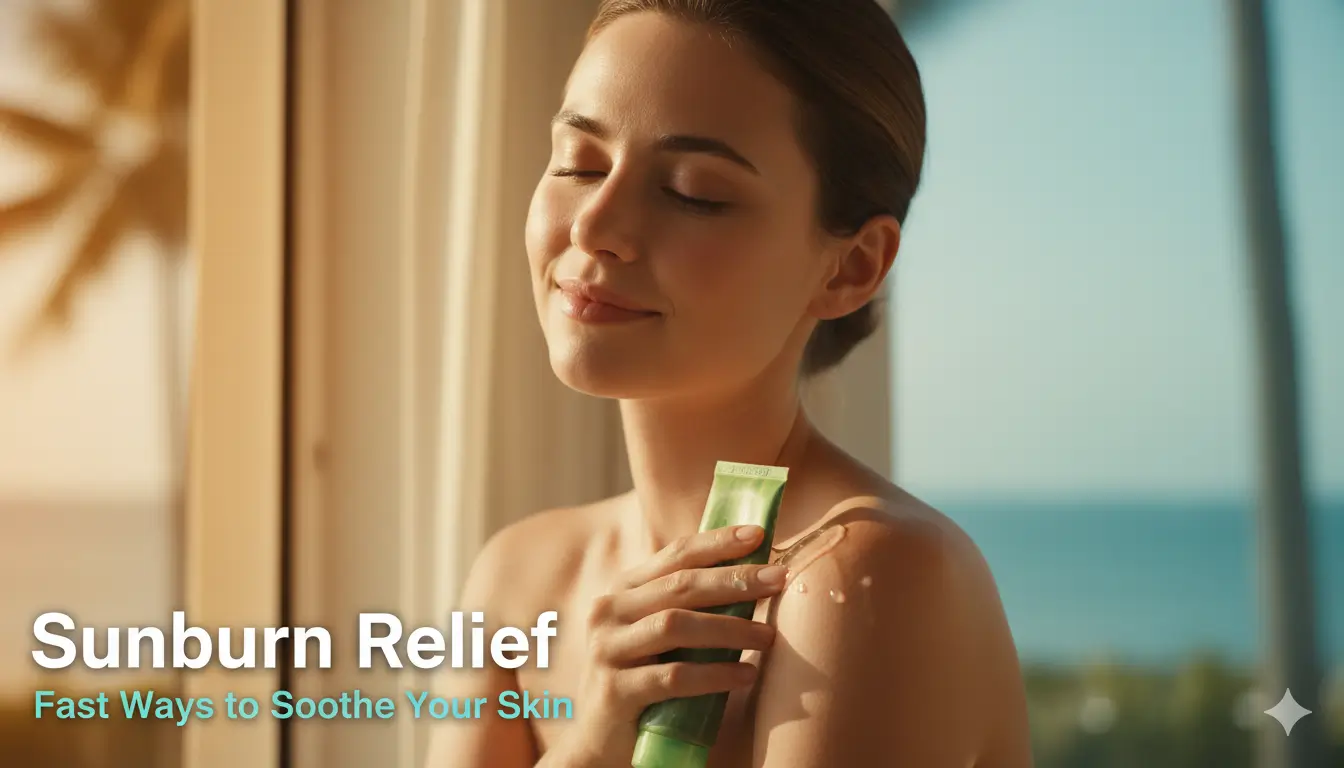
Sunburn Relief: Fast Ways to Soothe Your Skin
We’ve all enjoyed a sunny day a little too much — and later paid the price with red, painful skin. Sunburn can feel uncomfortable, but the right care can help your skin heal faster.
Sunburn is skin damage caused by ultraviolet (UV) radiation from the sun. It’s one of the most common skin problems in the world — and while it might seem minor, repeated sunburn can cause lasting damage over time. Even a single serious sunburn increases your risk of long-term skin issues, so it deserves proper attention.
In this article, we’ll cover everything you need to know: what sunburn is, what symptoms to watch for, the fastest ways to get relief, natural remedies worth trying, what to avoid, and how to prevent it from happening again.
Table of Contents
What Is Sunburn?
Sunburn is skin damage caused by too much UV (ultraviolet) exposure. UV rays come from the sun — and from tanning beds — and they’re powerful enough to damage the DNA in your skin cells.
When this happens, your body triggers an inflammatory response, causing the redness, heat, and pain you feel.
Sunburn affects the outer layer of the skin, called the epidermis. It can develop surprisingly fast — sometimes in as little as 10 to 15 minutes on a sunny day — and it’s not limited to hot, cloudless days. Up to 80% of UV rays can pass through clouds, meaning you can get sunburned even on overcast days.
There are two main types of UV rays:
- UVA rays — Penetrate deeper into the skin and are linked to premature aging and increased skin cancer risk.
- UVB rays — Affect the surface layers and are the primary cause of sunburn.
Both are harmful with prolonged, unprotected exposure.
Common Sunburn Symptoms
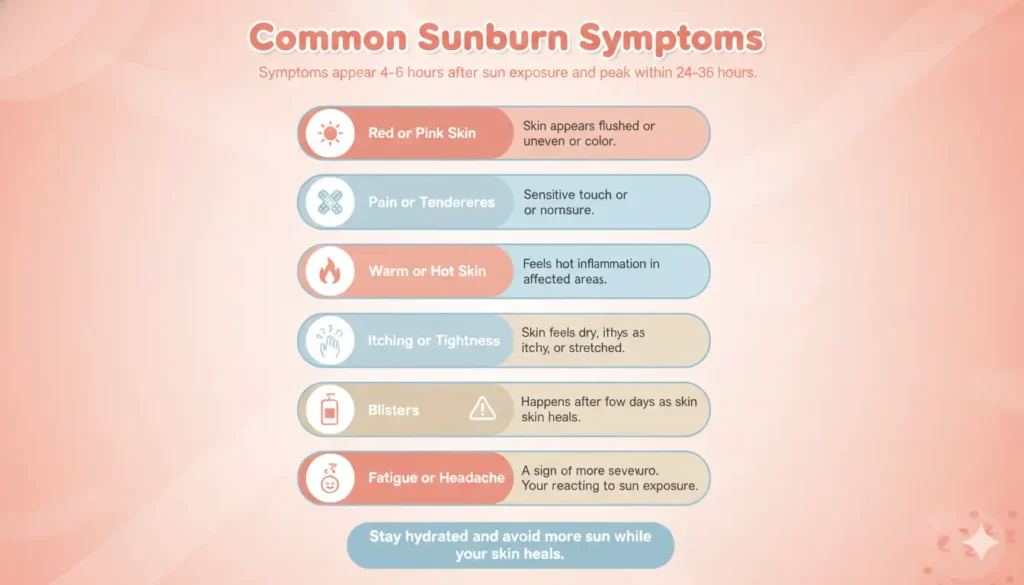
Sunburn symptoms don’t always show up immediately. In many cases, you won’t notice the full extent of the damage until 4 to 6 hours after sun exposure, with symptoms peaking around 24 to 36 hours later.
Common signs of sunburn include:
- Red or pink skin
- Pain or tenderness when touched
- Warm or hot skin
- Swelling in the affected area
- Itching or a feeling of tightness
- Peeling skin after 3 to 5 days
- Blisters in more severe cases
- Fatigue, headache, or general discomfort
Mild sunburn affects only the top skin layer and usually heals within a week. Severe sunburn — sometimes called sun poisoning — can include blistering, fever, nausea, and dizziness, and may need medical attention.
Sunburn Relief: Fast Ways to Soothe Your Skin
Acting quickly after you notice sunburn makes a real difference in how fast you heal and how much pain you feel. Here are the most effective steps to take right away.
Cool the Skin Immediately
One of the first and most important things to do is bring down the skin temperature. Heat makes inflammation worse, so cooling the skin helps reduce pain and redness.
- Take a cool (not cold) shower or bath. Ice-cold water can shock the skin and worsen irritation.
- Apply a damp, cool cloth or compress to the affected area for 15 to 20 minutes at a time.
- Pat the skin dry gently with a soft towel — never rub.
- Apply moisturizer immediately after, while the skin is still slightly damp.
Stay Hydrated
Sunburn draws fluid toward the skin’s surface and away from the rest of the body. This means you may be more dehydrated than you realize, even if you don’t feel particularly thirsty.
- Drink plenty of water — aim for at least 8 glasses a day while healing, and more if you’ve been sweating.
- Herbal teas, coconut water, and electrolyte drinks can also help restore hydration.
- Avoid alcohol and caffeine while your skin heals, as both can worsen dehydration.
Use Soothing Moisturizers
Keeping sunburned skin moisturized reduces peeling and supports faster healing. Look for products that are gentle and designed for sensitive or irritated skin.
- Aloe vera gel — the gold standard for sunburn relief. It cools, moisturizes, and reduces inflammation. Store it in the fridge for extra cooling relief.
- Fragrance-free creams or lotions — look for ingredients like hyaluronic acid, ceramides, or colloidal oat extract.
- Avoid any products that contain alcohol, retinoids, or alpha-hydroxy acids — these can further irritate sunburned skin.
- Avoid petroleum-based products like Vaseline in the first 24 hours, as they can trap heat in the skin.
Avoid More Sun Exposure
Your skin is in a vulnerable state while healing, and going back into the sun — even briefly — can deepen the damage and slow recovery significantly.
- Stay in the shade or indoors while healing, especially during peak sun hours (10 AM to 4 PM).
- If you must go outside, wear loose, lightweight, long-sleeved clothing that covers the sunburned areas.
- Apply a broad-spectrum SPF 30+ sunscreen on any exposed skin.
Take Over-the-Counter Pain Relief (If Needed)
If your sunburn is causing significant discomfort, over-the-counter medications can help ease the pain.
- NSAIDs such as ibuprofen or aspirin can help reduce both pain and inflammation.
- Acetaminophen (paracetamol) can help with pain, though it doesn’t reduce inflammation.
- Always use medications as directed on the label or by your pharmacist.
Natural Remedies for Sunburn Relief
Many people prefer natural options alongside — or instead of — store-bought products. Several natural remedies have a long history of use for soothing sunburned skin. Results can vary from person to person, but these are generally safe and gentle when used correctly.
- Aloe vera — Contains compounds that reduce inflammation and promote skin repair. Use pure aloe vera gel or a product with aloe as the primary ingredient.
- Oatmeal baths — Colloidal oatmeal has proven soothing and anti-inflammatory properties. Add finely ground oats to a cool bath and soak for 15 to 20 minutes.
- Cucumber slices — Naturally cooling and rich in antioxidants. Apply cool cucumber slices directly to sunburned areas for temporary relief.
- Cold milk compress — The fat, protein, and pH of milk can help calm sunburned skin. Soak a soft cloth in cool whole milk and apply gently to the affected area.
- Coconut oil — Best used after the initial redness and heat have subsided (usually after 48 hours). Avoid applying it to fresh burns, as it can trap heat.
- Green tea — Antioxidants in green tea may help reduce UV-related inflammation. Apply cooled green tea to the skin using a soft cloth or cotton pad.
Keep in mind that natural remedies work best for mild to moderate sunburn. If your sunburn is severe or comes with systemic symptoms, please seek professional medical care rather than relying on home treatments alone.
What to Avoid When You Have Sunburn
Knowing what not to do is just as important as the right steps. Some common habits can make sunburn worse or delay healing.
- Hot showers or baths — Heat increases inflammation and intensifies pain. Stick to cool or lukewarm water while healing.
- Harsh soaps or exfoliants — These strip the skin’s natural moisture barrier and irritate inflamed skin. Use mild, fragrance-free cleansers only.
- Tight clothing — Friction from tight fabrics on sunburned skin causes pain and can damage the outer layers. Choose loose, breathable cotton.
- Scratching or peeling skin — Pulling off peeling skin prematurely can open the skin to infection and lead to scarring. Let it shed naturally.
- More sun exposure — Sunburned skin has no natural UV protection. Going back out before healing can prolong recovery and increase the risk of long-term skin damage.
- Popping blisters — Blisters form to protect the healing skin underneath. Breaking them introduces bacteria and increases infection risk.
- Numbing creams with benzocaine — These can cause allergic reactions on damaged skin. Avoid unless specifically recommended by a doctor.
When to See a Doctor
Most sunburns heal safely at home. However, some cases need medical attention. Seek help from a healthcare professional if you notice any of the following:
- Severe blistering that covers a large area of the body
- Fever or chills
- Nausea, vomiting, or dizziness
- Headache or confusion
- Signs of infection — increased swelling, pus, or red streaks around the burn
- Very large areas of burned skin, especially in children or older adults
- Eye pain after sun exposure
Children are especially vulnerable to sunburn complications. A child with severe sunburn should always be evaluated by a doctor. Sun poisoning in particular — where systemic symptoms accompany the burn — needs prompt medical evaluation.
How to Prevent Sunburn in the Future
The best way to deal with sunburn is to prevent it entirely. Prevention is straightforward once it becomes a daily habit, and it protects your skin from both short-term pain and long-term damage like premature aging and skin cancer.
- Use sunscreen (SPF 30 or higher) — Choose a broad-spectrum formula and apply generously 15 to 30 minutes before going outside.
- Reapply every 2 hours — Sunscreen wears off, especially after sweating or swimming. Don’t skip reapplication.
- Wear hats and sunglasses — A wide-brimmed hat and UV-protective sunglasses shield your face, scalp, and eyes from direct sun exposure.
- Avoid peak sun hours (10 AM – 4 PM) — UV radiation is strongest during this window. Plan outdoor activities for early morning or late afternoon when possible.
- Stay in the shade — Umbrellas, trees, and covered areas all reduce UV exposure, especially during midday hours.
- Be cautious near reflective surfaces — Water, sand, and snow all reflect UV rays and can intensify your exposure.
- Check the UV Index — Most weather apps display this daily. A UV Index of 6 or higher means sun protection is essential.
Conclusion
Sunburn is incredibly common, but it doesn’t have to mean days of suffering. With the right care — cooling the skin, staying hydrated, moisturizing gently, and avoiding further irritation — most sunburns heal well within a week. Natural remedies like aloe vera and oatmeal baths can offer additional comfort, especially for milder cases.
Most importantly, prevention is the best long-term strategy. A consistent habit of applying sunscreen, wearing protective clothing, and being aware of peak sun hours can protect your skin from today’s pain and tomorrow’s long-term damage.
And if your sunburn is severe or comes with worrying symptoms, please reach out to a healthcare professional. Your skin is worth protecting.
Taking care of your skin today helps protect it for tomorrow.
FAQ
What is the fastest way to get sunburn relief?
The fastest way to get sunburn relief is to cool the skin quickly with a cool shower or damp compress, then apply aloe vera gel or a fragrance-free moisturizer. Staying hydrated and using an anti-inflammatory like ibuprofen may also help reduce pain and redness. Acting early gives the best results.
Does aloe vera help sunburn?
Yes. Aloe vera is one of the most effective natural remedies for sunburn relief. It helps reduce inflammation, soothe discomfort, and support skin healing. Using pure aloe vera gel and keeping it cool can provide extra relief.
How long does sunburn last?
Mild sunburn usually heals within 3 to 5 days. Redness fades after a couple of days, and peeling may start around day 3 or 4. More severe sunburn with blisters can take 1 to 2 weeks to heal fully.
Can sunburn turn into a tan?
Sometimes. As the skin heals, a light tan may appear underneath. However, this is a sign of skin damage rather than healthy tanning and offers very little protection from future sunburn.
Should you moisturize sunburned skin?
Yes. Moisturizing helps reduce peeling, calm irritation, and support the skin barrier. Use fragrance-free products or aloe vera gel and apply them after showering while the skin is slightly damp.
When should I worry about sunburn?
Seek medical care if you have fever, chills, nausea, dizziness, severe blistering, or signs of infection such as swelling or pus. These symptoms may indicate a more serious reaction and should not be ignored.
Disclaimer
The information on HealthHintz is provided for educational and informational purposes only and should not be considered medical advice. Always consult a qualified healthcare professional before making any medical or health-related decisions, starting a new treatment, or changing your existing health plan.