Brain Rot: The Hidden Effect of Screen Addiction
Are you spending too much time on your phone or computer? Many of us are stuck to our screens. But have you thought about how it affects your cognitive health?
Too much screen time can lead to “brain rot.” This term describes the mental or cognitive decline from watching too much low-quality content online. Gary Small, MD, says this happens when you watch too much easy or uninteresting stuff online.
Excessive screen time can harm your brain health. It’s important to know the risks and take steps to keep your mind sharp. Always talk to a doctor before making health choices.
Table of Contents
What Is “Brain Rot” and Why Should You Be Concerned?
Screen time is going up fast. It’s key to know about ‘brain rot’ and its effects on mental deterioration. This term means a drop in brain skills from too much screen time. It can hurt brain function and speed up neurodegenerative disorders.
Defining the Phenomenon in the Digital Age
‘Brain rot’ means losing skills like paying attention, remembering things, and solving problems. It happens because of all the info from digital devices. This makes it hard to focus on hard tasks, hurting work and brain health.
The Science Behind Cognitive Decline from Screen Overuse
Too much screen time can make your brain worse, mainly in paying attention, remembering, and solving problems. Being always online changes your brain. It’s hard to stay focused and remember things. This cognitive overload can lead to serious brain diseases. Knowing this helps us take steps to protect our brains.
This info helps us understand ‘brain rot.’ But, it’s not medical advice. Always talk to a doctor before making health choices.
The Alarming Statistics on Screen Time in America
Americans now spend a lot of time in front of screens, worrying about its health effects. Digital devices are a big part of our lives, leading to more screen time.
Current Screen Usage Trends Across Age Groups
People in the U.S. use social media for 2-3 hours daily. Teenagers are the biggest users. Children and teens are most at risk from too much screen time. It can hurt their brains and social skills.
Projected Impacts on Public Health
Too much screen time can lead to serious health problems. It raises the chance of dementia and Alzheimer’s disease. As we get older, knowing this is key to fighting these health issues.
We must be careful and find a balance between screen use and brain health. Always talk to a doctor before making health choices.
7 Warning Signs of Brain Rot from Excessive Screen Time
Spending too much time on screens can harm your brain. It can cause problems like a short attention span, memory loss, and less critical thinking. These issues can affect your daily life.
Here are some signs that you might be experiencing brain rot from too much screen time:
Declining Attention Span and Focus
Too much screen time can make it hard to focus. Switching between different digital content can make it tough to stay on one task.
Memory Issues and Information Retention Problems
Screen time can also hurt your memory. With so much new information, it’s hard to remember important things.
Reduced Critical Thinking Abilities
Too much tech use can make you think less critically. Relying on technology too much can weaken your critical thinking skills.
Emotional Regulation Difficulties
Too much screen time can mess with your emotions. Seeing violent or disturbing content can make you less sensitive. Social media can also make you feel bad about yourself.
Sleep Disruption and Its Cognitive Effects
Screen time can disrupt your sleep. The blue light from screens can stop your body from making melatonin, leading to poor sleep.
Social Skill Deterioration
Too much screen time can hurt your social skills. Not enough time with people can make it hard to communicate well.
Diminished Creativity and Problem-Solving Skills
Lastly, too much screen time can reduce your creativity and problem-solving skills. Too much digital content can make it hard to think outside the box.
Summary of Warning Signs:
| Warning Sign | Description |
|---|---|
| Declining Attention Span | Difficulty concentrating on a single task |
| Memory Issues | Problems retaining information |
| Reduced Critical Thinking | Over-reliance on digital tools for problem-solving |
| Emotional Regulation Difficulties | Desensitization, comparison, and decreased self-esteem |
| Sleep Disruption | Poor sleep quality due to blue light exposure |
| Social Skill Deterioration | Impaired communication skills |
| Diminished Creativity | Reduced ability to think creatively or solve problems |
It’s important to know these signs and take steps to avoid them. Recognizing these problems early can help you protect your brain health.
How Screen Addiction Physically Changes Your Brain
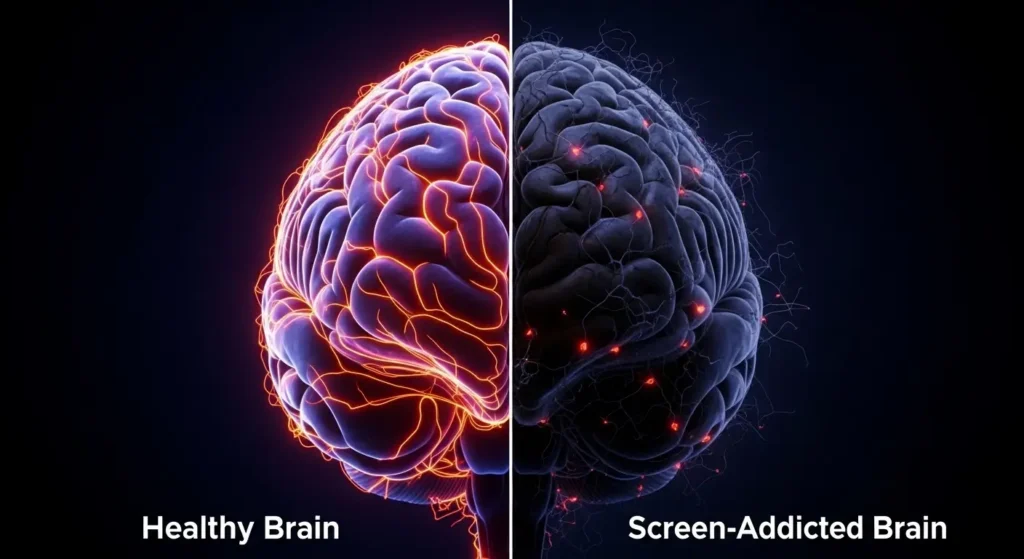
Spending more time in front of screens changes your brain. Studies show that too much screen time can alter brain structure and function. This affects areas like reward processing, emotion control, and thinking skills.
Neuroplasticity and Digital Stimulation
Neuroplasticity, or the brain’s ability to change, is impacted by digital stimulation. The constant flow of digital info can rewire your brain. This can boost digital skills but might harm attention and memory.
Gray Matter Density Changes
Too much screen time can change gray matter density in the brain. This affects areas linked to attention, emotion control, and impulse control. People with screen addiction might see a drop in gray matter density, leading to cognitive and emotional problems.
Dopamine Pathways and Addiction Mechanisms
Screen addiction activates dopamine pathways, releasing feel-good chemicals. This can lead to addiction. The constant screen stimulation can overactivate these pathways, making it hard to stop using devices. This creates a cycle of addiction, worsening mental health and increasing neurodegenerative disorder risks.
It’s key to know about these changes and take steps to protect your brain. Always talk to a healthcare professional before changing your digital habits or health routines.
The Connection Between Screen Time and Neurodegenerative Risks
Recent studies have found a link between too much screen time and cognitive decline. This has started an important talk about our digital habits. It’s becoming clear that too much screen time can harm our brain health, possibly leading to serious diseases.
Research on Early-Onset Cognitive Decline
Research shows that too much screen time can cause early cognitive decline. This is because our brains get overwhelmed by all the information. This can lead to brain fog, making it hard to focus or make decisions.
Potential Links to Serious Conditions Like Dementia and Alzheimer’s
There’s a growing worry about the link between screen time and serious brain diseases like dementia and Alzheimer’s disease. Studies suggest that too much screen time may speed up brain aging and lower cognitive reserve.
How Digital Habits May Accelerate Brain Aging
Digital habits, like too much screen time, can make our brains age faster. This can cause a drop in cognitive skills, including memory and problem-solving. By being careful with our screen time and choosing healthier digital habits, we can lower the risk of these diseases.
It’s key to know the risks of too much screen time and take steps to protect our brain health. Always talk to a healthcare professional before changing your health habits.
5 Practical Strategies to Reverse Brain Rot Effects
To reverse brain rot, you need a mix of strategies that boost brain health. These steps can help lessen the harm from too much screen time. They also improve how well your brain works.
Digital Detox Protocols That Work
Starting a digital detox can cut down on screen time and ease brain rot symptoms. Begin by setting aside days or hours without devices. As you get used to it, you can make these periods longer. Apps that track and limit screen time can also help you stay on track.
Brain-Boosting Activities to Counter Screen Damage
Doing activities that challenge your brain can fight back against screen time’s negative effects. Reading, solving puzzles, and learning new things are great. These activities keep your brain sharp and help you resist brain rot.
Nutrition and Supplements for Cognitive Protection
Eating a balanced diet full of important nutrients is key for brain health. Foods rich in antioxidants, omega-3s, and vitamins protect your brain. Adding supplements like omega-3s, vitamin D, and B vitamins can also help, but talk to a doctor first.
| Nutrient | Food Sources | Benefits |
|---|---|---|
| Omega-3 Fatty Acids | Salmon, Walnuts, Chia Seeds | Supports brain health, reduces inflammation |
| Antioxidants | Berries, Leafy Greens, Nuts | Protects against oxidative stress, promotes cognitive function |
| Vitamin D | Fatty Fish, Fortified Dairy, Sunlight | Essential for overall health, supports cognitive function |
Exercise Routines That Promote Brain Health
Regular exercise is vital for keeping your brain healthy and preventing brain rot. Aerobic exercises are best because they boost blood flow and improve brain function.
Mindfulness Practices for Neural Recovery
Mindfulness, like meditation and yoga, can help counteract screen time’s effects. They reduce stress and enhance focus, helping you regain control over your brain health.
By using these five strategies every day, you can start reversing brain rot and improving your brain health. Always talk to a doctor before making big changes to your lifestyle or health routine.
Creating Healthy Tech Boundaries for You and Your Family
To reduce the harm of too much screen time, setting healthy tech limits is key. This means using technology in a way that’s good for everyone in your family.
One good idea is to make some areas in your home screen-free. For example, the dinner table or bedrooms should be free from screens. This can help cut down on screen time and encourage better habits. Also, setting times when screens are off, like during meals or before bed, can help a lot.
Setting Up Screen-Free Zones and Times
Creating screen-free zones and times needs careful planning. First, find out where and when screens are most used. Then, make a plan to limit them in those places. For instance, you can:
- Make the dinner table a screen-free zone to encourage family conversation.
- Establish a pre-bedtime routine that excludes screens to improve sleep quality.
- Designate screen-free hours during the day to promote outdoor activities or reading.
Age-Appropriate Guidelines for Children
For families, setting age-appropriate guidelines is key. The American Academy of Pediatrics says kids aged 2 to 5 should watch no more than 1 hour of educational TV a day. Kids under 2 should not watch screens except for video calls. Parents should watch what their kids are watching to make sure it’s right for their age.
| Age Group | Recommended Screen Time | Content Guidelines |
|---|---|---|
| Under 2 years | None except video chatting | Video chatting only |
| 2-5 years | 1 hour/day | High-quality educational content |
| 6 and older | Consistent limits | Ensure content is appropriate and encourage physical activity |
By following these tips and watching your family’s screen time, you can help them stay healthy online. Always talk to a doctor for advice on how to manage screen time and its effects on your brain and health.
Conclusion: Balancing Digital Life and Brain Health
In today’s world, it’s key to balance your digital life and brain health. Too much screen time can harm your brain and lead to cognitive decline. By knowing these risks and taking steps to avoid them, you can keep your brain healthy and feel better overall.
Creating healthy tech limits is important for you and your family. Setting up areas and times where screens are not allowed can help a lot. Being aware of your digital habits and choosing wisely about screen use helps keep a good balance.
This info is for learning only and not medical advice. Always talk to a doctor before making health choices. By taking care of your brain, you can lower the chance of cognitive decline and live a healthier digital life.
Frequently Asked Questions About Brain Rot and Screen Time
What is brain rot, and how is it related to screen time?
Brain rot is when you lose mental sharpness from watching too much low-quality digital content. Excessive screen time can harm your brain’s ability to focus, remember, and think clearly.
What are the warning signs of brain rot?
Signs of brain rot include trouble focusing, poor memory, emotional imbalance, and reduced creativity. Other symptoms may include poor sleep and difficulty with social interactions.
How does screen addiction physically change the brain?
Screen addiction can alter the brain’s structure and chemistry. It affects how your brain processes emotions and rewards, reinforcing addictive patterns that impair cognitive function over time.
Is there a link between screen time and neurodegenerative disorders?
Yes, too much screen time may increase the risk of cognitive decline and dementia. Prolonged digital overstimulation can accelerate brain aging and reduce neural resilience.
How can I reverse the effects of brain rot?
To reverse brain rot, take digital detoxes, engage in stimulating mental activities, exercise regularly, and eat a balanced diet. Practicing mindfulness and reducing passive screen time can also help restore focus and mental clarity.
How can I create healthy tech boundaries for myself and my family?
Establish screen-free zones and hours, use apps to track screen time, and set clear limits for children. Encourage real-world hobbies and family time to promote a healthier balance with technology.
Can brain rot lead to memory loss or cognitive decline?
Yes, prolonged exposure to overstimulating digital content can cause memory loss and slower cognitive function. Over time, it may impair learning and concentration abilities.
What are some brain-boosting activities that can counter screen damage?
Activities such as reading, puzzles, learning new skills, meditation, and creative work can strengthen brain function. These stimulate critical thinking and help offset the negative effects of excessive screen time.
How can I protect my brain health in the digital age?
Maintain balance by monitoring screen time, taking regular breaks, exercising, eating nutrient-rich foods, and staying socially active. These habits support long-term brain health in a tech-heavy world.