

How to Stop Overthinking: Practical Mindfulness Exercises
How to Stop Overthinking: Did you know that nearly 60% of adults experience overthinking at some point in their lives? This can lead to more anxiety and stress. Mindfulness practices, like the DBT STOP skill, can help manage overthinking and reduce anxiety.
Adding mindfulness exercises to your daily routine can calm your mind. It helps you control your thoughts better. Always talk to a healthcare professional before starting new practices.
Table of Contents
Disclaimer
Our content is meant to give general information, not specific medical advice. It’s important to understand the context and limits of what we provide on this site.
Educational Purpose of This Content
The info on HealthHintz is for educational and informational purposes only. It should not replace professional medical advice, diagnosis, or treatment.
When to Consult Healthcare Professionals
Always talk to a qualified healthcare professional before making any medical or health-related decisions. If you’re feeling overwhelmed by thoughts or have other mental health concerns, getting professional help is key. They can give you the right evaluation and treatment.
Understanding the Overthinking Trap
You might find yourself caught in a cycle of rumination that’s hard to escape. This cycle can be deeply rooted in your neurological responses to stress and anxiety.
The Neurological Basis of Rumination
Rumination is linked to the brain’s default mode network. This network is responsible for self-referential thoughts. When you’re under stress, this network can become hyperactive. This leads to excessive thinking patterns.
How Chronic Overthinking Impacts Your Well-being
Chronic overthinking can significantly affect your mental and physical health. It can lead to anxiety, depression, and even cardiovascular issues. It’s important to break the cycle of overthinking to maintain your overall well-being.
Identifying Your Personal Overthinking Triggers
To stop overanalyzing, you first need to identify what triggers your overthinking. Common triggers include stress, uncertainty, and past traumas. By recognizing these triggers, you can develop ways to manage overthinking more effectively.
How to Stop Overthinking with Mindful Awareness
Mindfulness practices are great for fighting overthinking. They help you stay in the present moment. This way, you don’t get caught up in past worries or future fears.
Mindful awareness lets you catch overthinking early. This means you can stop it before it starts.
Anchoring to the Present Moment
One good way to stop overthinking is to stay in the present. You can do this by focusing on your breath or noticing your surroundings. Paying attention to your body also helps.
By staying present, you can break the cycle of overthinking.
Progressive Body Scan for Mental Grounding
A progressive body scan can calm your mind and reduce overthinking. Start by focusing on your toes and move up to your head. Release any tension as you focus on each area.
Diaphragmatic Breathing Techniques
Diaphragmatic breathing is a strong tool against overthinking. It involves deep breathing into your diaphragm, not shallow chest breathing. This calms your nervous system and lowers anxiety.
Box Breathing Method
The box breathing method is simple. Breathe in for 4 counts, hold for 4 counts, breathe out for 4 counts, and hold again for 4 counts. This creates a “box” shape with your breath, promoting balance and calm.
4-7-8 Breathing Pattern
The 4-7-8 breathing pattern, or “relaxation breath,” is another great technique. Breathe in through your nose for 4 counts, hold for 7 counts, and exhale through your mouth for 8 counts. This slows your heart rate and promotes relaxation.
5 Quick Mindfulness Exercises for Immediate Relief
Simple mindfulness techniques can offer quick relief from overthinking. These exercises are easy to do anywhere, anytime. They help you stay present and stop overthinking.
The 5-4-3-2-1 Sensory Grounding Technique
This technique involves noticing:
- 5 things you can see around you
- 4 things you can touch or feel
- 3 things you can hear
- 2 things you can smell
- 1 thing you can taste
By focusing on your surroundings, you can distract yourself from overthinking. It keeps you grounded in the present.
3-Minute Breathing Space Practice
Take 3 minutes to focus on your breathing. Feel the breath moving in and out of your body. If your mind wanders, gently bring it back to your breath. This simple practice can calm your mind and reduce overthinking.
Thought Labeling and Releasing
When you notice overthinking, label the thought as “thinking” or “worrying.” Then, let it go. This practice helps you observe your thoughts without getting caught up in them.
Mindful Object Observation
Choose an object and focus on it intently. Notice its color, texture, and shape. See it as if you’re seeing it for the first time. This exercise can help you cultivate mindfulness and reduce overthinking.
One-Minute Gratitude Pause
Take one minute to reflect on three things you’re grateful for. Focusing on gratitude can shift your mind away from overthinking. It helps cultivate a more positive mindset.
By adding these mindfulness exercises to your daily routine, you can manage overthinking better. This improves your overall well-being.
Establishing Daily Mindfulness Routines
Starting a daily mindfulness routine can help you manage overthinking and lower anxiety. It brings awareness and calm into your life.
Morning Mindfulness Ritual (10 Minutes)
Begin your day with a 10-minute morning mindfulness ritual. Sit comfortably, close your eyes, and focus on your breath. Feel the air moving in and out of your nostrils. If your mind drifts, gently bring it back to your breath.
Mindful Walking During Daily Activities
Make mindful walking a part of your daily routine. This could be walking to work or doing chores. Focus on the feeling of your feet on the ground, the movement of your legs, and your breath’s rhythm.
As you start your daily mindfulness routines, consider adding
Mindful Eating Practice
| Mindfulness Practice | Benefits |
|---|---|
| Morning Mindfulness Ritual | Sets a positive tone for the day |
| Mindful Walking | Reduces stress and increases awareness |
| Evening Reflection | Helps release negative thoughts |
| Mindful Eating | Promotes healthier eating habits |
By adding these mindfulness practices to your daily routine, you can reduce anxiety and gain greater self-awareness. Mindfulness expert Jon Kabat-Zinn says, “The best way to take care of the future is to take care of the present moment.”
“You can’t start the next chapter of your life if you keep re-reading the last one.”
Cognitive Techniques to Break the Overthinking Cycle
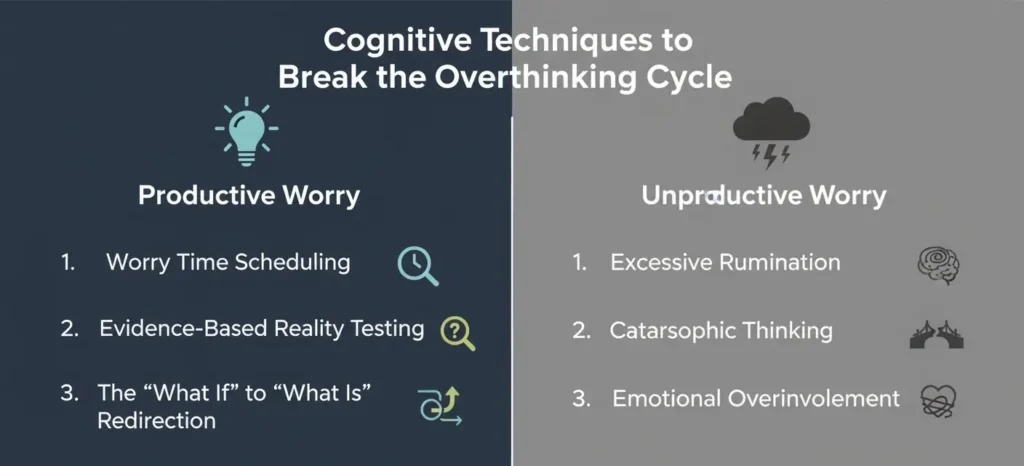
Cognitive techniques are a strong tool to stop overthinking and lessen mental stress. They help you manage unwanted thoughts and find mental balance.
Thought Record Worksheets
Thought record worksheets come from cognitive behavioral therapy. They let you track and study your thoughts. This way, you can spot patterns and what makes you overthink.
The “What If” to “What Is” Redirection
This method changes your thoughts from “what if” scenarios to what’s real now. Focusing on the present moment cuts down on guessing.
Evidence-Based Reality Testing
Reality testing checks if your negative thoughts are true. It helps you see if your worries are real or blown out of proportion.
Worry Time Scheduling
Worry time scheduling sets a time for worrying. It keeps overthinking in check by limiting it to a certain time.
Setting boundaries means not letting overthinking take over your day. It keeps your thoughts from controlling you.
Productive vs. Unproductive Worry
It’s important to know the difference between worry that helps and worry that doesn’t. Productive worry leads to solutions, while unproductive worry just goes round in circles.
Lifestyle Adjustments That Reduce Overthinking
Making simple lifestyle changes can help you think less and feel clearer. By adding a few key habits to your day, you can cut down on negative thoughts.
Sleep Optimization for Cognitive Balance
Getting enough sleep is key for your brain and emotions. Try to sleep 7-9 hours each night. Also, keep your sleep schedule regular to keep your brain in check.
Strategic Physical Activity for Mental Release
Exercise regularly to lower anxiety and overthinking. It releases happy hormones. Try walking, jogging, or yoga to soothe your mind.
Digital Boundaries and Information Diet
Limiting your screen time can reduce stress and overthinking. Cut down on news and social media. Stick to trusted sources of information.
Social Connection as Overthinking Prevention
Strong social ties can stop overthinking by giving emotional support and new views. Look for activities that bring you closer to others and build lasting friendships.
When to Seek Professional Support
If overthinking is causing you lasting distress, it’s time to get help from a mental health expert. Overthinking can be a sign of deeper issues like anxiety, depression, or obsessive-compulsive disorder.
Warning Signs That Overthinking Is Becoming Clinical
You might need professional help if your overthinking is really bothering you. It could also be if it’s affecting your daily life or making you feel hopeless. Look out for signs like trouble sleeping, changes in appetite, or pulling away from friends and family.
Effective Therapeutic Approaches
There are several ways to break the cycle of overthinking. Two top methods are:
Cognitive Behavioral Therapy (CBT)
CBT focuses on changing negative thought patterns. It helps you see things more clearly and find better ways to cope.
Acceptance and Commitment Therapy (ACT)
ACT teaches you to accept your thoughts and feelings without judgment. It encourages you to move towards your goals, helping you stay flexible and less caught up in overthinking.
Finding the Right Mental Health Professional
When looking for help, find a therapist who knows CBT or ACT well. Look at their background, experience, and how well you connect. You can ask your doctor for suggestions or check online directories.
Conclusion: Building Your Personalized Anti-Overthinking Strategy
To fight overthinking, mix mindfulness, cognitive tricks, and lifestyle changes. You’ve learned how to stop overthinking with mindful awareness and quick exercises. Adding these to your day can cut down anxiety and stop the cycle of overthinking.
Managing overthinking well means being steady and patient. Pick a few methods like deep breathing or labeling thoughts and use them every day. As you get better, try more techniques like changing your thoughts or your lifestyle to improve your mind.
Using mindfulness to handle overthinking can make your mind more balanced and calm. Make mindfulness a regular part of your life. This way, you’ll be ready to face stress and lower your anxiety. Start your journey to a calmer, more mindful you today.
Frequently Asked Questions About Overthinking and Mindfulness
What is overthinking, and how does it affect mental health?
Overthinking means constantly analyzing thoughts, leading to more anxiety and stress. It can harm mental health by creating a cycle of negative thoughts and worry.
How can mindfulness help in managing overthinking?
Mindfulness, such as meditation, helps you observe your thoughts without judgment. It keeps you grounded in the present moment and reduces overthinking.
What are some quick mindfulness exercises that can provide immediate relief from overthinking?
Simple exercises like the 5-4-3-2-1 sensory grounding technique or the 3-minute breathing space can calm your mind and reduce overthinking quickly.
How can I incorporate mindfulness into my daily routine?
Start with short morning mindfulness sessions, mindful walking, or mindful eating. Evening reflection practices can also strengthen awareness and reduce overthinking.
What cognitive techniques can help break the overthinking cycle?
Techniques like keeping a thought record and shifting from “what if” to “what is” thinking help challenge negative thought patterns and ease overthinking.
How can lifestyle adjustments help reduce overthinking?
Getting enough rest, setting digital boundaries, and maintaining a balanced lifestyle support better mental clarity and reduce overthinking.
When should I seek professional help for overthinking?
If overthinking interferes with your daily life, sleep, or emotional well-being, it’s time to seek help from a mental health professional.
What therapeutic approaches are effective in addressing overthinking?
Cognitive-behavioral therapy (CBT) and acceptance and commitment therapy (ACT) are proven methods for managing overthinking and related anxiety.
How can I build a personalized anti-overthinking strategy?
Combine mindfulness, cognitive techniques, and lifestyle changes to create a tailored plan. Consistency and patience are key for lasting results.