
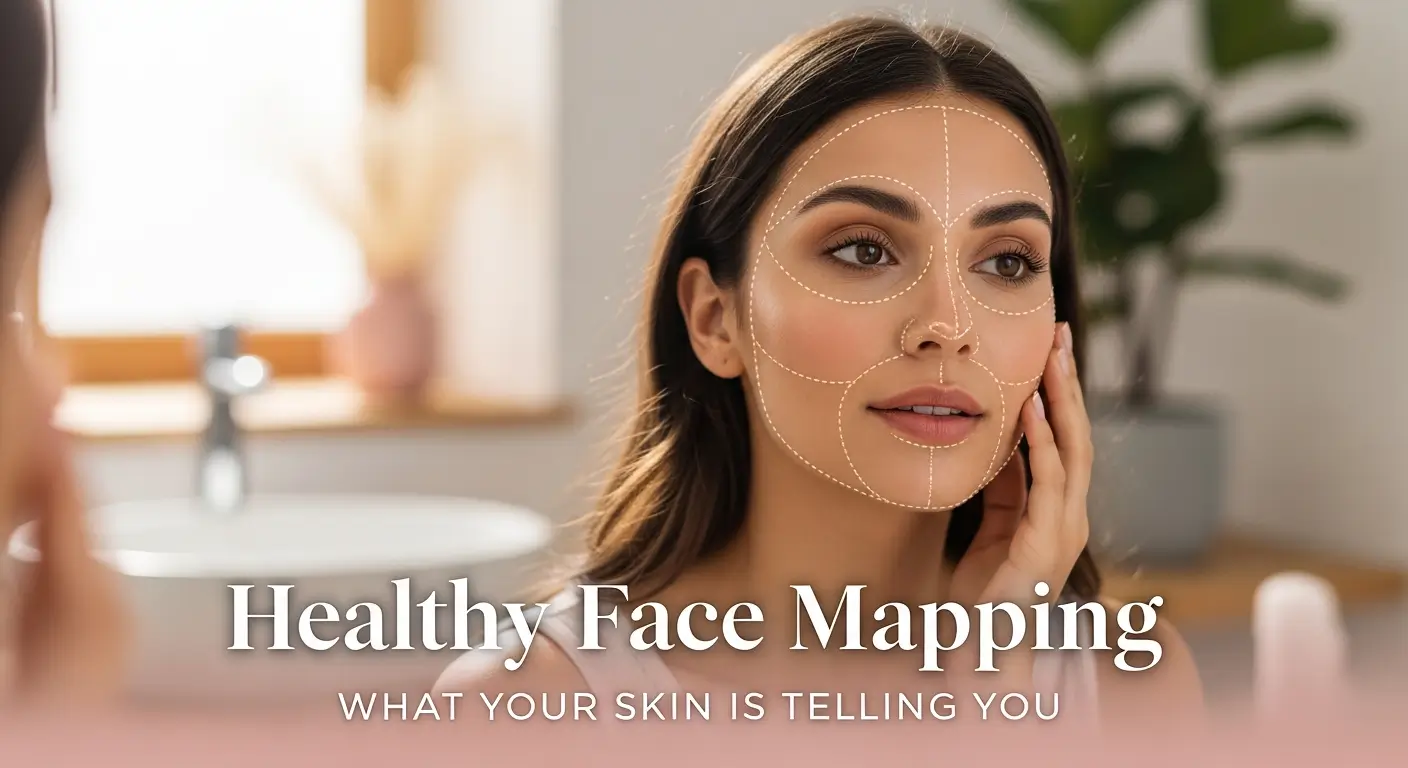
Healthy Face Mapping: What Your Skin Is Telling You
Have you ever noticed how that one stubborn pimple seems to pop up on your chin right before your period? Or how stress consistently leads to a breakout on your forehead? It can feel frustrating, and it’s easy to wonder if these patterns mean something deeper. You might be dabbing on spot treatment while thinking, “What is my skin trying to tell me?”
This is where the concept of face mapping comes in. It’s an ancient idea that suggests the location of your skin issues, like acne or redness, can offer clues about your internal health. It’s like your face is a map, and every spot has a story to tell about what’s happening inside your body.
In this guide, we’ll explore the art of face mapping, helping you to interpret your skin’s signals and discover simple lifestyle changes that can bring you back into balance, both inside and out.
Table of Contents
What Is Face Mapping?
Face mapping has its roots in ancient wellness practices, particularly Traditional Chinese Medicine (TCM) and Ayurveda. These traditions view the body as an interconnected system where everything works together. They believe that different areas of your face are linked to specific internal organs and systems.
According to this philosophy, an imbalance in a particular organ—whether from stress, diet, or lifestyle—can show up on the corresponding part of your face. For example, persistent breakouts on your forehead might point to a stressed digestive system, while acne along your jawline could be a sign of a hormonal imbalance.
It’s important to remember that face mapping is not a medical diagnostic tool. It can’t tell you that you have a specific disease. Instead, think of it as a helpful guide—a way to listen to your body’s whispers before they become shouts. It offers clues that can empower you to make small, supportive changes to your overall wellness routine.
How Face Mapping Works
The logic behind face mapping is based on observing patterns. Our bodies are constantly communicating with us, and the skin, as our largest organ, is often one of the first places to show signs of internal distress. When you notice recurring issues like acne, redness, dryness, or puffiness in the same facial zone, face mapping suggests there might be an underlying reason.
Factors that can influence what you see on your face map include:
- Diet: Foods that are inflammatory or hard to digest can tax your system.
- Hormones: Fluctuations in hormones like estrogen and testosterone are famous for causing breakouts.
- Stress: High stress levels can impact everything from your digestion to your hormones.
- Digestion and Gut Health: If your digestive system is sluggish, toxins may not be eliminated efficiently.
- Sleep: Lack of quality sleep can affect your body’s ability to repair and detoxify.
By paying attention to where and when these issues appear, you can start to connect the dots between your lifestyle and your skin’s health.
The Face Map Breakdown: What Each Area Means
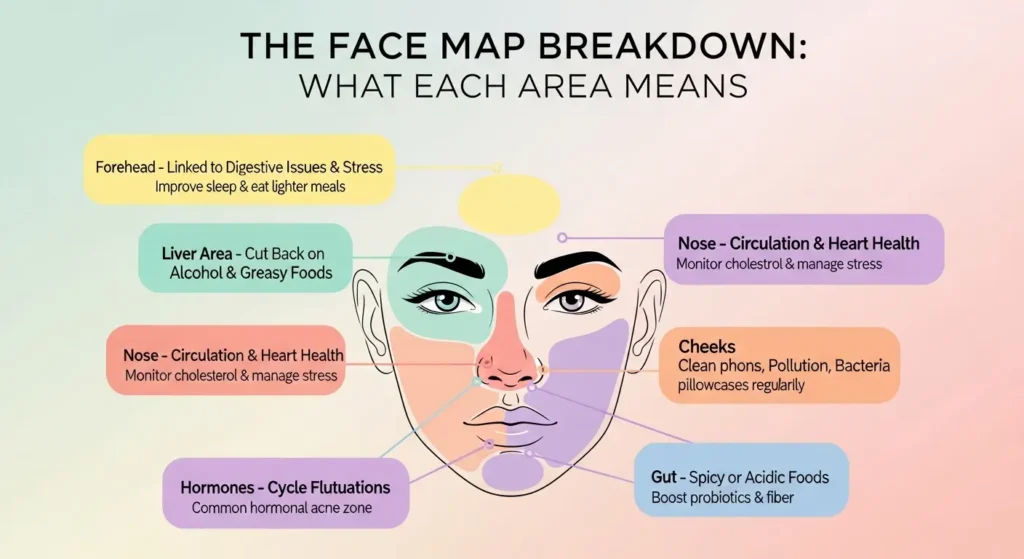
Let’s explore the different zones of the face map. While interpretations can vary slightly between traditions, these are the most commonly accepted connections.
| Face Area | Possible Cause | What It Might Indicate |
|---|---|---|
| Forehead | Digestive issues, high stress, poor sleep. | Your body may be struggling to break down certain foods, or your sleep schedule needs attention. Consider lighter meals and a calming bedtime routine. |
| Between the Eyebrows | Liver overload, diet high in processed foods or alcohol. | Your liver, your body’s main detox organ, might be working overtime. Cutting back on alcohol and greasy foods could help. |
| Nose | Poor circulation, potential blood pressure or heart issues. | This area is linked to the circulatory system. Monitor cholesterol, reduce stress, and focus on heart-healthy fats. |
| Cheeks | Respiratory system, pollution, bacteria from phones or pillowcases. | Your lungs may be affected by air quality. Also, be mindful of keeping your phone screen and pillowcases clean. |
| Chin & Jawline | Hormonal imbalance, menstrual cycle fluctuations. | This is the classic “hormonal acne” zone. Breakouts here often sync up with your cycle due to shifts in estrogen and testosterone. |
| Around the Mouth | Gut imbalance, diet high in spicy or acidic foods. | This area is connected to your digestive tract, particularly your stomach and intestines. Increasing probiotics and fiber may help. |
What Your Skin Might Be Saying
Beyond just the location, the type of skin issue you’re experiencing can also offer clues.
Acne and Breakouts
The location of your acne is a key piece of the face mapping puzzle.
- Chin and Jawline Acne: This is almost always linked to a hormonal imbalance. It often appears as deep, cystic pimples that flare up cyclically.
- Forehead Breakouts: These are frequently tied to stress and your digestive system. If you’re eating a lot of processed foods or not getting enough sleep, it might show up here.
- Cheek Acne: This can be related to your respiratory system. If you live in a polluted area or are a smoker, you might see breakouts here. More commonly, it’s caused by external factors like a dirty phone screen, pillowcase, or touching your face.
Redness or Flushing
Persistent redness or flushing, especially on the nose and cheeks, can be a sign of inflammation in the body. It might be triggered by spicy foods, alcohol, stress, or an underlying sensitivity. It could also be a sign of a skin condition like rosacea, which is influenced by both internal and external factors.
Dryness or Dullness
If your skin feels constantly dry, tight, or looks dull, it could be a simple sign of dehydration. Are you drinking enough water? It could also point to a lack of healthy fats in your diet, which are essential for maintaining a strong skin barrier and keeping your skin moisturized from within.
How to Respond to What You See
The beauty of face mapping is that it gives you actionable insights. Once you have a clue about the potential cause, you can make gentle, supportive changes.
For Stress-Related Issues (Forehead)
- Practice mindfulness: Try deep breathing exercises for a few minutes each day to calm your nervous system.
- Prioritize sleep: Aim for 7-9 hours of quality sleep per night. Create a relaxing bedtime routine to help you wind down.
- Journal: Writing down your worries can be a powerful way to release stress before bed.
For Hormone-Related Acne (Chin & Jawline)
- Track your cycle: Notice when your breakouts appear. This can help you anticipate them and adjust your routine.
- Balance your diet: Reduce your intake of sugar and dairy, which can be inflammatory and affect hormones.
- Consider seed cycling: Some women find that rotating seeds like flax, pumpkin, sesame, and sunflower throughout their cycle helps to naturally balance hormones.
For Digestive Issues (Forehead, Around Mouth)
- Increase your fiber intake: Eat more fruits, vegetables, and whole grains to support regular digestion and help eliminate toxins.
- Stay hydrated: Drink plenty of water throughout the day to keep things moving.
- Add probiotics: Incorporate fermented foods like yogurt, kefir, or kimchi to support a healthy gut microbiome.
For Liver Overload (Between Eyebrows)
- Reduce alcohol and processed foods: Give your liver a break from working so hard.
- Start your day with lemon water: A glass of warm water with lemon can help stimulate your liver’s natural detoxification processes.
- Eat liver-supportive foods: Leafy greens, beets, and turmeric can all help support liver health.
When to See a Dermatologist
While face mapping is a fantastic guide for holistic wellness, it is not a substitute for professional medical advice. You should see a dermatologist or doctor if:
- You have persistent, painful cystic acne.
- Your skin issues are not responding to lifestyle changes.
- You have a rash, severe redness, or a suspicious mole.
- Your skin problems are causing you significant emotional distress.
A professional can give you an accurate diagnosis and recommend targeted treatments, whether it’s a prescription topical, a medication, or further testing to look into a potential hormonal imbalance.
Conclusion
Your skin is much more than just a surface; it’s a messenger. It’s constantly communicating with you, offering insights into your overall well-being. Face mapping is a beautiful and empowering way to learn how to listen to these messages. Instead of seeing a breakout as a frustrating flaw, you can view it as a helpful clue—a gentle nudge from your body asking for a little more support.
By paying attention to the patterns on your face and making small, thoughtful adjustments to your lifestyle, you can not only improve your skin but also foster a deeper, more connected relationship with your whole self.
FAQs About Face Mapping
Is face mapping scientifically proven?
Modern science has not formally proven the direct link between specific facial zones and internal organs as described in Traditional Chinese Medicine. However, science does confirm that factors like hormones, stress, and diet have a major impact on skin health, which supports the core principles of face mapping.
Can face mapping really detect health problems?
Face mapping cannot diagnose a health problem or a disease. Instead, it should be viewed as a tool that provides clues or hints about potential internal imbalances. It helps you pay closer attention to your body’s signals.
How accurate is face mapping for acne?
It can be quite insightful, especially for hormonal acne. The connection between breakouts on the chin and jawline and the menstrual cycle is well-documented. For other areas, it serves as a good starting point for investigating lifestyle factors.
Does diet affect face mapping results?
Yes, absolutely. Your diet is one of the biggest factors. For example, if you eat a lot of greasy food and notice breakouts between your eyebrows, face mapping suggests this is linked to your liver, which is working hard to process those fats.
Should I change my skincare routine based on face mapping?
While you can adjust your lifestyle based on face mapping, you should also choose skincare products that address the symptom you are seeing. For example, if you have hormonal acne on your chin, you would still use products with ingredients like salicylic acid or benzoyl peroxide on that area, while also working on balancing your hormones internally.
Disclaimer
The information on HealthHintz is provided for educational and informational purposes only and should not be considered medical advice. Always consult a qualified healthcare professional before making any medical or health-related decisions, starting a new treatment, or changing your existing health plan.