Follicular Phase Symptoms: Signs of Hormonal Shift
After your period ends, you might notice a subtle but welcome change. Your mood starts to lift, your energy slowly returns, and maybe your skin even begins to glow again. This isn’t just a coincidence; it’s your body entering a new chapter of your monthly cycle. These positive changes are often the first follicular phase symptoms, signaling a powerful hormonal reset.
This phase is the first half of your menstrual cycle, and it’s a time of renewal and preparation. Understanding what happens in your body during this time can empower you to work with your hormones, not against them. In this guide, we’ll explore the key signs of a hormonal shift during the follicular phase, what they mean, and how you can feel your absolute best.
Table of Contents
What Is the Follicular Phase?
The follicular phase is the first part of your menstrual cycle. It starts on the very first day of your period (Day 1 of your cycle) and ends when you ovulate. On average, this phase lasts about 14 days, but it’s important to remember that every woman’s cycle is unique, and the length can vary from person to person and cycle to cycle.
Think of your menstrual cycle in two main halves. The follicular phase is the first half, where your body is building up and preparing for ovulation. The second half, called the luteal phase, happens after ovulation and prepares your body for a possible pregnancy.
Here is a simple look at the main menstrual cycle phases:
| Phase | Typical Time Frame | Main Hormones | What Happens |
|---|---|---|---|
| Follicular Phase | Day 1 to around Day 14 | Estrogen ↑, FSH ↑ | Follicles mature in the ovaries; energy and mood rise. |
| Ovulation | Around Day 14 | Luteinizing Hormone (LH) peaks | A mature egg is released from an ovary. |
| Luteal Phase | Around Day 15 to Day 28 | Progesterone ↑ | The body prepares the uterus for a possible pregnancy. |
The Hormonal Shift During the Follicular Phase
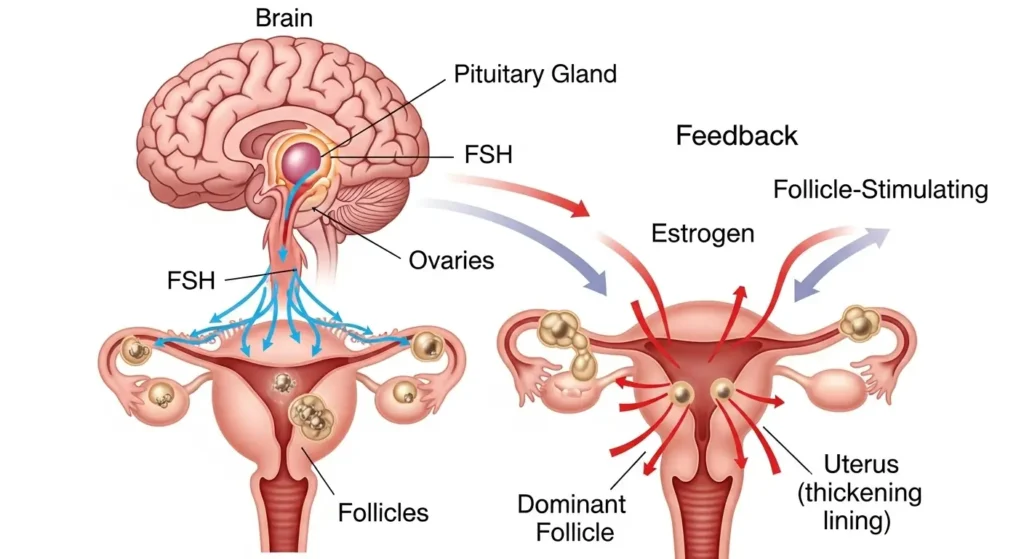
The follicular phase is all about growth and preparation, driven by a beautiful dance between your brain and your ovaries. Here’s what’s happening with your female hormones:
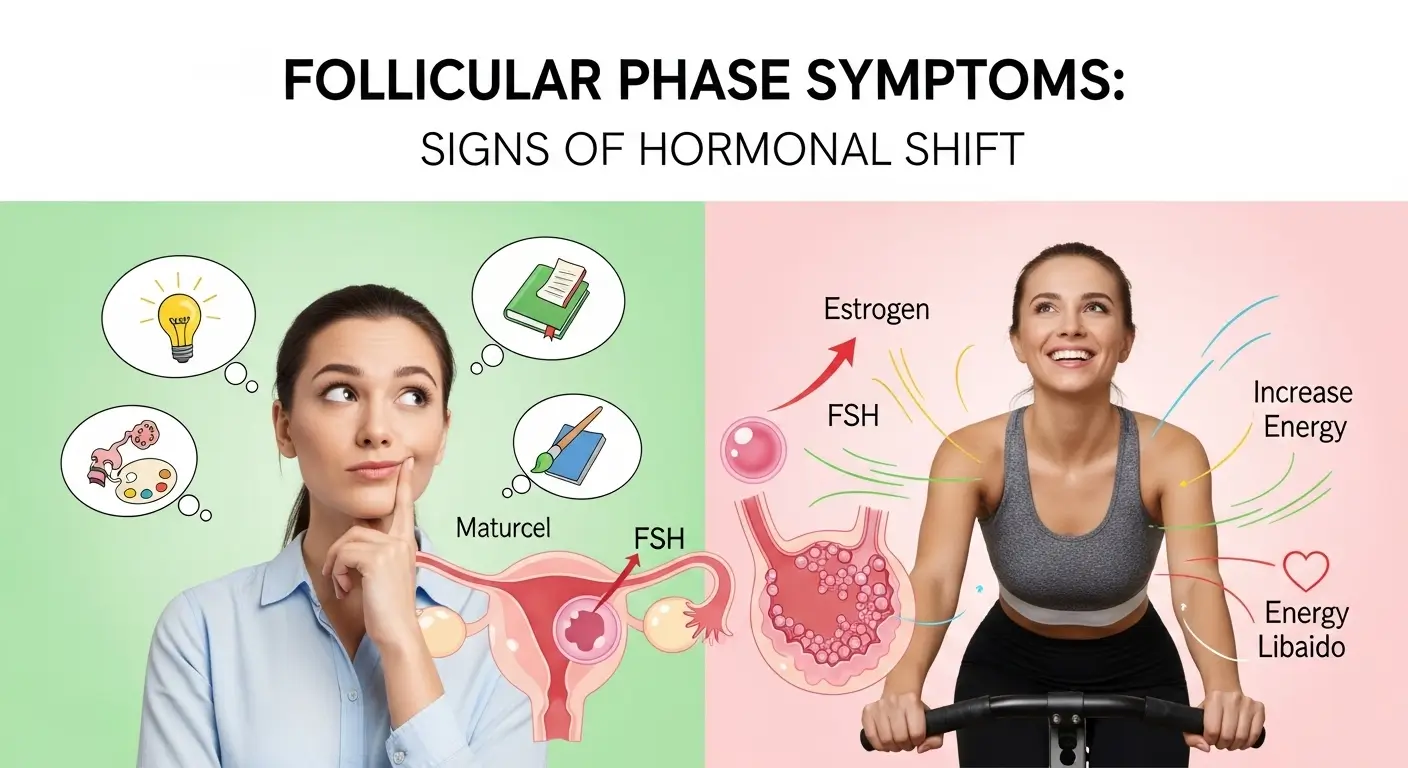
- Your brain sends a signal. Your brain releases a hormone called Follicle-Stimulating Hormone (FSH). As its name suggests, FSH travels to your ovaries and tells them to start preparing a few small sacs, called follicles. Each follicle contains an immature egg.
- Follicles start to grow. Several follicles will begin to mature, but usually, only one will become the dominant one that will eventually release an egg.
- Estrogen begins to rise. As these follicles grow, they start producing another key hormone: estrogen. The estrogen rise is what causes most of the positive follicular phase symptoms. This hormone works to thicken the lining of your uterus, creating a welcoming environment for a potential pregnancy later on.
- Preparation for ovulation. This steady increase in estrogen sends signals back to the brain, preparing it for the next big event: ovulation.
This powerful hormonal shift is designed to get your body ready for ovulation preparation, but it also has a wonderful effect on your mood, energy, and overall sense of well-being.
Common Follicular Phase Symptoms
As your estrogen levels climb, you’ll likely start to feel some noticeable changes. These symptoms are your body’s way of telling you it’s entering a phase of growth and vitality.
Physical Changes
After the fatigue of your period, the physical shifts during the follicular phase can feel like a breath of fresh air.
- Rising energy and motivation: The estrogen rise acts as a natural energy booster. You may find it easier to wake up in the morning and feel more motivated to tackle your to-do list.
- Clearer, healthier-looking skin: Estrogen helps boost collagen production and skin hydration, which can lead to that “post-period glow.” Many women find their skin is at its best during this phase.
- Better workouts and stamina: With higher energy levels during the follicular phase, your body can often handle more intense exercise. You might feel stronger and have more endurance during cardio or strength training.
- Possible light cramping: Some women experience a dull ache or light cramping on one side of their lower abdomen as follicles grow and stretch the ovary.
- Reduced bloating: As your period ends and progesterone levels drop, you’ll likely notice a significant decrease in bloating and water retention.
Emotional and Mental Shifts
The hormonal changes don’t just affect your body; they have a powerful impact on your brain and mood.
- Improved follicular phase mood: Rising estrogen levels are linked to an increase in serotonin, the “feel-good” brain chemical. This often leads to a more positive, optimistic, and stable mood.
- More creativity and mental clarity: Many women report feeling sharper, more focused, and more creative during this time. It can be a great phase for brainstorming, problem-solving, and learning new things.
- Greater social confidence: You might feel more outgoing, sociable, and confident. This is your body’s natural way of encouraging you to connect with others as you approach your fertile window.
- Feeling “refreshed” after period fatigue: The transition from the low-hormone phase of your period to the rising hormones of the follicular phase often feels like a mental and emotional reset.
Hormonal and Biological Signs
Your body also gives you physical clues that it’s preparing for ovulation.
- Increase in cervical fluid: As you get closer to ovulation, you’ll notice your cervical fluid becomes clearer, more watery, and stretchy—often compared to the consistency of raw egg whites. This is a key sign of increasing fertility.
- Slight changes in body temperature: Your basal body temperature (your temperature at rest) is typically lower during the follicular phase and will rise after ovulation.
- Higher libido: Estrogen is linked to an increase in sex drive. It’s your body’s natural way of nudging you toward conception during your most fertile time.
Supporting Your Body During the Follicular Phase
Knowing you’re in a phase of renewal, you can tailor your diet and lifestyle to support your body’s needs. This is a time to focus on nourishment, movement, and harnessing your newfound energy.
Nutrition Tips (Follicular Phase Diet)
Your diet can help support healthy hormone production and replenish nutrients lost during your period.
| Goal | Helpful Foods | Why They Help |
|---|---|---|
| Support Estrogen | Flaxseeds, organic soy (tofu, edamame), leafy greens, broccoli. | These foods contain phytoestrogens and nutrients that help your body produce and metabolize estrogen in a healthy way. |
| Boost Energy | Whole grains (oats, quinoa), fruits, nuts, seeds. | These provide complex carbohydrates and healthy fats for steady, sustained energy, preventing blood sugar crashes. |
| Rebuild Iron | Lentils, beans, spinach, red meat, eggs, fortified cereals. | After losing blood during your period, it’s important to replenish your iron stores to prevent fatigue and anemia. |
Lifestyle & Self-Care (Follicular Phase Care)
Lean into the energy of this phase with supportive lifestyle habits.
- Exercise: Your body is primed for more intense activity. This is a great time for cardio, strength training, HIIT workouts, or trying a new fitness class. Movement can also help support a positive follicular phase mood.
- Sleep: Hormonal balance relies on good sleep. Aim for a consistent sleep schedule to support your body’s natural rhythm and optimize your energy levels during the follicular phase.
- Mindset: Take advantage of your increased mental clarity. This is an ideal time to set goals, start a new project, plan your month, or engage in creative hobbies. Your brain is ready to learn and create.
When Symptoms Feel Off
While the follicular phase is typically a positive time for many, it’s important to remember that everyone is different. Not everyone will feel a huge surge of energy. If your cycle is irregular, you might experience different symptoms.
Pay attention to these potential signs of a hormonal shift that might indicate an imbalance:
- Very short or long follicular phases: A phase that is consistently shorter than 10 days or longer than 21 days could be a sign of a hormonal issue.
- No signs of ovulation: If you don’t notice changes in cervical fluid or other ovulation signs, it could indicate an anovulatory cycle (a cycle without ovulation).
- Irregular bleeding or spotting: While some light spotting can be normal, persistent spotting during this phase should be discussed with a doctor.
- Low energy throughout the cycle: If you never experience that post-period recovery energy boost, it could be a sign of an underlying issue like a thyroid condition or nutrient deficiency.
If you feel like something is off with your cycle, tracking your symptoms in an app or a journal can be very helpful. Share this information with your healthcare provider to get the right support.
FAQs About the Follicular Phase
How long does the follicular phase last?
The follicular phase typically lasts between 10 to 14 days, but it can be shorter or longer depending on the individual. It’s the most variable part of the menstrual cycle phases.
What hormones increase during the follicular phase?
The main female hormones that increase are follicle-stimulating hormone (FSH) and estrogen. FSH stimulates the ovaries to prepare an egg, and the growing follicles produce estrogen.
Why do I feel happier or more energetic after my period?
This positive shift in mood and energy is one of the classic follicular phase symptoms. It’s primarily caused by the estrogen rise, which boosts brain chemicals like serotonin and gives you a natural lift.
Can I track my follicular phase?
Yes! You can track it by counting the days from the start of your period. You can also monitor follicular phase symptoms like increased energy, improved mood, and changes in your cervical fluid. Many period-tracking apps can help with this.
What if my follicular phase feels longer or shorter than normal?
A slightly shorter or longer phase from time to time is usually normal. However, if your follicular phase is consistently very short (less than 10 days) or very long (more than 21 days), it may be a sign of a hormone imbalance and is worth discussing with your doctor.
Conclusion
The follicular phase is your body’s natural reset button. It’s a time when your hormones are working to build you up, restore your energy, and prepare your body for the possibility of new life. Far from being just a lead-up to your period, it’s a dynamic and powerful phase in its own right.
By tuning into your body’s signals—the rising energy, the clearer mind, the glowing skin—you can learn to embrace this time of renewal. Supporting your body with the right nutrition, movement, and self-care can help you make the most of this vibrant phase. Listen to your body, honor its rhythms, and let your hormones work for you.
Disclaimer
The information on HealthHintz is provided for educational and informational purposes only and should not be considered medical advice. Always consult a qualified healthcare professional before making any medical or health-related decisions, starting a new treatment, or changing your existing health plan.