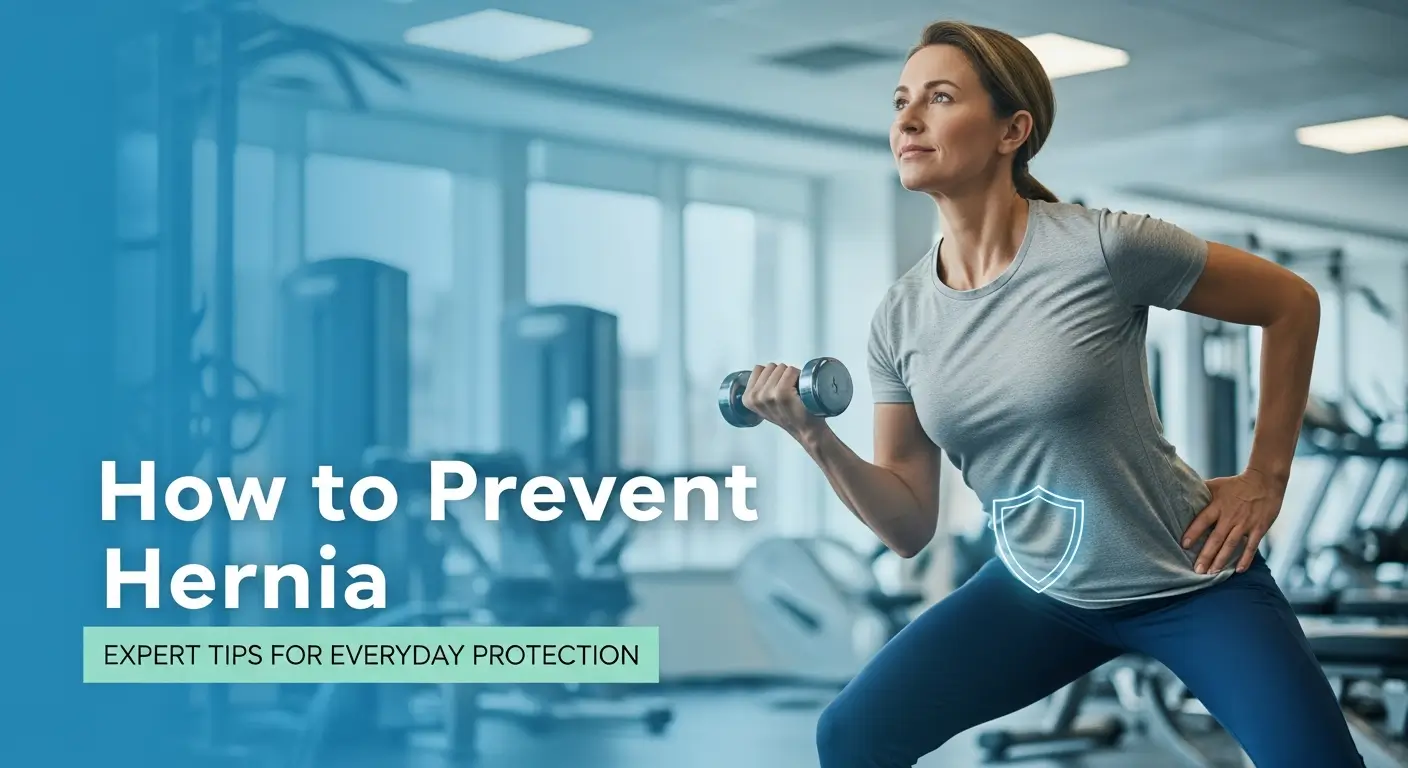
How to Prevent Hernia: Expert Tips for Everyday Protection
Have you ever lifted something heavy and felt a strange twinge or a sudden pain in your belly or groin? Or perhaps you noticed a small, unexplained bulge that appears when you cough or strain. These moments can be unsettling, leaving you to wonder if you’ve pulled a muscle or if it’s something more serious. Often, this could be the first sign of a hernia—a common condition where an internal part of your body pushes through a weak spot in your muscle or tissue.
While hernias can happen to anyone, at any age, the good news is that many of them are preventable. You don’t have to be a weightlifter to be at risk; everyday activities and habits can contribute to their development. Understanding how to prevent hernia formation is about learning to protect your body and build strength from the inside out. Let’s explore what causes hernias, who’s at risk, and the simple, effective steps you can take to keep your body strong, safe, and hernia-free.
Table of Contents
What Is a Hernia?
A hernia occurs when an organ, intestine, or fatty tissue pushes through a weak spot or tear in the surrounding muscle or connective tissue (fascia) that is supposed to hold it in place. Imagine an inner tube pushing through a weak spot in a tire—that’s similar to what happens in your body. This bulge can be painless at first, but it can become uncomfortable or even painful over time.
While hernias can occur in many parts of the body, they are most common in the abdominal wall. The most common types include:
- Inguinal Hernia: This is the most frequent type, accounting for about 75% of all abdominal hernias. It occurs when part of the intestine or bladder pushes through the abdominal wall into the inguinal canal in the groin. Inguinal hernias are far more common in men than in women.
- Umbilical Hernia: This happens when part of the intestine pushes through the abdominal wall near the belly button. It’s common in newborns but can also affect adults, especially women who have had multiple pregnancies or are overweight.
- Hiatal Hernia: This type is different because it’s internal. It occurs when the upper part of your stomach bulges up through an opening in your diaphragm (the large muscle separating your abdomen and chest) and into your chest cavity. It can cause heartburn and acid reflux.
- Incisional Hernia: This can occur after you’ve had abdominal surgery. The intestine may push through the weakened tissue of the incision scar.
- Femoral Hernia: This type occurs when tissue bulges through a weak spot in the groin near the upper thigh. Femoral hernias are less common but are more frequently seen in women, especially those who are pregnant or obese.
What Causes a Hernia?
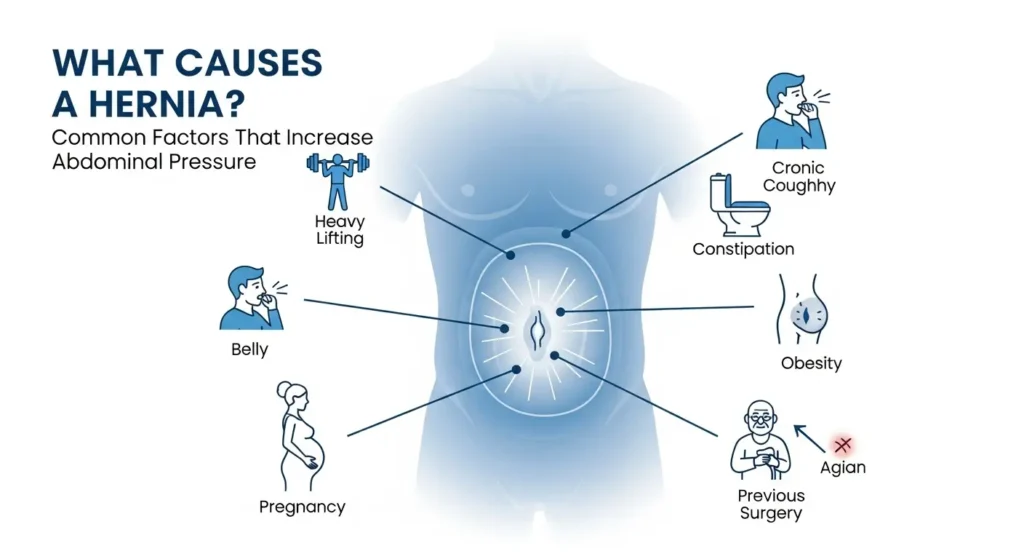
A hernia almost always develops from a combination of two factors: increased pressure inside the abdomen and a pre-existing weak spot in the muscle or tissue wall. Anything that puts strain on your abdomen can contribute to a hernia if there’s a weak point for tissue to push through.
Some of the most common causes and contributors include:
- Heavy Lifting: Lifting objects that are too heavy, or using improper form, dramatically increases intra-abdominal pressure.
- Chronic Coughing or Sneezing: Persistent coughing from smoking, bronchitis, asthma, or allergies puts repeated, forceful strain on the abdominal wall.
- Straining During Bowel Movements or Urination: Chronic constipation or difficulty urinating forces you to bear down, which raises pressure in your abdomen.
- Obesity: Excess body weight, especially around the belly, puts constant pressure on the abdominal muscles, weakening them over time.
- Pregnancy: The growing uterus increases pressure on the abdominal wall, which is why pregnant women are more susceptible to umbilical or femoral hernias.
- Aging: As we get older, our muscles naturally lose some of their strength and elasticity, making them more prone to weakness.
- Previous Abdominal Surgery: An incision site from a past surgery is a naturally weaker point in the abdominal wall.
Early Signs of a Hernia
Spotting a hernia early is key to managing it effectively and preventing serious complications. If you notice any of these signs, don’t ignore them.
- A visible bulge or lump in the groin, abdomen, or around the belly button. The lump may disappear when you lie down and reappear when you stand up, cough, or strain.
- Pain or discomfort in the area, especially when bending over, coughing, or lifting something heavy.
- A heavy, dragging, or full sensation in your abdomen or groin.
- A burning or aching feeling at the site of the bulge.
- In the case of a hiatal hernia, you might experience heartburn, indigestion, or difficulty swallowing.
In some severe cases, a hernia can become “trapped” (incarcerated) or “strangulated,” meaning the blood supply to the trapped tissue is cut off. This is a medical emergency. Signs of a strangulated hernia include sudden, severe pain, nausea, vomiting, and the inability to pass gas or have a bowel movement.
How to Prevent a Hernia: Expert Tips
Prevention is all about reducing abdominal pressure and strengthening your supporting muscles. Here are ten expert tips on how to prevent hernia formation in your daily life.
1. Lift Objects Safely
Improper lifting is one of the leading causes of hernias. Always protect your back and abdomen.
- Bend at your knees, not your waist. Keep your back straight and lift with your powerful leg muscles.
- Keep the object close to your body. Holding a heavy item far from your center of gravity increases the strain.
- Tighten your core. Engage your abdominal muscles before you lift to create a natural “corset” of support.
- Exhale as you lift. Holding your breath while lifting (the Valsalva maneuver) spikes intra-abdominal pressure. Exhaling during the effort releases that pressure.
- Know your limits. Avoid lifting anything that feels too heavy. Ask for help or use tools like a dolly or wheelbarrow.
2. Strengthen Your Core Muscles
A strong core acts like a protective shield for your abdominal wall. However, you need to choose the right exercises.
- Focus on deep core muscles: Exercises like planks, pelvic tilts, and the bridge pose strengthen the transverse abdominis, which wraps around your midsection like a corset.
- Try gentle movements: Exercises like leg raises (while keeping your lower back pressed to the floor) and the bird-dog pose are excellent for building stability.
- Be cautious with sit-ups and crunches. If you already have a weakness in your abdominal wall, these exercises can actually increase pressure and potentially make things worse. Focus on stabilization exercises instead.
3. Maintain a Healthy Weight
Excess body weight, particularly around the abdomen, puts constant, day-to-day pressure on your abdominal wall. Maintaining a healthy weight is one of the most effective long-term strategies for hernia prevention.
- Eat balanced meals. Focus on a diet rich in whole foods.
- Stay active daily. Aim for at least 30 minutes of moderate activity, like walking, swimming, or yoga, most days of the week.
- Limit processed foods and sugar. These can contribute to weight gain and inflammation.
| Food Group | Examples | How It Helps |
|---|---|---|
| Lean Proteins | Chicken, fish, tofu, eggs, beans | Build and maintain strong muscle tissue. |
| Fiber-Rich Foods | Oats, vegetables, fruits, whole grains | Prevent constipation and straining. |
| Healthy Fats | Olive oil, nuts, avocado, seeds | Support overall tissue health and reduce inflammation. |
| Hydrating Foods | Watermelon, cucumber, celery | Keep your digestion smooth and your tissues hydrated. |
4. Avoid Straining During Bowel Movements
Chronic constipation is a major, yet often overlooked, risk factor for hernias.
- Eat more fiber. Aim for 25-35 grams of fiber per day from fruits, vegetables, and whole grains.
- Drink plenty of water. Water helps soften stool and makes it easier to pass.
- Exercise regularly. Physical activity stimulates your digestive system.
- Don’t ignore the urge. Holding it in can make constipation worse.
- Use proper toilet posture. Placing your feet on a small footstool to raise your knees can help relax the muscles and make bowel movements easier.
5. Quit Smoking
Smoking is detrimental to your tissue health. The nicotine and other chemicals in cigarettes can weaken connective tissue and impair your body’s ability to produce collagen, making your muscles and fascia less resilient. On top of that, the chronic “smoker’s cough” puts repeated, forceful strain on your abdominal wall.
6. Manage Chronic Coughs and Allergies
Anything that causes you to cough or sneeze forcefully and repeatedly can increase your hernia risk.
- Treat underlying conditions: Work with your doctor to manage conditions like chronic bronchitis, asthma, or seasonal allergies.
- Address acid reflux (GERD): Acid reflux can cause a chronic cough, especially at night, which can strain your abdominal and chest muscles, increasing the risk for hiatal hernias.
7. Be Cautious After Surgery
An incision from a previous abdominal surgery creates a weak spot. To reduce your risk of an incisional hernia:
- Follow your doctor’s instructions carefully. This includes all restrictions on lifting, activity, and returning to work.
- Avoid heavy lifting for at least 6–8 weeks, or as long as your doctor recommends.
- Support the area. When you cough, sneeze, or get up from a sitting position, gently press a pillow against your incision to provide support.
8. Eat Foods That Support Muscle and Tissue Strength
Your diet plays a key role in building and maintaining strong connective tissues.
- Protein: Essential for tissue repair. Include fish, eggs, lentils, and lean meats in your diet.
- Vitamin C: Crucial for collagen production. Find it in citrus fruits, bell peppers, strawberries, and broccoli.
- Zinc: Promotes wound healing and tissue growth. Good sources include pumpkin seeds, chickpeas, and nuts.
- Omega-3s: Help reduce inflammation. Find them in fatty fish like salmon, walnuts, and flaxseeds.
9. Practice Good Posture
Slouching or sitting hunched over can put uneven pressure on your abdominal muscles. Try to sit and stand up straight, with your shoulders back and your core gently engaged. This helps distribute pressure evenly and reduces strain.
10. Stay Physically Active (But Don’t Overdo It)
Gentle, consistent exercise is fantastic for hernia prevention. It strengthens muscles, helps with weight management, and promotes healthy digestion. Good choices include walking, swimming, yoga, and light strength training with proper form. Avoid jumping into sudden, high-intensity workouts or heavy lifting without proper training, as this can increase your risk.
When to See a Doctor
You should see a doctor if you notice a bulge or have persistent pain. However, you should seek immediate medical attention if you experience:
- A painful lump that is firm and doesn’t go away when you lie down.
- Nausea, vomiting, and severe belly pain.
- Redness, tenderness, or discoloration around the bulge.
- Inability to pass gas or have a bowel movement.
These are signs that your hernia may be trapped (incarcerated) or that the blood supply has been cut off (strangulated), which requires emergency surgery.
FAQs: How to Prevent a Hernia
Can exercise help prevent a hernia?
Yes, absolutely! Regular, gentle exercise is one of the best ways to prevent hernia development. It helps you maintain a healthy weight and builds strong core muscles, both of which reduce your risk. Just be sure to use proper form and avoid lifting weights that are too heavy for you.
Can wearing a hernia belt prevent it?
Not really. Hernia belts or binders are designed to provide support and manage symptoms if you already have a hernia. They do not prevent a hernia from forming in the first place.
Can hernias go away on their own?
No, adult hernias do not heal or go away by themselves. Surgery is the only way to fully repair a hernia. This is why prevention is so important.
Can being overweight cause a hernia?
Yes, being overweight or obese is a major risk factor. The excess weight puts constant pressure on your abdominal wall, weakening it over time and making it more likely for a hernia to develop.
Can I prevent a hernia after surgery?
You can significantly reduce your risk. The most important thing is to strictly follow your doctor’s post-operative instructions, especially lifting restrictions. Eating a healthy diet rich in protein and vitamin C and avoiding constipation during your recovery will also help your tissues heal strong.
Conclusion
Hernias can be a painful and disruptive part of life, but they don’t have to be an inevitable one. By understanding what causes them, you can take simple, powerful steps every day to protect your body. Maintaining a healthy weight, lifting objects safely, strengthening your core, and managing other health issues like chronic coughs or constipation can dramatically lower your risk.
Prevention is always easier than treatment. By making these healthy habits a part of your life, you are not just working on how to prevent hernia formation—you are investing in your long-term strength, health, and well-being.
Disclaimer
The information on HealthHintz is provided for educational and informational purposes only and should not be considered medical advice. Always consult a qualified healthcare professional before making any medical or health-related decisions, starting a new treatment, or changing your existing health plan.