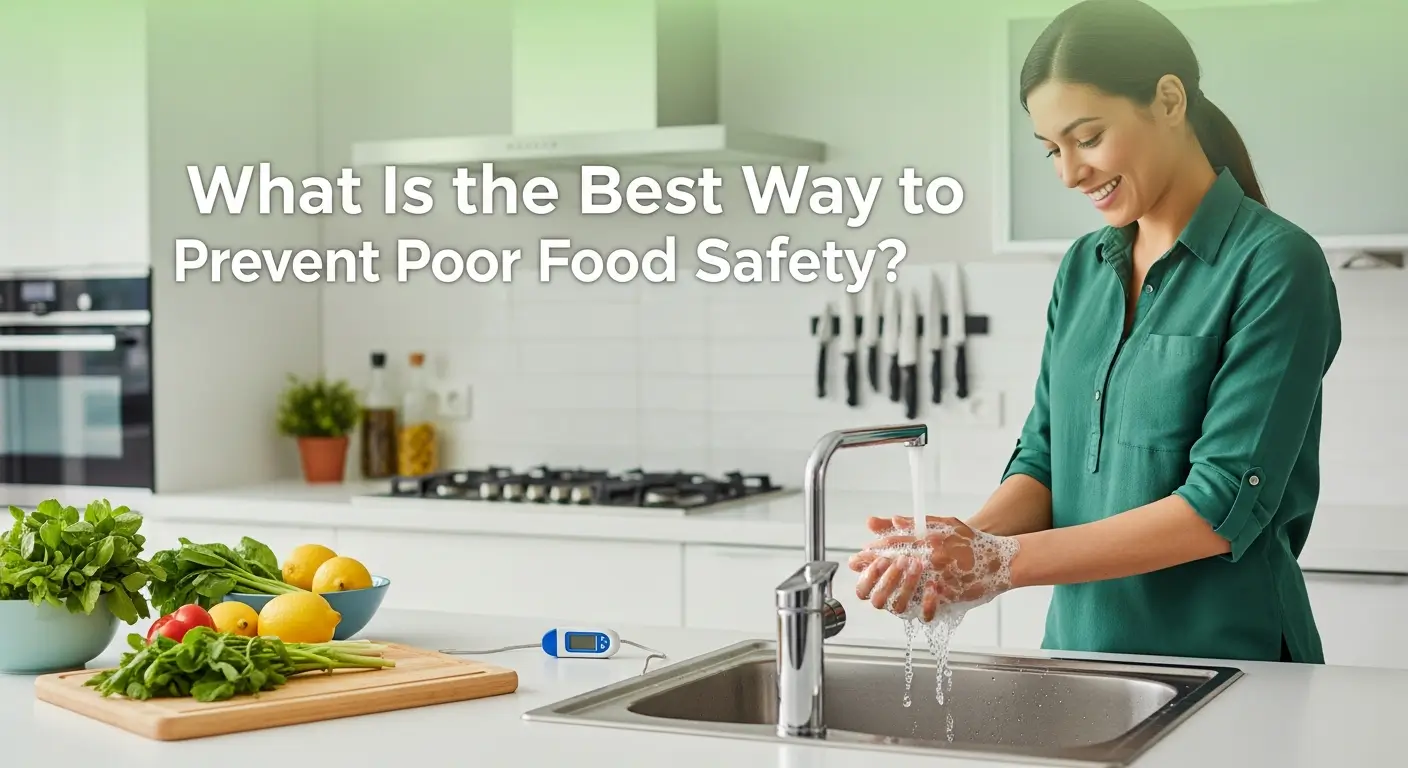
What Is the Best Way to Prevent Poor Food Safety?
Food poisoning can happen to anyone — at home, in restaurants, or even from foods we think are completely safe. One moment you’re feeling fine, and the next, you’re doubled over with stomach cramps and nausea, wondering what went wrong. The good news? Most cases of foodborne illness are completely preventable. With a few smart habits and careful handling, you can protect yourself and your loved ones from most food safety risks.
This article will guide you through everything you need to know about what is the best way to prevent poor food safety — from understanding what causes food contamination to following easy, practical steps that keep your meals safe and healthy.
Table of Contents
What Is Poor Food Safety?
“Poor food safety” simply means not handling, cooking, or storing food properly — which allows harmful bacteria or viruses to grow. These microorganisms are invisible but can cause serious health problems when they get into your body.
Some examples of poor food safety include:
- Leaving meat or fish out on the counter too long.
- Cooking chicken that’s still pink inside.
- Cutting raw chicken and vegetables on the same board.
- Forgetting to wash your hands before preparing food.
The biggest risks that come from poor food safety are bacteria like Salmonella, E. coli, and Listeria, as well as viruses such as Norovirus and Hepatitis A. These can cause food poisoning, which affects millions of people worldwide each year. Thankfully, most of these infections can be prevented with good hygiene and careful food handling.
What Causes Poor Food Safety?
Food safety problems often come down to what happens in the kitchen — both at home and in restaurants. Here are some of the most common causes of unsafe food:
- Improper food storage (like unrefrigerated leftovers).
- Not washing hands before handling food.
- Cooking meat or poultry to unsafe temperatures.
- Using dirty surfaces, utensils, or kitchen cloths.
- Cross-contamination between raw and cooked foods.
- Keeping food at unsafe temperatures for too long.
- Eating food past its expiration date or when it smells odd.
It doesn’t take much for a small mistake to lead to a big problem — but the prevention steps are simple once you know them.
What Is the Best Way to Prevent Poor Food Safety?
When it comes to preventing foodborne illness, the key is to keep bacteria from entering or growing in your food. Here are the best ways to stay safe in your kitchen and beyond.
Keep Your Hands Clean
This is the first — and most important — rule of food safety. Hands carry bacteria from surfaces, pets, and other parts of your body into your food.
- Wash your hands with warm water and soap for at least 20 seconds before and after handling food.
- Pay special attention after touching raw meat, eggs, or seafood.
- Dry your hands with a clean towel or paper towel.
- Use hand sanitizer only when soap and water are not available.
Avoid Cross-Contamination
Cross-contamination happens when bacteria from raw foods (especially meat and poultry) spread to ready-to-eat foods like salads or cooked meals.
- Use separate cutting boards for raw meat and vegetables.
- Clean all surfaces, knives, and utensils with hot, soapy water after use.
- Don’t reuse marinades used on raw meat unless you boil them first.
- Never place cooked food back on the same plate or tray that held raw food.
Cook Food to the Right Temperature
Proper cooking kills most harmful germs in food that can cause illness. Use a food thermometer to make sure food reaches a safe internal temperature before eating.
| Food Type | Safe Internal Temperature |
|---|---|
| Chicken / Poultry | 165°F (74°C) |
| Ground Meat (beef, pork, lamb, turkey) | 160°F (71°C) |
| Fish | 145°F (63°C) |
| Eggs | Cook until both yolks and whites are firm |
| Leftovers | 165°F (74°C) |
Tip: Reheat soups and sauces until they are boiling hot, and let casseroles or stews get steaming all the way through.
Store Food Safely
Most harmful bacteria grow rapidly between 40°F and 140°F — what food safety experts call “the danger zone.” Keeping foods out of this range is key.
- Refrigerate perishable foods within 2 hours, or within 1 hour if it’s hotter than 90°F (32°C).
- Set your fridge temperature to below 40°F (4°C) and your freezer to 0°F (-18°C) or lower.
- Don’t crowd your fridge — cold air needs space to circulate.
- Thaw frozen food in the fridge, not on the counter.
- Store cooked food in shallow containers to help it cool quickly.
Keep the Kitchen Clean
Your kitchen surfaces can easily collect germs from raw foods. Keeping them clean is essential.
- Wipe counters with hot, soapy water or a kitchen sanitizer.
- Wash sponges frequently or replace them every week.
- Clean cutting boards with hot water after each use.
- Disinfect handles, faucets, and refrigerator doors regularly.
Using paper towels for spills can prevent germs from spreading to reusable cloths.
Pay Attention to Expiration Dates
Always check labels before eating or cooking.
- Throw out spoiled or expired foods — especially dairy, meat, seafood, and eggs.
- If something smells or tastes off, play it safe and discard it.
- Transfer leftovers or dry goods to airtight containers to keep them fresh and free of pests.
Foods That Carry Higher Risk
Some foods are more likely to cause foodborne illness because they can harbor bacteria more easily. Here’s what to watch out for:
- Raw eggs: Can contain Salmonella; always cook eggs until firm.
- Raw fish or sushi: Must be from a trusted, high-quality source because it can harbor parasites or bacteria.
- Unpasteurized milk or juice: Lacks the heat treatment that kills germs, increasing the risk of infection.
- Deli meats and hot dogs: Can be contaminated with Listeria unless reheated until steaming hot.
- Raw sprouts (alfalfa, bean sprouts, etc.): Can contain harmful bacteria even before they sprout.
- Undercooked chicken or beef: Must reach safe internal temperatures to destroy pathogens.
Signs of Foodborne Illness
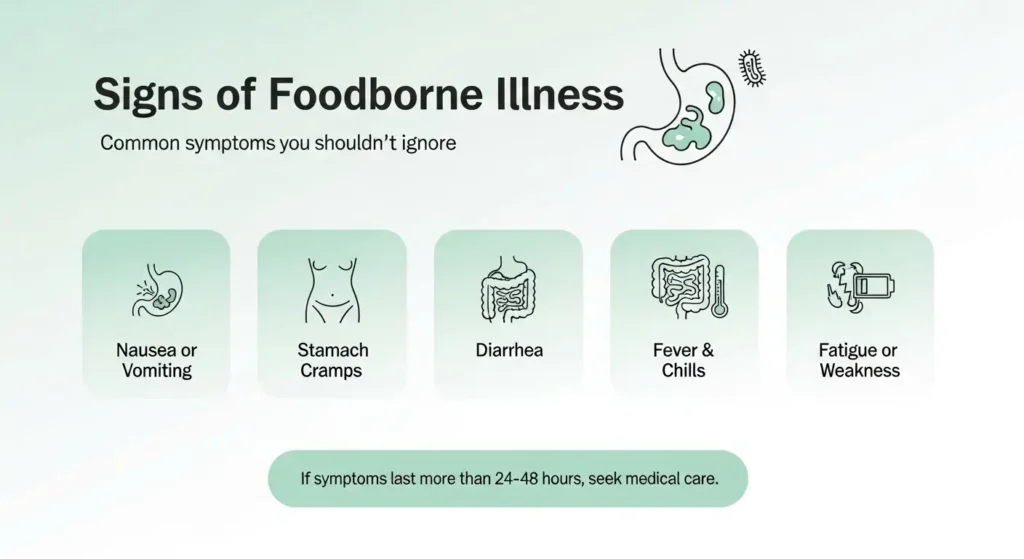
Sometimes even with care, foodborne illness can still happen. Knowing the symptoms can help you respond quickly.
Common symptoms include:
- Nausea or vomiting
- Stomach cramps or abdominal pain
- Diarrhea (sometimes with blood)
- Fever and chills
- Fatigue or weakness
These symptoms usually appear between a few hours and several days after eating contaminated food.
Seek medical attention immediately if you experience:
- Persistent vomiting or dehydration
- High fever (over 102°F or 39°C)
- Bloody stools
- Symptoms lasting more than 3 days
Some infections can become serious, especially for young children, older adults, pregnant women, and people with weakened immune systems.
Food Safety Tips for the Home
Preventing foodborne illness starts in your own kitchen. These small daily habits can make a big difference:
- Use a food thermometer for accuracy when cooking meat.
- Don’t thaw frozen food on the counter — use the fridge or cold water.
- Rinse fruits and vegetables under running water, even if you plan to peel them.
- Don’t taste food to check for spoilage. Spoiled food can make you sick even after a small bite.
- Keep pets off kitchen counters to prevent contamination.
Food Safety Tips for Eating Out
Even if you’re not the one cooking, you can still protect yourself when eating away from home.
- Check that the restaurant or food stall looks clean and well-maintained.
- Avoid foods that look raw, undercooked, or not served hot.
- Be careful with buffets — make sure hot foods are steamed and cold foods are on ice.
- Wash hands before and after eating, especially at public places.
- Avoid drinks with ice if you’re unsure about water quality (especially when traveling abroad).
Conclusion
Food safety isn’t just for restaurants — it starts with you, every time you handle food at home. Simple habits like washing your hands, keeping raw and cooked foods separate, cooking to safe temperatures, and refrigerating leftovers on time can make a world of difference.
By practicing these steps daily, you’ll not only prevent poor food safety but also build confidence that the meals you prepare are nourishing, delicious, and safe to enjoy. Remember: when you protect your food, you protect your health and your loved ones, too.
FAQs: How to Prevent Poor Food Safety
What is the #1 cause of poor food safety?
The most common cause is improper food handling, such as poor handwashing, cross-contamination, and not cooking food to a safe temperature. These mistakes let bacteria multiply and contaminate your food.
Does handwashing really prevent food poisoning?
Yes — it’s the simplest and most effective way to prevent poor food safety. Washing your hands removes bacteria, viruses, and dirt that could easily transfer to your food.
What temperature kills bacteria in food?
Most harmful bacteria are killed when food reaches 165°F (74°C) or higher. Use a food thermometer to check internal temperatures of meats and leftovers.
Can reheating food kill all bacteria?
Reheating can kill some kinds of bacteria — but not all toxins produced by bacteria. Always store food safely first, then reheat it thoroughly before eating.
How long can food safely sit out?
Perishable foods should not be left out for more than 2 hours (1 hour if it’s hot outside). After this time, bacteria can multiply quickly, even if the food looks okay.
What foods spoil the fastest?
Foods like fish, seafood, milk, cooked rice, eggs, and fresh berries spoil quickly. Always refrigerate them promptly and consume them within a few days.
Disclaimer
The information on HealthHintz is for educational purposes only and is not medical advice. Always consult a healthcare professional if you suspect foodborne illness or have health concerns related to food safety.