Skin Cancer on Breast vs Breast Cancer: Understanding the Key Differences
You noticed something unusual on your breast—a small spot that looks different from the rest of your skin. Maybe it’s darker than before, or it has an irregular edge. Your heart races. Is this breast cancer? Could it be something else? The fear that grips you in that moment is entirely understandable, but here’s something crucial to know: not every abnormality on your breast is breast cancer. Sometimes, what appears on the surface is actually skin cancer on breast tissue, and understanding the difference could help you get the right treatment faster.
This article will walk you through the key differences between skin cancer that develops on breast skin and breast cancer that originates in breast tissue. We’ll explore symptoms, risk factors, diagnosis methods, and treatment options so you can approach any concerns with knowledge and confidence.
Table of Contents
What Is Skin Cancer on Breast?
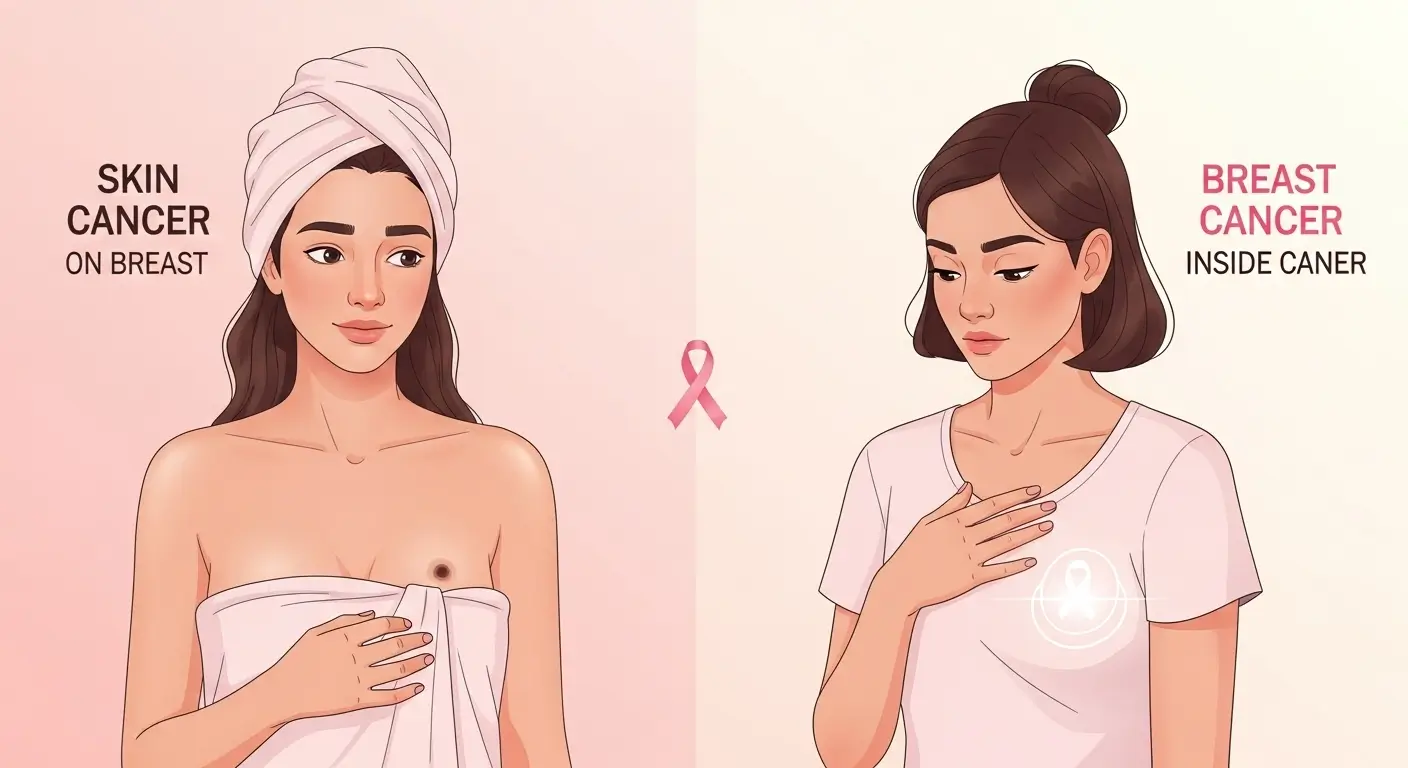
Skin cancer on breast refers to cancerous growths that develop in the skin cells covering the breast area. Just like skin cancer can appear anywhere on your body, it can also occur on breast skin. This type of cancer originates in the skin’s outer layers, not in the breast tissue beneath.
There are three main types of skin cancer that can appear on the breast:
Basal cell carcinoma is the most common form. It typically appears as a pearly or waxy bump, or as a flat, flesh-colored lesion. These grow slowly and rarely spread to other parts of the body.
Squamous cell carcinoma often looks like a firm, red nodule or a flat lesion with a scaly, crusted surface. While more aggressive than basal cell carcinoma, it’s still highly treatable when caught early.
Melanoma is the most serious type. It can develop in existing moles or appear as new dark spots with irregular borders, multiple colors, or asymmetrical shapes. Melanoma on breast skin requires immediate attention due to its potential to spread rapidly.
Warning Signs and Symptoms
According to dermatology experts, watch for these visual cues on your breast skin:
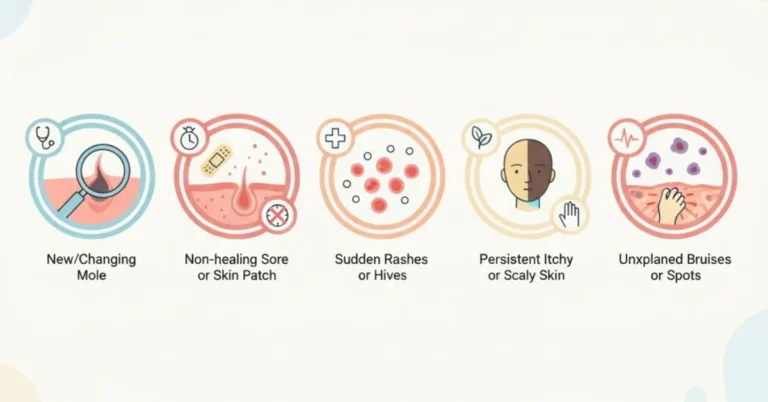
- New moles or growths that change in size, shape, or color
- Sores that don’t heal within a few weeks
- Rough, scaly patches that persist
- Spots with irregular, notched borders
- Areas with unusual color variations—browns, blacks, reds, whites, or blues
- Itching, tenderness, or bleeding in a specific spot
Risk Factors
Several factors increase your likelihood of developing skin cancer on breast:
- Prolonged sun exposure to the chest area (especially while sunbathing topless or wearing low-cut clothing)
- Fair skin with less protective melanin
- History of sunburns, particularly blistering burns
- Family history of skin cancer
- Age—risk increases as you get older
- Previous skin cancer diagnoses
How It’s Diagnosed
Dermatologists diagnose skin cancer on breast through visual examination and skin biopsy. During a biopsy, a small tissue sample is removed and examined under a microscope to identify cancerous cells and determine the cancer type.
What Is Breast Cancer?
Breast cancer develops in the cells of breast tissue—specifically in the milk ducts, lobules, or supporting connective tissue. This is an internal cancer that begins deep within the breast structure, not on the surface skin.
Common Symptoms
Breast cancer symptoms differ significantly from skin cancer signs:
- A lump or mass in the breast or underarm
- Changes in breast size or shape
- Nipple discharge (other than breast milk)
- Nipple inversion or changes in nipple appearance
- Skin dimpling or puckering on the breast
- Swelling, even without a distinct lump
- Breast pain in a specific area
Risk Factors
Research shows that breast cancer risk factors include:
- Hormonal influences, particularly estrogen exposure
- Genetic mutations (BRCA1 and BRCA2)
- Family history of breast cancer
- Age—most breast cancers occur in women over 50
- Dense breast tissue
- Reproductive history (early menstruation or late menopause)
- Lifestyle factors like alcohol consumption and obesity
Diagnostic Tools and Testing
Breast cancer diagnosis involves mammography, ultrasound, MRI, and tissue biopsy. These imaging techniques allow doctors to see inside breast tissue to identify abnormal growths, while biopsies confirm whether cells are cancerous.
Key Differences Between Skin Cancer on Breast and Breast Cancer
Comparison Table
| Feature | Skin Cancer on Breast | Breast Cancer |
|---|---|---|
| Origin | Skin cells on breast surface | Breast tissue cells (ducts, lobules) |
| Common Symptoms | Moles, sores, discoloration, scaly patches | Lumps, nipple discharge, tissue swelling |
| Risk Factors | UV exposure, fair skin, sunburns | Hormonal factors, genetics, age, lifestyle |
| Diagnosis | Visual exam, skin biopsy | Mammogram, ultrasound, MRI, tissue biopsy |
| Treatment | Surgical excision, cryotherapy, topical medications | Surgery, chemotherapy, radiation, hormone therapy |
| Location | Surface of breast skin | Inside breast tissue |
The most critical distinction is location: skin cancer affects the surface skin cells you can see and touch, while breast cancer develops internally within breast tissue structures. This fundamental difference impacts everything from symptoms to treatment approaches. If you notice a visible skin change, it may be skin cancer. If you feel an internal lump or notice nipple discharge, it could be breast cancer. Both require professional evaluation, but they’re distinctly different diseases requiring different specialists.

Causes and Risk Factors
While these two cancers differ significantly, they share some risk factors while having unique triggers:
Shared Risk Factors:
- Age (risk increases with time)
- Family history of cancer
- Personal history of previous cancers
- Genetic mutations affecting cancer susceptibility
Unique to Skin Cancer on Breast:
- UV radiation exposure from sun or tanning beds
- Fair skin, light hair, and light eyes
- History of severe sunburns
- Weakened immune system
- Exposure to certain chemicals
Unique to Breast Cancer:
- Hormonal factors and hormone replacement therapy
- Dense breast tissue
- Radiation exposure to chest area during childhood
- Early menstruation or late menopause
- Having first child after age 30 or never giving birth
- Alcohol consumption patterns
Understanding these differences helps you recognize your personal risk profile and take appropriate preventive measures.
Early Detection and Diagnosis
Early detection dramatically improves outcomes for both conditions. Here’s how to stay vigilant:
Self-Examination Tips
For Skin Cancer Monitoring:
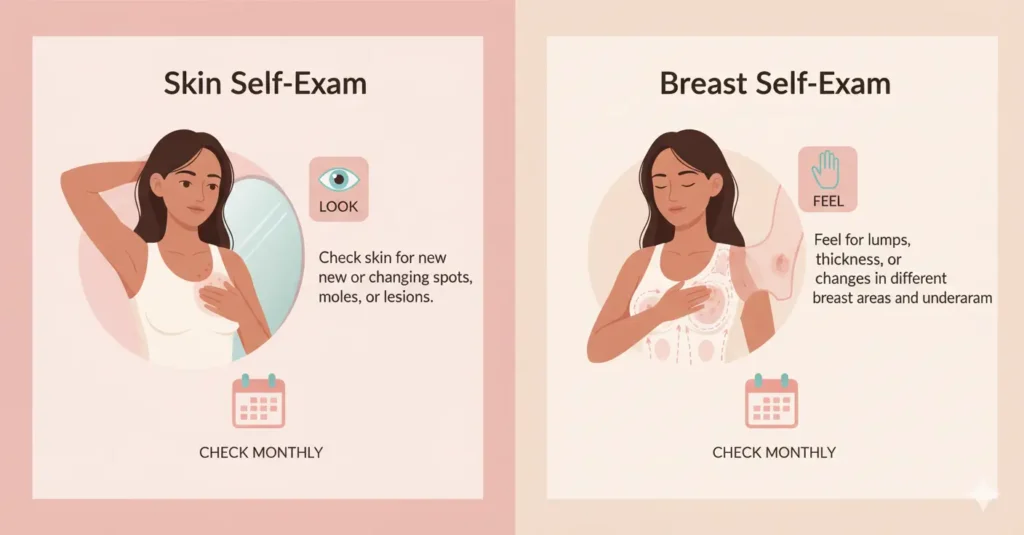
Examine your breast skin monthly in good lighting. Use a mirror to check all angles. Look for the ABCDEs of melanoma: Asymmetry, Border irregularity, Color variation, Diameter larger than a pencil eraser, and Evolving changes.
For Breast Cancer Monitoring:
Perform monthly breast self-exams. Feel for lumps or thickened areas using gentle pressure with your fingertips. Check your entire breast and underarm area. Note any changes in size, shape, or texture.
When to See a Doctor
Consult a healthcare provider immediately if you notice:
- Any new or changing skin lesion on your breast
- A growth that bleeds, crusts, or doesn’t heal
- Any breast lump, even if it’s painless
- Persistent nipple discharge
- Sudden changes in breast appearance
- Skin dimpling or orange-peel texture
Screening Methods
Experts recommend regular screenings based on your age and risk factors. For breast cancer, mammograms starting at age 40 (or earlier for high-risk individuals) are standard. For skin cancer prevention, annual full-body skin checks with a dermatologist help catch changes early, especially if you have risk factors.
Treatment Options
Treatment approaches differ significantly based on cancer type, stage, and location.
Skin Cancer on Breast Treatments
Surgical Excision: The most common approach involves removing the cancerous lesion along with a margin of healthy tissue. This is typically an outpatient procedure with local anesthesia.
Mohs Surgery: For more complex cases, this technique removes cancer layer by layer while preserving healthy tissue, particularly useful in cosmetically sensitive areas.
Cryotherapy: Freezing destroys abnormal cells, effective for superficial basal cell carcinomas.
Topical Medications: Prescription creams containing immune-boosting or chemotherapy agents treat certain superficial skin cancers.
Radiation Therapy: Used when surgery isn’t ideal or for recurrent cases.
Recovery from skin cancer treatment on the breast is generally quick, with healing occurring within weeks.
Breast Cancer Treatments
Surgery: Options include lumpectomy (removing the tumor and surrounding tissue) or mastectomy (removing all breast tissue). Lymph nodes may also be removed.
Chemotherapy: Medications kill cancer cells throughout the body, often used before or after surgery.
Radiation Therapy: Targeted beams destroy remaining cancer cells post-surgery.
Hormone Therapy: Blocks hormones that fuel certain breast cancers.
Targeted Therapy: Newer drugs attack specific cancer cell characteristics.
Breast cancer treatment is typically more intensive and longer-term than skin cancer treatment, often involving multiple therapy types over months or years.
Prevention Tips
Taking proactive steps can significantly reduce your risk:
- Practice Sun Protection: Apply broad-spectrum SPF 30+ sunscreen to your chest and reapply every two hours when outdoors. Sun damage is cumulative, so protection matters at every age.
- Perform Regular Self-Examinations: Monthly breast and skin checks help you notice changes early. Familiarity with your normal appearance makes abnormalities stand out.
- Wear Protective Clothing: Cover your chest with UV-protective fabrics when spending extended time outdoors, especially during peak sun hours.
- Maintain a Healthy Lifestyle: Exercise regularly, maintain a healthy weight, limit alcohol consumption, and eat a nutrient-rich diet with plenty of fruits and vegetables.
- Attend Regular Medical Screenings: Schedule annual dermatology appointments if you’re at high risk for skin cancer, and follow recommended mammogram schedules based on your age and risk factors.
- Avoid Tanning Beds: Artificial UV radiation significantly increases skin cancer risk. There’s no safe tan from indoor tanning.
- Know Your Family History: Share your family cancer history with healthcare providers so they can recommend appropriate screening schedules and preventive measures.
Conclusion
Understanding the difference between skin cancer on breast and breast cancer empowers you to recognize symptoms accurately and seek appropriate care promptly. While both require medical attention, they originate in different tissues, present different symptoms, and need different treatment approaches. Skin cancer affects what you can see on the surface, while breast cancer develops internally within breast tissue.
The most important takeaway? Trust your instincts. If something looks or feels different—whether it’s a skin change or an internal lump—consult a healthcare provider. Early detection transforms both conditions from serious concerns into highly treatable diagnoses. Your awareness, vigilance, and willingness to seek help when something seems wrong are your strongest tools for maintaining breast health. Knowing the difference could help you act faster, choose the right specialist, and stay healthy for years to come.
Skin Cancer on the Breast — FAQ
Common questions and clear answers about skin cancer that appears on the skin of the breast — signs, diagnosis, seriousness, spread, and prevention.
Yes. Skin cancer can develop anywhere there is skin — including the skin of the breast. The common types (basal cell carcinoma, squamous cell carcinoma, and melanoma) may occur on the breast just as they can on other parts of the body.
Appearance varies by type: it may be a new mole or a mole that changes, a persistent sore that won’t heal, a scaly red patch, or a waxy bump. Any unusual or changing skin growth on the breast should be evaluated by a clinician.
No. They are different diseases. Skin cancer affects surface skin cells (epidermis) while breast cancer arises in internal breast tissue such as ducts or lobules — their diagnosis and treatments are different.
Basal and squamous cell carcinomas are generally highly treatable and rarely life-threatening when found early. Melanoma on the breast is more serious and needs prompt attention; however, early detection improves outcomes significantly.
A dermatologist or clinician will examine the area visually and — when indicated — perform a skin biopsy to remove a small sample for microscopic analysis. The biopsy determines whether cancer is present and which type it is.
Basal cell carcinoma rarely spreads. Squamous cell carcinoma can spread in some cases but usually does not. Melanoma has the highest risk of spreading to lymph nodes and other organs, so early diagnosis and treatment are important.
Sun protection is key: apply a broad-spectrum sunscreen to the chest daily, wear protective clothing when exposed to sun, avoid tanning beds, and perform regular skin self-exams (monthly) to notice any new or changing lesions early.
Not medical advice — if you have any suspicious skin change on your breast, see a healthcare professional for evaluation.
Disclaimer
The information on HealthHintz is provided for educational and informational purposes only and should not be considered medical advice. Always consult a qualified healthcare professional before making any medical or health-related decisions, starting a new treatment, or changing your existing health plan.