
10 Skin Signs That Need a Doctor’s Attention
You notice a new mole that wasn’t there before. Or maybe a small patch near your elbow that keeps itching, no matter how much you moisturize. It’s easy to brush off skin changes as harmless or cosmetic—but sometimes, your skin is trying to alert you to something deeper.
Your skin is your body’s largest organ, acting as both shield and messenger. When something changes—color, texture, or sensation—it can be an early sign that something inside needs your attention. This guide will help you recognize the skin signs that need a doctor’s attention and understand when to schedule a dermatologist visit. Early care can make all the difference.
Table of Contents
Why Your Skin Deserves Attention
Your skin tells the story of your health. It protects you from the outside world while reflecting what’s happening inside your body. That’s why dermatologists often call the skin a “mirror” of internal health.
Sometimes, skin changes are harmless—temporary dryness, a mild rash from a new detergent—but others can signal conditions that need urgent evaluation.
Examples of skin changes worth noticing:
- Sudden rash or hives without a clear reason
- Changes in skin color such as yellowing or dark patches
- Persistent itching, scaling, or thickening of skin
- New moles or spots that look different from the rest
Trusting your instincts—and your reflection—can help catch serious issues before they advance.
Common Skin Changes You Shouldn’t Ignore
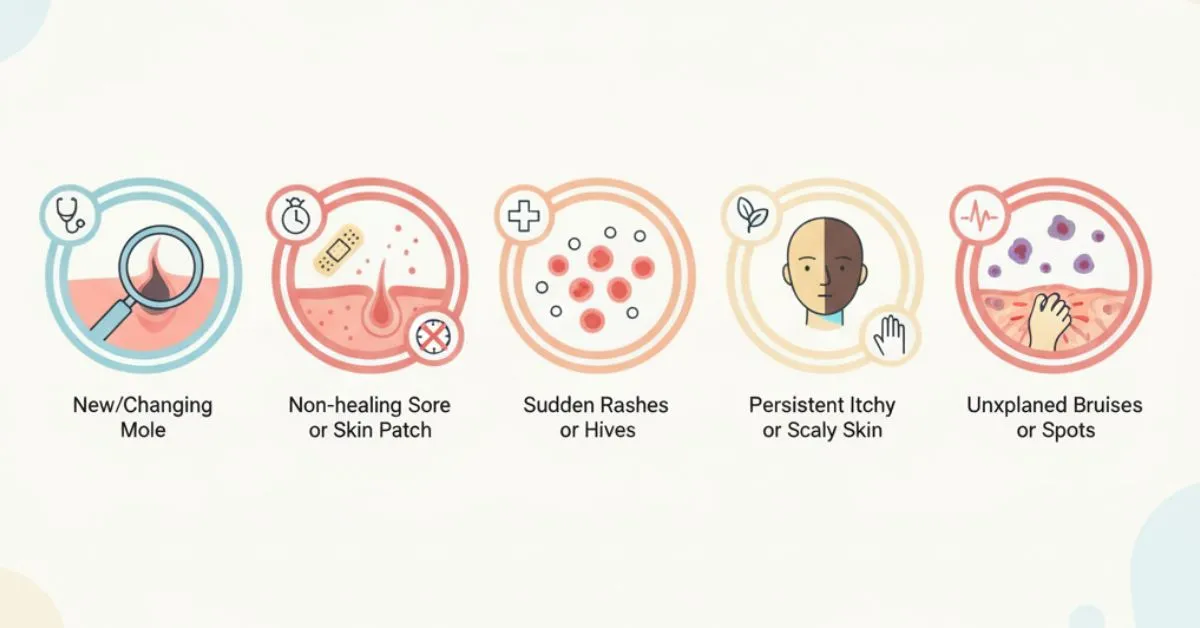
New or Changing Moles
Most moles are harmless, but changes in their appearance can signal melanoma, a serious type of skin cancer. Dermatologists recommend using the ABCDE rule to evaluate moles:
- A – Asymmetry: One half doesn’t match the other
- B – Border: Irregular, blurred, or jagged edges
- C – Color: Varies across the spot—brown, black, red, or white
- D – Diameter: Larger than 6mm (the size of a pencil eraser)
- E – Evolving: Changing in size, shape, or feeling over time
If a mole itches, bleeds, or looks unusual compared to others, schedule a skin exam right away.
Non-Healing Sores or Patches
A sore that doesn’t heal within a few weeks can be more than a simple irritation. Persistent lesions might result from infections, precancerous changes, or diabetes-related poor circulation.
Pay close attention to wounds that reopen repeatedly or form scabs that never disappear. These may indicate basal cell carcinoma or squamous cell carcinoma, both common skin cancers that respond best to early treatment.
Sudden Rashes or Hives Without Clear Cause
A rash that appears without warning can be triggered by allergies, autoimmune diseases, or even infections. For example, sudden widespread redness could point to an allergic reaction, while localized hives might suggest an immune response to medication or food.
Seek medical attention if your rash comes with:
- Fever or swollen lymph nodes
- Difficulty breathing or facial swelling (possible allergy emergency)
- Pain, pus, or spreading redness (possible infection)
Yellowing, Darkening, or Blue Skin Tone
Changes in skin color are sometimes early signs of internal health problems:
- Yellowing (Jaundice): May signal liver or gallbladder issues
- Bluish tint (Cyanosis): Indicates low oxygen or heart/lung problems
- Dark patches (Hyperpigmentation): Can result from hormonal changes, certain medications, or endocrine disorders like Addison’s disease
Any new or widespread color change deserves evaluation by a doctor, especially when accompanied by fatigue, dizziness, or abdominal pain.
Itchy or Scaly Skin That Persists
Occasional dry skin is normal, but itching or flaking that lingers could suggest eczema, psoriasis, or fungal infections. Persistent itch can also hint at kidney or thyroid problems.
When self-care remedies fail—or when itching interferes with sleep or daily comfort—a dermatologist visit can uncover the cause and offer targeted relief.
Unexplained Bruises or Spots
Bruises that appear easily or without recollection of injury can stem from blood disorders, low platelets, or vitamin deficiencies (especially vitamin C or K). Some medications, like blood thinners, may also make you bruise more easily.
If you notice frequent unexplained bruising—especially alongside fatigue or frequent nosebleeds—contact your primary care provider for testing.
When to See a Doctor or Dermatologist
You don’t need to panic about every blemish, but certain changes are significant warning signs. Use this list to decide when to schedule a professional evaluation:
- A mole or spot changes shape, color, or size
- A rash or patch lasts longer than two weeks
- A sore fails to heal or reopens frequently
- Itching disrupts sleep or daily life
- Pain, bleeding, or swelling develops on the skin
- Skin changes accompany fever, fatigue, or weight loss
- You have a personal or family history of skin cancer
If any of these apply, it’s time for a dermatologist visit. Seeing a professional early helps rule out serious conditions and start treatment before complications arise.
How Doctors Evaluate Skin Symptoms
Visiting a dermatologist can feel intimidating, but the process is straightforward and often painless. Understanding what to expect helps ease anxiety and promotes open communication.
Visual Examination
The doctor begins with a full or targeted skin check, looking at the area of concern under bright lighting or magnification. They may use a dermoscope—a handheld tool that gives a close-up view of skin structures.
Medical History Review
Expect questions about your symptoms:
- When did you first notice them?
- Have they changed over time?
- Any new medications, foods, or exposures recently?
Providing complete information helps the dermatologist identify possible triggers.
Diagnostic Tests
If something appears suspicious, your doctor might recommend one or more of the following:
- Skin biopsy: A small tissue sample taken for lab analysis to confirm or rule out cancer or infection.
- Blood tests: To uncover underlying systemic issues (e.g., liver, thyroid, or immune problems).
- Allergy testing: Useful when rashes or hives appear without clear cause.
Most cases can be addressed quickly and painlessly, and early detection always leads to better outcomes.
Prevention and Self-Care Tips
Caring for your skin daily is one of the best ways to prevent future problems and catch changes early. Follow these steps for optimal skin health:
- Perform monthly skin self-checks: Use a mirror to inspect all areas, including your back, chest, and scalp.
- Protect with sunscreen: Apply broad-spectrum SPF 30+ every day, especially to face, neck, and arms.
- Stay moisturized: Dry skin cracks easily, making it more vulnerable to irritation and infection.
- Avoid tanning beds: Artificial UV exposure significantly increases skin cancer risk.
- Eat a balanced diet: Include fruits, vegetables, and healthy fats to support skin repair and elasticity.
- Hydrate well: Water helps maintain skin’s natural protective barrier.
- Track any changes: Keep a photo log of moles or spots to notice subtle transformations.
- See your dermatologist annually: Even when nothing looks wrong, regular professional exams can catch issues invisible to the untrained eye.
Conclusion
Your skin speaks a language of its own—it changes color, texture, or pattern to communicate that something might be wrong. Ignoring those signals can delay diagnosis and treatment for serious conditions ranging from infections to cancer.
Pay attention to new or persistent skin signs, schedule regular dermatologist visits, and trust your intuition when something feels “off.” Your skin is your body’s early warning system—when it speaks, listen.
Skin Signs That Need a Doctor’s Attention — FAQs
Common warning signs to watch for, how to recognize dangerous moles and sores, and when to seek medical care for skin changes.
Seek immediate care for a rapidly changing mole, painful sores that don’t heal, widespread rash with fever, or yellow/blue skin discoloration—these may signal serious conditions needing urgent evaluation.
Use the ABCDE rule: Asymmetry, Border irregularity, Color variation, Diameter >6mm, and Evolving (changes). Any mole that changes or looks different from others should be checked by a dermatologist.
If itching lasts more than two weeks, disrupts sleep, or affects multiple areas, schedule a dermatologist visit—persistent itching can point to a skin disorder or an internal issue that needs diagnosis.
No. Non-healing sores can come from infections, diabetes, or poor circulation. Still, because skin cancer can look similar, have any persistent sore evaluated by a clinician.
Yellowing (jaundice) often indicates liver, gallbladder, or bile-duct issues and can also be medication-related. Medical tests (blood work, imaging) help determine the cause.
Yes. Stress can trigger or worsen eczema, psoriasis, and acne. If stress-related skin problems become chronic, painful, or lower quality of life, see a dermatologist for targeted treatment.
Monthly self-exams are recommended—photograph suspicious spots, watch for changes, and consult a clinician for anything new, growing, or changing.
Disclaimer: informational only — consult a healthcare provider for personal medical advice.
Disclaimer
The information on HealthHintz is provided for educational and informational purposes only and should not be considered medical advice.
Always consult a qualified healthcare professional before making any medical or health-related decisions, starting a new treatment, or changing your existing health plan.