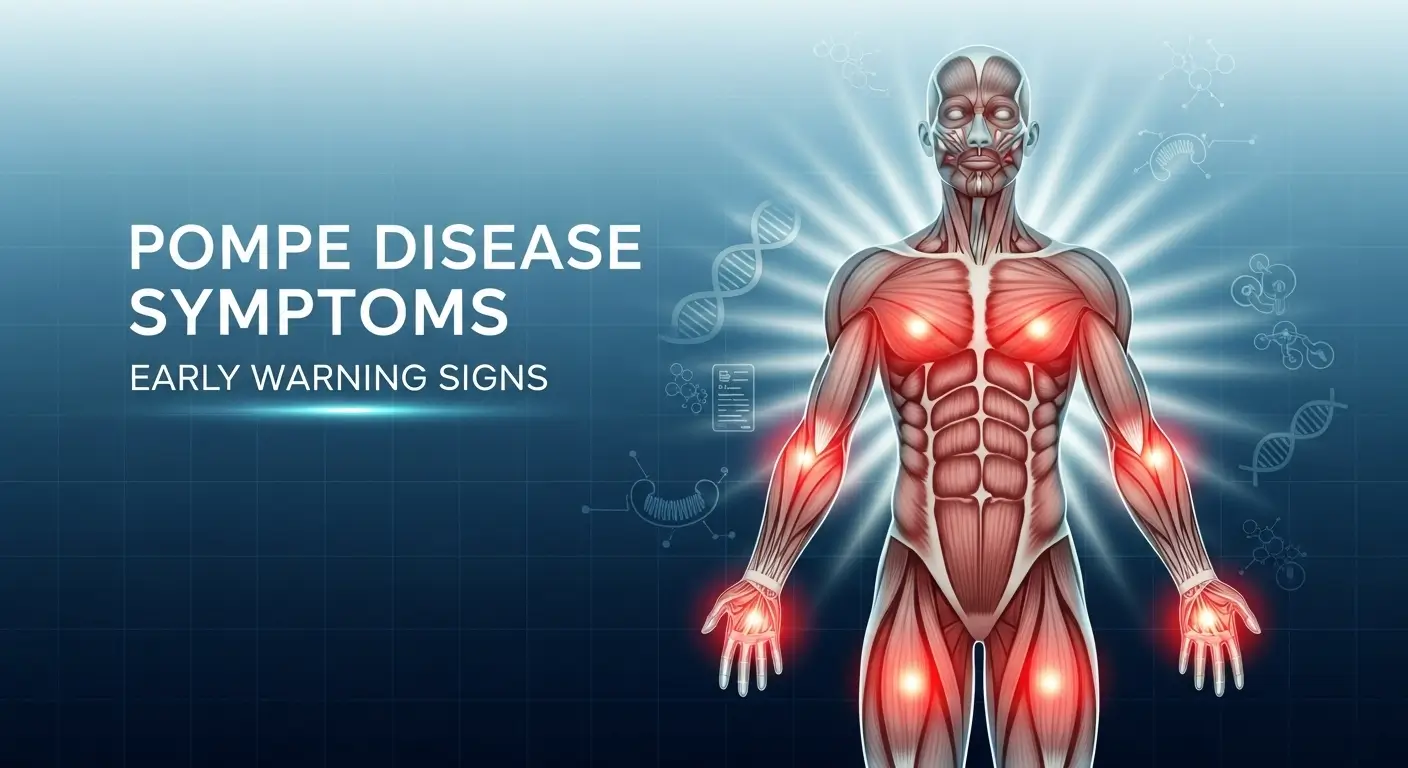
Pompe Disease Symptoms and Early Warning Signs
Sometimes, small changes in your body can mean something bigger is going on. Maybe you’ve noticed your baby struggles to hold their head up, or you feel unusually weak when walking up a flight of stairs. While these things can have many causes, they can also be early warning signs of a rare condition called Pompe disease.
Pompe disease is a condition that affects the muscles, and spotting it early can make a world of difference in managing it. Understanding the signs is the first step toward getting the right help. This guide will walk you through the key Pompe disease symptoms, what causes the condition, and how it can be managed to improve quality of life.
Table of Contents
What Is Pompe Disease?
Pompe disease is a rare genetic disorder that changes how your body uses and stores sugar. Specifically, it is a type of glycogen storage disease. In a healthy body, a special protein called an enzyme breaks down a type of sugar called glycogen to use for energy. In people with Pompe disease, this enzyme is either missing or doesn’t work correctly.
As a result, glycogen builds up inside the body’s cells, especially in the muscles. Over time, this buildup damages the muscle cells and causes them to become weak. This is why the main symptom of Pompe disease is progressive muscle weakness. The disease can affect people of all ages, from infants to adults, and it appears in two main forms.
| Type | Typical Age of Onset | Main Symptoms |
|---|---|---|
| Infantile Pompe Disease | Babies (within the first year of life) | Severe muscle weakness, an enlarged heart, and serious breathing problems. |
| Late-Onset Pompe Disease | Children or adults | Slow but steady muscle weakness, tiredness, and problems with walking or breathing. |
Early Signs and Symptoms of Pompe Disease
Recognizing the early signs of Pompe disease is crucial for getting a timely diagnosis and starting treatment. The symptoms can look very different depending on whether the disease appears in infancy or later in life.
Signs in Babies (Infantile Pompe Disease)
Infantile Pompe disease is the most severe form and usually appears within the first few months of life. Babies with this condition often have a “floppy” appearance due to severe muscle weakness. Parents and doctors might notice the following signs:
- Weak muscles: The baby may feel limp when held and have poor muscle tone. This is often one of the first and most noticeable early signs of Pompe disease.
- Trouble feeding or swallowing: Weak muscles in the mouth and throat can make it difficult for the baby to suck, swallow, or eat properly, leading to poor weight gain.
- Breathing problems: Weakness in the diaphragm and other breathing muscles can cause frequent respiratory infections or shortness of breath.
- Enlarged heart: The buildup of glycogen can cause the heart to become very large and weak, a condition called cardiomyopathy.
- Delayed motor skills: The baby may not be able to reach typical milestones like holding their head up, rolling over, sitting, or crawling.
- An enlarged tongue or liver may also be present.
Signs in Older Children and Adults (Late-Onset Pompe Disease)
In late-onset Pompe disease, symptoms can appear anytime from childhood to late adulthood. The disease progresses more slowly than the infantile form. The muscle problems often start in the legs and torso, gradually affecting other parts of the body.
Common Pompe disease symptoms in children and adults include:
- Muscle weakness: This usually affects the legs and hips first, making it hard to climb stairs, stand up from a chair, or run. Over time, weakness can also develop in the arms and shoulders.
- Trouble breathing: Weakness of the diaphragm muscle can cause shortness of breath, especially when lying down. This can lead to morning headaches or feeling tired during the day.
- Fatigue: Feeling tired and having a general loss of stamina is a very common complaint.
- Difficulty walking: People may develop an unusual or wobbly walk to compensate for weak hip muscles.
- Enlarged tongue or trouble swallowing: Just like in babies, weakness in the facial and throat muscles can make chewing and swallowing difficult.
- Back pain and a curved spine (scoliosis) can also occur due to weak core muscles.
What Causes Pompe Disease?
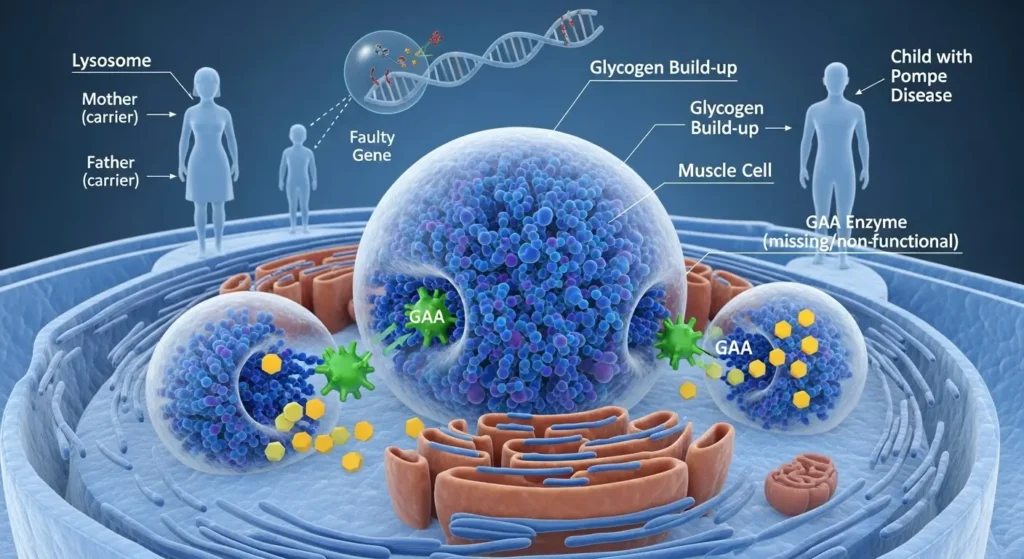
Pompe disease is caused by a problem in a person’s genes. It happens when the body cannot make enough of an enzyme called acid alpha-glucosidase (GAA). The GAA enzyme works inside parts of our cells called lysosomes, which act like the cell’s recycling center. The enzyme’s job is to break down glycogen into glucose, a simple sugar that our cells use for energy.
When the GAA enzyme is missing or doesn’t work, glycogen builds up in the lysosomes, causing them to swell and damage the muscle cells. This is what leads to the progressive muscle weakness seen in Pompe disease.
Because it is a rare genetic disorder, a person must inherit a faulty gene from both of their parents to develop the condition. People who inherit only one faulty gene are called carriers. They do not have symptoms but can pass the gene on to their children.
How Pompe Disease Is Diagnosed
Getting a diagnosis for Pompe disease can sometimes be a long journey because it is so rare and its symptoms can mimic other, more common conditions. However, once a doctor suspects Pompe disease, there are specific tests that can confirm it.
- Blood Test: This is often the first step. A simple blood test can measure the activity level of the GAA enzyme. In a person with Pompe disease, this enzyme level will be very low or absent.
- Genetic Test: A genetic test, usually done with a blood or saliva sample, looks for mutations in the GAA gene. This test can confirm the diagnosis and help determine which type of Pompe disease a person has.
- Muscle Biopsy: In the past, doctors sometimes took a small sample of muscle tissue to look for glycogen buildup under a microscope. However, with modern blood and genetic tests, this is done less often.
- Heart and Lung Checks: Doctors may perform tests like an echocardiogram (an ultrasound of the heart) or breathing tests to see how the disease is affecting these organs.
Treatment and Care Options
While there is currently no cure for Pompe disease, there are effective treatments that can help manage symptoms, improve muscle strength, and enhance quality of life. Early treatment is key to achieving the best possible outcomes.
- Enzyme Replacement Therapy (ERT): This is the main treatment for Pompe disease. ERT involves regular infusions (given through an IV) of a man-made version of the missing GAA enzyme. This therapy helps the body break down glycogen, reducing its buildup in the muscles and slowing the progression of the disease.
- Physical Therapy: A physical therapist can create a personalized exercise program to help maintain muscle strength, flexibility, and mobility. This is a critical part of managing muscle problems associated with Pompe disease.
- Breathing Support: For people with weak breathing muscles, devices like a ventilator or BiPAP machine can help them breathe more easily, especially while sleeping.
- Healthy Nutrition: A dietitian can help create a balanced eating plan, often high in protein and low in carbohydrates, to support muscle health and maintain a healthy weight.
Daily Care Tips
- Stay as active as possible with gentle exercises approved by your doctor.
- Eat balanced, nutritious meals to support your energy levels.
- Attend all your regular medical checkups and ERT appointments.
- Work closely with a team of specialists who are familiar with Pompe disease, including a neurologist, cardiologist, and physical therapist.
Living With Pompe Disease
Living with a rare genetic disorder like Pompe disease can be challenging, but advancements in treatment and care have greatly improved the outlook for patients. With early diagnosis and a comprehensive care plan, many people with Pompe disease are living longer, healthier, and more active lives.
Having a strong support system of family, friends, and healthcare professionals is incredibly important. Connecting with other families affected by Pompe disease can also provide emotional support and valuable insights. The focus is on managing symptoms, maintaining function for as long as possible, and living life to the fullest.
FAQs About Pompe Disease Symptoms
What are the first signs of Pompe disease?
The early signs of Pompe disease often involve unexplained muscle weakness. In babies, this might look like a “floppy” body and trouble feeding. In adults, it often starts as difficulty climbing stairs, getting up from a chair, or feeling extremely tired.
Can adults develop Pompe disease?
Yes. Late-onset Pompe disease can appear in older children, teenagers, or adults. The symptoms develop much more slowly than in the infantile form, and a person might not receive a diagnosis for many years.
How is Pompe disease treated?
The main treatment for Pompe disease is enzyme replacement therapy (ERT), which provides the body with the enzyme it’s missing. This is combined with supportive care like physical therapy to manage muscle problems, breathing support, and proper nutrition.
Is Pompe disease curable?
No, at this time there is no cure for Pompe disease. However, current treatments can significantly slow the disease’s progression, improve muscle function, and greatly enhance a person’s quality of life.
When should I see a doctor?
You should see a doctor if you or your child has unexplained and persistent muscle weakness, trouble breathing, or significant delays in meeting developmental milestones. Since Pompe disease symptoms can be mistaken for other conditions, it’s important to advocate for your health and ask about testing if you are concerned.
Conclusion
Pompe disease may be rare, but for the families it affects, awareness is everything. Understanding the symptoms and pushing for an early diagnosis can completely change the course of the disease. From the “floppy” baby who struggles to move to the adult who feels winded after a few stairs, recognizing these signs is the first step toward getting life-changing care.
With modern treatment and dedicated supportive care, there is more hope than ever before. Pompe disease is a serious condition, but awareness can lead to early action, and early action can change lives for the better. The sooner it’s spotted, the brighter the future can be.
Disclaimer
The information on HealthHintz is provided for educational and informational purposes only and should not be considered medical advice. Always consult a qualified healthcare professional before making any medical or health-related decisions, starting a new treatment, or changing your existing health plan.