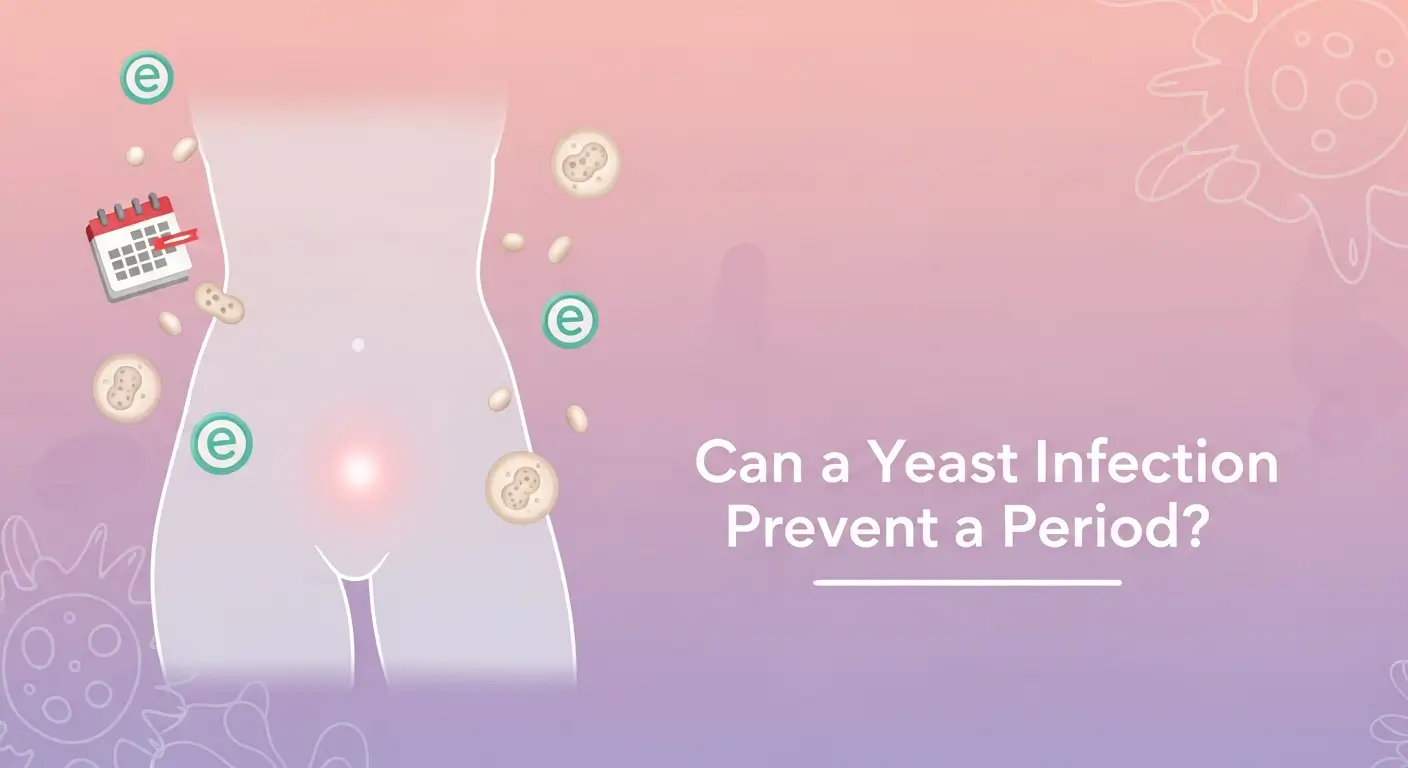
Can a Yeast Infection Prevent a Period?
You’re feeling that all-too-familiar discomfort—the itching, the irritation, and that tell-tale discharge. You know it’s a yeast infection. But on top of that, you’re also staring at the calendar, wondering where your period is. It’s late, and now your mind is racing. Could the two be connected? You’re not alone in asking this question. Many women find themselves in this exact situation, trying to figure out what their body is telling them.
This is a common concern, and the relationship between vaginal health and your menstrual cycle can be confusing. In this guide, we will explore the question, “Can a yeast infection prevent a period?” We’ll break down what a yeast infection is, what can actually delay your period, and how hormonal changes play a role in both. By the end, you’ll have a clearer understanding of your body and know when it’s time to seek medical advice.
Table of Contents
What Is a Yeast Infection?
First, let’s get clear on what a yeast infection is. A vaginal yeast infection, also known as candidiasis, is a very common condition caused by an overgrowth of a fungus called Candida albicans. Your vagina naturally has a balanced mix of yeast and bacteria. Certain things can disrupt this balance, allowing the yeast to multiply and cause an infection.
Common symptoms of a yeast infection include:
- An intense itching or burning sensation in and around the vagina.
- A thick, white, clumpy discharge that is often described as looking like cottage cheese.
- Redness, swelling, or irritation of the vulva.
- Pain or discomfort during urination or sex.
Yeast infections are not considered a sexually transmitted infection (STI), though they can sometimes be passed between partners. They are incredibly common, and most women will experience at least one in their lifetime. Thankfully, they are usually easy to treat with over-the-counter or prescription antifungal medications.
Can a Yeast Infection Affect Your Period?
Now for the big question: Can a yeast infection prevent a period? The short and direct answer is no. A yeast infection is a fungal overgrowth in the vagina and does not directly interfere with the hormonal processes in your ovaries and uterus that control your menstrual cycle. Your period is triggered by a drop in the hormones estrogen and progesterone, and a vaginal infection does not have the power to stop this hormonal shift.
So why does it often feel like they are related? The answer lies in the timing. The same hormonal fluctuations that bring on your period can also create the perfect environment for a yeast infection to develop.
Before your period starts, your hormone levels change dramatically. Estrogen levels, in particular, can fluctuate, which can alter the pH balance of your vagina. This change can allow the Candida yeast to overgrow. So, it’s very common to develop a yeast infection in the days leading up to your period.
Because both the yeast infection and your period are tied to your hormonal cycle, they often happen at the same time. This can make it seem like one is causing the other, but in reality, they are two separate events triggered by the same underlying hormonal changes. The stress and physical discomfort of a yeast infection also won’t delay your period, although a high level of overall life stress certainly can.
What Can Actually Delay Your Period?
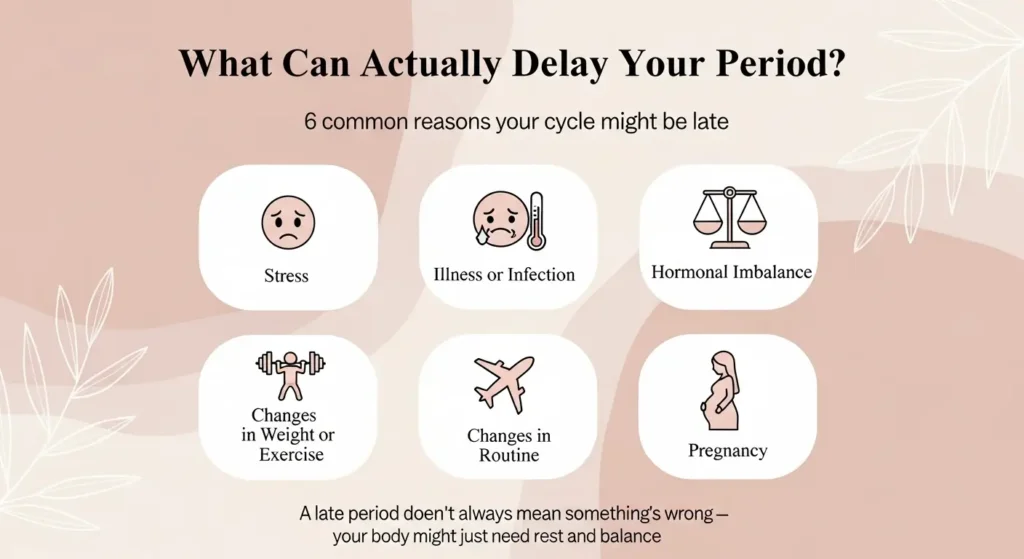
If a yeast infection isn’t the culprit, what can actually make your period late? Your menstrual cycle is a sensitive system, and many factors can throw it off schedule.
Here are some of the most common reasons for a delayed period:
- Stress: High levels of emotional or physical stress are one of the biggest reasons for a late period. Stress causes your body to produce cortisol, the “stress hormone.” Cortisol can interfere with the hormones that regulate your cycle and can delay ovulation, which in turn delays your period.
- Illness or Infection: When your body is fighting off an illness, like the flu or even a severe cold, it can temporarily shut down non-essential functions like ovulation to conserve energy for healing.
- Hormonal Imbalance: Conditions like Polycystic Ovary Syndrome (PCOS) or thyroid issues can cause significant hormonal imbalances that lead to irregular or missed periods.
- Changes in Weight or Exercise: Drastic weight loss or gain, as well as a sudden increase in intense exercise, can put stress on your body and disrupt your hormonal cycle.
- Changes in Routine: Traveling across time zones, changing your sleep schedule, or shifting your work hours can all be enough to delay your period.
- Pregnancy: This is the most common reason for a missed period in sexually active women. If your period is more than a week late and there’s a chance you could be pregnant, taking a home pregnancy test is a good first step.
If your period is more than a week late and you’ve ruled out pregnancy, it’s a good idea to talk to your doctor to explore other possible causes.
Why Yeast Infections Often Happen Before Your Period
As we mentioned, the hormonal rollercoaster before your period is often the main reason you might get a yeast infection. Here’s a closer look at why.
In the week or two leading up to your period (the luteal phase), your estrogen levels rise and then fall. Estrogen can encourage the growth of yeast. Additionally, these hormonal shifts can change the natural pH of your vagina, making it a more hospitable environment for Candida to thrive.
Other factors that can increase your risk of getting a yeast infection before your period include:
- Wearing tight, non-breathable clothing that traps moisture and heat.
- Using scented pads, tampons, soaps, or douches that can irritate the sensitive skin of the vulva and disrupt the natural pH.
- Staying in wet clothes, like a swimsuit or sweaty gym clothes, for too long.
- Taking certain medications, like antibiotics, which can kill off the “good” bacteria that keep yeast in check.
To help prevent these pre-period yeast infections, try to wear breathable cotton underwear, change out of wet clothing promptly, use gentle, unscented products, and consider adding probiotic-rich foods like yogurt to your diet to support a healthy balance of vaginal bacteria.
Can Periods Make Yeast Infections Worse?
The relationship between your period and a yeast infection can be complicated. For some women, getting their period can actually bring relief. Menstrual blood raises the pH of the vagina, making it less acidic. Since yeast thrives in an acidic environment, this change can sometimes help to naturally reduce the overgrowth and ease symptoms.
For other women, however, a period can make things feel worse. The constant moisture from menstrual blood can increase irritation, and wearing pads or tampons can trap heat and moisture, which can exacerbate the infection. The symptoms may feel more intense right before your period starts and right after it ends.
How to Tell If It’s a Yeast Infection or Something Else
Vaginal symptoms can be confusing, and it’s easy to misdiagnose yourself. While yeast infections are common, other conditions like Bacterial Vaginosis (BV) or a Urinary Tract Infection (UTI) can have similar symptoms. Here’s a quick comparison to help you tell the difference.
| Symptom | Yeast Infection | Other Possible Causes |
|---|---|---|
| Thick, White Discharge | ✔️ Very common. | ❌ Rare with BV, UTI, or STIs. |
| Fishy Odor | ❌ No, yeast infection discharge is usually odorless. | ✔️ A key symptom of Bacterial Vaginosis (BV). |
| Burning During Urination | ✔️ Possible, usually because urine touches irritated skin. | ✔️ A classic symptom of a Urinary Tract Infection (UTI). |
| Irregular Bleeding | ❌ Rare. | ✔️ Can be a sign of hormonal issues or certain STIs. |
| Pain in Lower Abdomen | ❌ No, pain is usually external. | ✔️ Can be a symptom of a UTI or other pelvic infections. |
If you’ve tried an over-the-counter yeast infection treatment and your symptoms don’t improve after three days, it’s a good idea to see a doctor. It might not be a simple yeast infection.
When to See a Doctor
While a single yeast infection is usually not a cause for major concern, there are times when you should definitely seek professional medical help.
- You get frequent yeast infections. If you have four or more yeast infections in a single year, this is considered recurrent and needs a doctor’s evaluation.
- You experience severe symptoms, such as intense itching, swelling, or sores.
- Your discharge has an unusual color or a strong, foul odor.
- Your period is missed for more than 10 days, and you have a negative pregnancy test.
- You have unexplained pelvic pain or a fever.
Self-diagnosing vaginal infections can be tricky. A doctor can perform a simple test to confirm what’s causing your symptoms and ensure you get the right treatment.
Conclusion
So, while a yeast infection can certainly add to the stress and discomfort of a late period, it’s not the reason your cycle is off schedule. The two often appear together because they are both influenced by the same hormonal shifts that happen in your body every month.
If your period is late, consider other factors like stress, illness, or changes in your routine. And if your cycle changes are persistent, or if you’re ever worried about your symptoms, don’t hesitate to talk with your doctor. Listening to your body and keeping track of your cycle patterns is an empowering way to stay in control of your health.
FAQs: Yeast Infections and Your Period
Can a yeast infection delay my period?
No, a yeast infection itself does not directly delay your period. However, the underlying factors that can cause a late period—like high stress or a hormonal imbalance—can also sometimes contribute to getting a yeast infection. They often occur at the same time, but one doesn’t cause the other.
Does having a yeast infection mean I’m pregnant?
No, a yeast infection is not a sign of pregnancy. However, pregnant women are more prone to yeast infections due to higher estrogen levels in the body. If you think you might be pregnant, the only way to know for sure is to take a pregnancy test.
Can I treat a yeast infection while waiting for my period?
Yes, it’s safe to use over-the-counter antifungal creams or suppositories to treat a yeast infection while waiting for your period. If your period starts during treatment, you can continue using most creams, but avoid suppositories during your heaviest flow. If symptoms persist, see your doctor.
Will my yeast infection go away when my period starts?
Sometimes, symptoms can improve during your period because menstrual blood raises the vaginal pH, making it less hospitable for yeast. However, this is not a reliable cure, and the infection will likely return after your period ends if it’s not properly treated.
How can I prevent yeast infections before my period?
You can help prevent pre-period yeast infections by maintaining good vaginal health. Wear breathable cotton underwear, avoid tight clothing, change out of wet or sweaty clothes promptly, and use gentle, unscented soaps. Eating probiotic-rich foods like yogurt can also help maintain a healthy bacterial balance.
Disclaimer
The information on HealthHintz is provided for educational and informational purposes only and should not be considered medical advice. Always consult a qualified healthcare professional before making any medical or health-related decisions, starting a new treatment, or changing your existing health plan.