
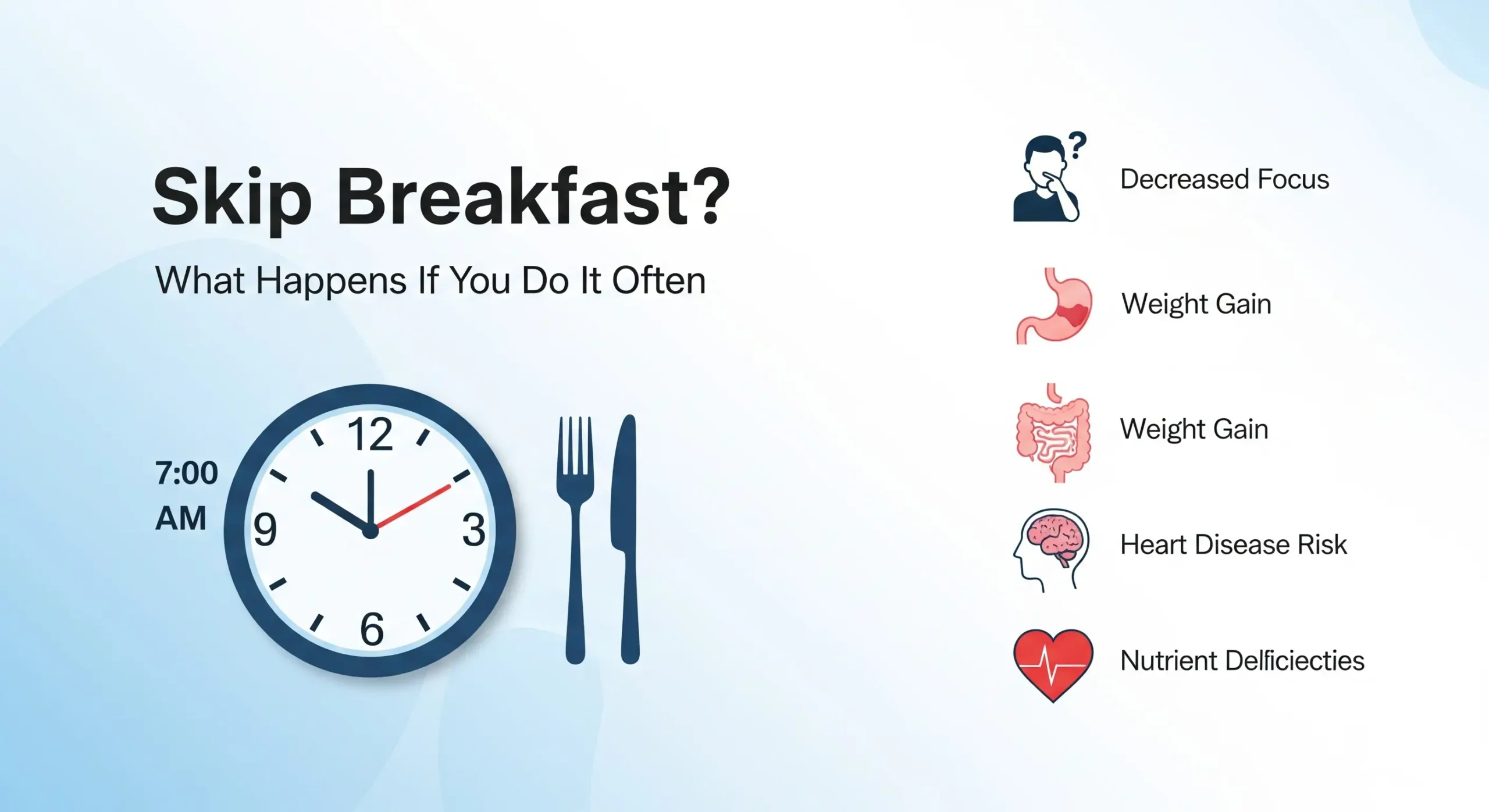
Skip Breakfast: What Interesting Happens If You Do It Often?
The alarm blares, you hit snooze one too many times, and suddenly the morning is a frantic rush. You grab your keys, your bag, and a travel mug of coffee, heading out the door with an empty stomach and a promise to “grab something later.” We’ve all been there. We all skip breakfast sometimes. But what really happens when “sometimes” becomes a daily habit?
While life gets busy, that first meal of the day—or the lack of it—has a more profound impact than most of us realize. It sets the stage for your energy, mood, metabolism, and even your long-term health. In this article, we’ll explore the science-backed truth about skipping breakfast effects, from your brain to your gut, and help you understand what your body truly needs to thrive.
Table of Contents
Why Breakfast Matters More Than You Think
The word “breakfast” literally means to “break the fast” you’ve been in overnight while sleeping. After 8-12 hours without food, your body’s fuel tank is running low. Eating a balanced breakfast is your body’s morning wake-up call, signaling that it’s time to power up for the day ahead.
Here’s why that first meal is so important:
- It replenishes your blood sugar. Your brain and muscles run on glucose (sugar). After a long fast, your glucose stores are low. Breakfast restocks them, providing essential energy levels for mental and physical tasks.
- It supports mental focus and productivity. A fueled brain is a focused brain. Studies consistently show that eating breakfast improves concentration, memory, and problem-solving skills throughout the morning.
- It helps stabilize your hormones. Breakfast helps regulate hormones like ghrelin (the hunger hormone) and insulin (the blood sugar hormone). This sets a stable foundation for appetite control for the rest of the day.
In short, breakfast importance lies in its ability to set the metabolic and hormonal tone for your entire day, influencing everything from your mood to your food choices hours later.
What Happens When You Skip Breakfast Regularly

Skipping a single breakfast is unlikely to cause any harm. However, when it becomes a chronic habit, a cascade of physiological changes can begin to unfold.
1. Blood Sugar Fluctuations
When you skip breakfast, your blood sugar levels can drop too low, a state known as hypoglycemia. This can leave you feeling tired, irritable, shaky, and unable to concentrate. To compensate, your body may release stress hormones like cortisol. When you finally do eat, you’re often so hungry that you choose carb-heavy foods, causing a rapid spike in blood sugar, followed by an inevitable crash a few hours later, perpetuating a vicious cycle of highs and lows.
2. Slower Metabolism
Your metabolism is the process by which your body converts food into energy. When you regularly skip meals, especially breakfast, your body can interpret this as a sign of scarcity or famine. To conserve energy, it may slow down your metabolic rate, meaning you burn calories less efficiently over time. This “conservation mode” can make it harder to manage your weight in the long run.
3. Increased Cravings and Overeating
One of the most immediate skipping breakfast effects is intense hunger later in the day. Your body, desperate for quick energy, will start sending powerful signals for high-calorie, high-sugar, and high-carb foods. This is why you might find yourself reaching for a donut at 11 a.m. or eating a much larger lunch than you normally would, leading to overconsumption of calories and unhealthy food choices.
4. Mood and Focus Issues
Your brain consumes about 20% of your body’s total energy, primarily in the form of glucose. When you skip breakfast, you deprive your brain of its primary fuel source. This can lead to “brain fog,” difficulty concentrating, irritability, and even feelings of anxiety. A balanced meal helps stabilize your mood and provides the sustained energy your brain needs to function optimally.
5. Possible Weight Gain Over Time
Ironically, many people skip breakfast to cut calories and lose weight, but this strategy often backfires. The intense hunger and cravings that result can lead to overeating later in the day, often on less healthy foods. This pattern of undereating in the morning and overeating in the afternoon and evening is strongly linked to weight gain over time, particularly an increase in belly fat.
6. Digestive Impact
Your digestive system follows a daily rhythm, and eating breakfast helps kickstart it. The act of eating stimulates a process called the gastrocolic reflex, which encourages bowel movements and promotes regularity. Regularly skipping your morning meal can lead to a sluggish digestive system, contributing to issues like bloating, constipation, and general discomfort.
Are There Any Benefits to Skipping Breakfast?
In recent years, trends like intermittent fasting have popularized the idea of skipping breakfast. For some people, intentionally delaying their first meal can have benefits. When done correctly, as part of a structured eating plan, it may:
- Help with calorie control by creating a shorter eating window.
- Improve insulin sensitivity in some individuals.
- Give the digestive system a longer rest period.
However, it’s crucial to add a note of caution. This approach is not for everyone. The potential benefits are tied to an intentional, structured fasting plan, which is very different from the chaotic, stress-induced habit of randomly skipping breakfast. If you have issues with low blood sugar, adrenal fatigue, hormonal imbalances, or are highly active, skipping breakfast may do more harm than good.
What Science Says—Comparison Table
To make it clear, here’s a simple breakdown of the different effects on your body.
| Health Aspect | Eating a Balanced Breakfast | Skipping Breakfast Habitually |
|---|---|---|
| Blood Sugar | More stable throughout the day. | Prone to significant spikes and crashes. |
| Metabolism | Boosted early in the day, promoting calorie burning. | May slow down over time to conserve energy. |
| Energy Levels | Consistent and balanced through the morning. | Mid-morning and midday fatigue are common. |
| Mood & Focus | Supports mental clarity, focus, and a stable mood. | Can lead to irritability, brain fog, and poor focus. |
| Weight Control | Helps reduce cravings and promotes balanced meals. | Increased hunger and overeating risk can lead to weight gain. |
| Digestive Health | Stimulates gut motility and promotes regularity. | Can contribute to a sluggish gut and irregular habits. |
Who Should Never Skip Breakfast
While anyone can experience negative effects, certain groups are particularly vulnerable and should prioritize a morning meal.
- People with diabetes or blood sugar issues: Skipping meals can make it extremely difficult to manage blood sugar levels safely.
- Those who experience morning dizziness or headaches: These are often signs of low blood sugar, which breakfast can correct.
- Children and teenagers: Their growing bodies and developing brains have high energy demands and require regular fuel for learning and growth.
- Athletes or highly active individuals: They need consistent fuel to support performance, muscle repair, and energy levels.
- Pregnant or breastfeeding women: They have increased nutritional needs to support both themselves and their baby.
Healthy Breakfast Ideas to Start Your Day Right
Forgetting to eat is one thing, but not knowing what to eat is another common barrier. Here are some simple, balanced ideas for building healthy breakfast habits.
| Type | Example | Key Nutrients |
|---|---|---|
| Quick & Easy | Greek yogurt with a handful of berries and nuts. | Protein, probiotics, antioxidants, healthy fats. |
| Balanced Meal | Oatmeal made with milk or water, topped with banana and chia seeds. | Fiber, complex carbs, potassium, omega-3s. |
| On-the-Go | A whole-grain wrap with a scrambled egg, spinach, and avocado. | Protein, fiber, iron, vitamins, healthy fats. |
| Light Option | A green smoothie with spinach, fruit, protein powder, and almond milk. | Vitamins, minerals, hydration, protein. |
How to Build the Habit If You Often Skip Breakfast
If you’re a chronic breakfast skipper, trying to force down a big meal first thing can feel daunting. The key is to start small and build a sustainable routine.
- Start small. You don’t need a huge meal. A piece of fruit, a hard-boiled egg, or a small yogurt is a great start. Even a smoothie counts and is easy on a sensitive morning stomach.
- Prepare the night before. The biggest enemy of breakfast is the morning rush. Prepare overnight oats, bake a batch of egg muffins for the week, or portion out smoothie ingredients into bags.
- Keep healthy snacks handy. Stock your desk or bag with healthy, easy-to-grab options like nuts, seeds, or a quality protein bar for days when you’re truly running late.
- Listen to your hunger cues. You don’t have to eat the second you wake up. Pay attention to your body and try to eat within the first one to two hours of your day, before a hunger crisis strikes.
FAQs About Skipping Breakfast
Is it really bad to skip breakfast every day?
For most people, yes. Habitually skipping breakfast can disrupt your blood sugar, slow your metabolism, and lead to increased cravings and potential weight gain. It can also negatively affect your mood and energy levels.
Does skipping breakfast help with weight loss?
While it may seem like an easy way to cut calories, research suggests it often backfires. The skipping breakfast effects of intense hunger can lead you to overeat later in the day, often negating any calories you “saved.”
What happens to my metabolism if I skip breakfast often?
Your body can interpret frequent meal skipping as a sign of food scarcity. In response, it may slow down your metabolism to conserve energy, making it harder to burn calories efficiently throughout the day.
Is skipping breakfast okay for intermittent fasting?
Skipping breakfast can be part of a structured intermittent fasting plan, which can have benefits for some. However, this should be an intentional choice, not a result of a chaotic morning. If you feel unwell, dizzy, or irritable, it’s a sign this approach may not be right for you.
How does skipping breakfast affect energy and mood?
Your brain relies on glucose for fuel. When you skip breakfast, you deprive it of its morning energy source, which can lead to brain fog, poor concentration, irritability, and low energy levels.
What’s the healthiest thing to eat for breakfast?
The best breakfast is a balanced one containing protein, healthy fats, and fiber. This combination provides sustained energy and keeps you full. Think eggs, Greek yogurt, oatmeal with nuts, or a smoothie with protein powder.
Conclusion
The occasional rushed morning where you skip breakfast isn’t going to derail your health. The problem arises when it becomes a daily default. Your body thrives on routine, and consistently missing your morning meal can disrupt your energy, mood, metabolism, and overall well-being.
Think of breakfast not as a rigid rule you must follow, but as a powerful tool at your disposal. It’s your body’s morning fuel—a chance to start the day balanced, energized, and ready for whatever comes your way. Listening to your body and providing it with the nourishment it needs is one of the best forms of self-care you can practice.
Disclaimer
The information on HealthHintz is provided for educational and informational purposes only and should not be considered medical advice. Always consult a qualified healthcare professional before making any medical or health-related decisions, starting a new treatment, or changing your existing health plan.