
The Truth About Detox Diets: What Science Says
Detox diets are everywhere — from juice cleanses to 3-day resets promising to flush out toxins and boost energy. They sound clean, fresh, and life-changing. But do these diets actually work, or are they just another trend dressed up as health advice?
Many people turn to detox diets when they feel tired, bloated, or out of balance. Others hope a detox will kick-start weight loss or undo a period of overeating, drinking, or stress. It is totally understandable to want a “reset.” But to make a smart choice, it helps to know what detox diets really do — and what they do not do.
This guide breaks down what detox diets are, what they claim, what science says, the real risks and benefits, and healthier alternatives that support your body’s natural detox system.
Table of Contents
What Are Detox Diets?
Detox diets are short-term eating plans that claim to “remove toxins” from your body.
They usually involve one or more of these:
- Drinking only juices or smoothies
- Fasting or eating very little
- Using special teas, powders, or supplements
- Cutting out sugar, caffeine, or processed foods
- Doing “colon cleanses” or using laxatives
Common types of detox diets include:
- Juice cleanses (1–7 days of fruit and vegetable juices only)
- Tea detoxes (“teatoxes”) that promise to flush out waste
- Fasting programs (water fasts, intermittent fasting challenges)
- Sugar detoxes (complete removal of added sugars)
- “Colon cleanse” diets with herbal pills, enemas, or powders
Most detox diets promise a full “body reset” and quick results. But just because something is popular does not mean it is backed by good science.
What Detox Diets Claim to Do
If you read ads or social media posts, detox diets often claim to:
- Remove toxins from the body
- Cleanse the liver, kidneys, or colon
- Improve digestion and reduce bloating
- Boost energy and mental clarity
- Clear the skin
- Support fast weight loss
- Strengthen the immune system
These promises sound amazing — who wouldn’t want all of that? But the key question is: are these claims real, or mostly marketing?
To answer that, we need to understand how your body already detoxes itself.
What Science Says About Detox Diets
The Body Already Has a Detox System
Your body is not passive or dirty inside. It has its own powerful detox system working 24/7, even while you sleep.
Main detox organs:
- Liver: Filters blood, breaks down chemicals, drugs, and hormones.
- Kidneys: Filter waste and extra water, sending them out in urine.
- Lungs: Remove carbon dioxide and some airborne particles.
- Skin: Releases small amounts of waste through sweat.
- Gut: Moves waste and toxins out through bowel movements.
If these organs are healthy, your body is already detoxing all day long. You don’t need a special drink or plan to “turn detox on” — it is always on.
Most Detox Diets Have Limited Scientific Proof
When scientists look at detox diets, they often find:
- Very few high-quality studies
- Small numbers of people in the studies
- Poor research methods or no comparison groups
- No clear proof that specific detox plans remove toxins better than a normal, healthy diet
Reviews of detox diets have concluded that:
- There is not strong evidence that commercial detox diets remove toxins
- Claims about long-term weight loss are usually not supported
- Many benefits people feel are likely due to eating less junk food, not because toxins are being flushed out
In short: there is no solid proof that most detox products or extreme cleanses do what they promise.
Why People Feel Better on Detox Diets
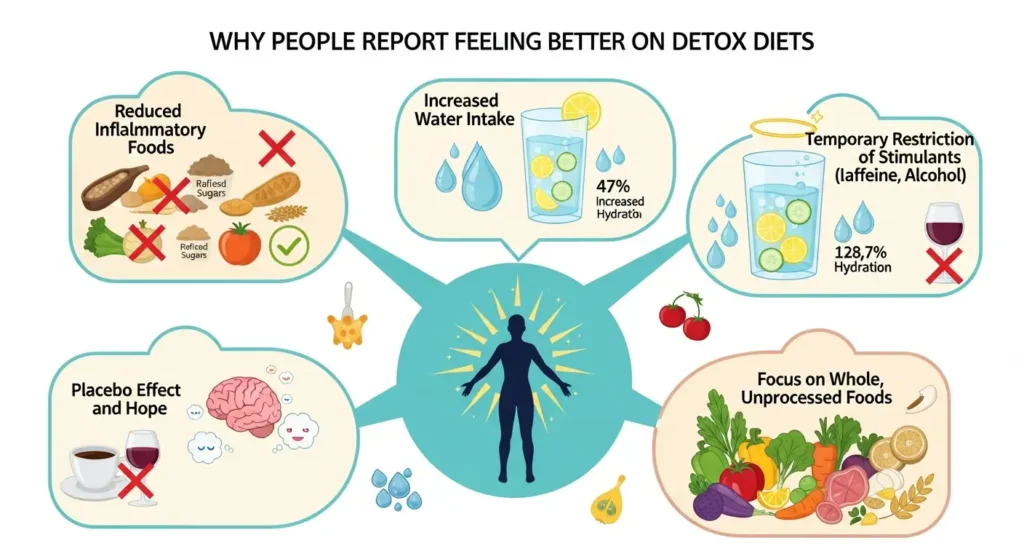
If there’s weak evidence, why do some people say they feel great on detox diets?
Often, it’s because of what they stop doing and what they add, such as:
- Drinking more water
- Cutting out processed foods, fast foods, and sugary snacks
- Avoiding alcohol for several days
- Eating more fruits and vegetables
- Sleeping more and paying attention to self-care
These changes alone can:
- Reduce bloating
- Improve digestion
- Stabilize blood sugar
- Increase energy
- Clear up skin over time
So, the “good feeling” may come from cleaner eating and better habits — not from a special detox product or from toxins magically leaving the body.
Benefits of Detox Diets (When They Help)
While detox diets are often overhyped, some short-term benefits can happen, mainly because of the simple, healthier choices they include.
Possible benefits:
- Reduced bloating: Eating fewer salty and processed foods can reduce water retention.
- Resetting habits: A short, structured plan may help some people break old patterns and restart healthier eating.
- More fruits and vegetables: Juice or smoothie-based detoxes can increase plant intake (though they may lack fiber and protein).
- Better hydration: Many detox plans encourage more water and herbal teas.
- Short-term weight loss: Often from water and glycogen loss, not lasting fat loss.
However, these benefits can also be gained without extreme restriction or “detox” labels.
Risks and Problems With Detox Diets
Detox diets are not risk-free. For some people, they can do more harm than good — especially if they are very strict or last too long.
Nutrient Deficiency
Very low-calorie or unbalanced detox diets may:
- Give you too little protein, fat, or important vitamins
- Make you feel tired, weak, and dizzy
- Slow down your metabolism if done repeatedly or for long periods
Common symptoms:
- Fatigue
- Dizziness
- Weakness
- Irritability
- Headaches
Quick Weight Loss That Returns
Detox diets often cause fast weight loss, but:
- Most of it is water and glycogen, not body fat
- Once you start eating normally again, much of the weight comes back
- This can start a cycle of “detox – regain – detox” that feels discouraging and stressful
Slow, steady weight loss with good nutrition is safer and more sustainable than quick fixes.
Digestive Issues
Some detox teas, powders, or colon cleanses contain strong herbs or laxatives that:
- Cause diarrhea or loose stools
- Lead to dehydration and electrolyte imbalances
- Cause cramping and discomfort
In extreme cases, these products can irritate the gut or interfere with normal bowel function.
Blood Sugar Problems
Juice fasts or fruit-heavy detoxes can:
- Cause big blood sugar spikes, especially in people with insulin resistance or diabetes
- Leave you feeling shaky, hungry, or moody
- Lack enough fiber, protein, and healthy fats to keep you full and balanced
Not Safe for Everyone
Certain groups should be very careful — or avoid detox diets altogether:
- Pregnant or breastfeeding women
- People with diabetes or blood sugar disorders
- Kids and teenagers
- People with kidney or liver disease
- Anyone with eating disorders or a history of disordered eating
- People on certain medications (detox supplements can interact with drugs)
If you are in any of these groups, talk with a doctor before making big diet changes.
Detox Diet Ingredients: Helpful or Hype?
Many detox plans use specific ingredients that are marketed as “cleansing.” Here’s a simple look at what they claim and what we actually know.
| Common Detox Ingredient | What It Supposedly Does | What Science Says |
|---|---|---|
| Lemon water | Cleanses the liver and removes toxins | Hydrating and rich in vitamin C, but doesn’t “detox” the liver. Your liver already works without lemon. |
| Apple cider vinegar | Burns fat and detoxes the body | May support digestion and blood sugar slightly, but not a magic detox or weight-loss solution. |
| Green juices | Boost energy and detox organs | Provide vitamins and antioxidants, but often low in protein and fiber. Helpful as part of a balanced diet, not as a full-time meal replacement. |
| Herbal “detox teas” | Flush toxins and clean the colon | Often work as laxatives or diuretics, which can cause dehydration and don’t remove toxins in a special way. |
| Charcoal supplements | Absorb toxins in the body | Used in hospitals for certain poisonings, but not recommended for regular use. Can block absorption of nutrients and medications. |
Some ingredients can be part of a healthy lifestyle (like lemon water or green juices), but they are not magic detox buttons.
Healthier Alternatives to Detox Diets
You do not need an extreme cleanse to support your body’s detox system. Small, consistent daily habits are much more effective and sustainable.
Eat More Whole Foods
Instead of focusing on what to “flush out,” focus on what to put in your body.
Base your meals on:
- Vegetables: leafy greens, broccoli, carrots, peppers
- Fruits: berries, apples, oranges, pears
- Whole grains: oats, brown rice, quinoa, whole-wheat bread
- Lean proteins: fish, chicken, beans, lentils, tofu, eggs
- Healthy fats: olive oil, nuts, seeds, avocado
Whole foods provide:
- Fiber to support digestion and bowel movements
- Antioxidants to protect cells
- Protein to help your liver and other organs work properly
Support Natural Detox Organs
You can boost your built-in detox system by caring for your organs, not starving them.
Try to:
- Drink enough water: Helps kidneys filter and move waste out.
- Eat enough fiber: Supports gut health and regular bowel movements.
- Limit alcohol: Alcohol puts extra stress on the liver.
- Avoid smoking and unnecessary drugs or supplements: Fewer chemicals means less work for your liver.
- Get enough sleep: Nighttime is when your body repairs and processes waste.
These habits help your liver, kidneys, gut, and skin do their jobs efficiently.
Try a “Gentle Reset” Instead of a Detox
If you feel like you need a reset, you can plan a gentle, realistic refresh without starving yourself.
Ideas:
- 3-day whole food reset:
- Eat only whole, minimally processed foods.
- Skip alcohol, added sugar, and heavily processed snacks.
- Hydration challenge:
- Drink a set amount of water each day for a week.
- Limit sugary drinks and sodas.
- Sugar reduction week:
- Avoid sweets, sugary drinks, and desserts.
- Focus on naturally sweet foods like fruit.
These resets can give you many of the same benefits people seek from detox diets — more energy, better digestion, clearer thinking — without the risks of extreme restriction.
When to See a Doctor
If you’ve tried a detox diet and notice worrying symptoms, or if you’re thinking about a very strict cleanse, it’s wise to talk with a healthcare provider first.
Watch for:
- Extreme fatigue or weakness
- Dizziness or fainting
- Rapid or unexplained weight loss
- Severe stomach pain, diarrhea, or vomiting
- Heart palpitations or chest pain
- Any symptom that feels “not normal” or scary
A doctor or registered dietitian can help you find a safe, science-based plan to improve your energy, digestion, or weight without risking your health.
Conclusion
Detox diets sound appealing. They promise a quick fix — a clean slate for your body, more energy, and rapid weight loss. But when we look at the science, the truth is clear: your body already knows how to detox itself.
Your liver, kidneys, lungs, gut, and skin are constantly working to remove waste and keep you in balance. Most detox diets do not make this system work better and can even cause problems if they are too strict or unbalanced.
The real “detox” your body needs is not a 3-day juice cleanse or a harsh tea. It is:
- Whole, nourishing foods
- Enough water and sleep
- Regular movement
- Less alcohol, sugar, and processed food
- Sustainable, kind habits you can maintain long term
You don’t need a strict cleanse to feel your best — your body simply needs support, nourishment, and balance.
FAQ: Detox Diets and Your Health
Do detox diets really work?
Detox diets may make you feel better in the short term, but not because they remove toxins. Most benefits come from eating fewer processed foods, cutting out sugar and alcohol, drinking more water, and paying closer attention to your health. Your body already has a detox system, and there is no strong evidence that detox diets improve it.
Are detox diets safe for weight loss?
Short detox plans may cause fast weight loss, but most of it is water, not fat. You may also lose muscle if your calories or protein are too low. The weight usually returns once you resume normal eating. A balanced, long-term eating plan is safer and more effective for real fat loss.
What is the safest type of detox diet?
The safest “detox” approach is simply eating whole foods for a few days, avoiding alcohol and added sugar, drinking plenty of water, and not starving yourself. Very low-calorie or supplement-heavy detoxes are not recommended without medical supervision.
Can detox diets harm your liver?
Yes. Some detox pills and herbal blends can stress the liver, especially if they contain many ingredients or untested compounds. Your liver doesn’t need detox supplements — it needs hydration, enough protein, limited alcohol, and a healthy diet. People with liver disease or on medications should always consult a doctor first.
Are juice cleanses good for your body?
Juice cleanses provide vitamins but are low in fiber, may be high in natural sugar, and often lack protein and healthy fats. Short cleanses aren’t necessary and may cause hunger, mood swings, or blood sugar issues in some people.
What is a healthy way to “reset” without detoxing?
Healthy reset options include eating whole foods, drinking water and herbal teas instead of alcohol or soda, getting 7–9 hours of sleep, taking daily walks, stretching, and eating balanced meals with vegetables, protein, and whole grains. These support your natural detox system without extreme rules.
Disclaimer
The information on HealthHintz is provided for educational and informational purposes only and should not be considered medical advice. Always consult a qualified healthcare professional before making any medical or health-related decisions, starting a new treatment, or changing your existing health plan.