Childhood Cancer Symptoms: Early Warning Signs
Every parent knows that heart-sinking feeling when their child doesn’t feel well. You worry, you check their temperature, and you wonder if it’s serious. Most of the time, it’s nothing more than a passing cold, growing pains, or a stomach bug. But sometimes, small, persistent changes can be your child’s way of telling you that something more serious is going on.
Childhood cancer is rare, and it’s important to start with that fact. But it can happen, and knowing the early warning signs of childhood cancer can make all the difference. This guide is not meant to cause alarm, but to empower you with knowledge. We will walk through the most common childhood cancer symptoms, help you understand when to seek medical help, and offer reassurance for those moments of worry.
Table of Contents
What Is Childhood Cancer?
In the simplest terms, childhood cancer happens when healthy cells in a child’s body change and start to grow out of control. These abnormal cells can form a mass, or tumor, or in the case of blood cancers, they can crowd out normal cells in the bone marrow. It’s crucial to know that pediatric cancer is not caused by anything a parent did or didn’t do. It is a biological event that is no one’s fault.
The most common types of cancers in children are different from those in adults. They include:
- Leukemia (cancer of the blood and bone marrow)
- Brain and spinal cord tumors
- Lymphomas (cancer of the immune system)
- Bone cancers (like osteosarcoma and Ewing sarcoma)
- Wilms tumor (a type of kidney cancer)
- Neuroblastoma (a cancer that often starts in the abdomen)
Common Childhood Cancers and Typical Age Groups
| Type of Cancer | Common Age Range | Common Areas Affected |
|---|---|---|
| Leukemia | 2–10 years | Blood, bone marrow |
| Brain Tumor | Any age | Brain, spine |
| Lymphoma | Teenagers | Lymph nodes, immune system |
| Bone Cancer | Teenagers | Arms, legs |
| Neuroblastoma | Under 5 years | Abdomen, chest |
General Early Warning Signs to Watch For
Many pediatric cancer signs can look like everyday childhood illnesses. The key difference is that these symptoms don’t go away or can’t be easily explained. As a parent, you should pay close attention if symptoms:
- Persist for a long time (more than a week or two).
- Seem to get worse over time.
- Don’t have a clear cause (like a recent injury or infection).
Common General Symptoms
Here are some of the most common general warning signs that could signal a problem.
- Unexplained weight loss: A child who is losing weight without trying is a significant warning sign. Any unexplained weight loss in a child should be evaluated.
- Persistent fever: A fever that lasts for more than a week or keeps coming back without a clear reason (like a cold or flu).
- Extreme tiredness or weakness: Fatigue that is so severe it interferes with normal play and school activities.
- Pale skin or easy bruising: A child who looks unusually pale or develops bruises or tiny red dots (petechiae) without a known injury.
- Ongoing pain: Pain in bones, joints, the back, or the belly that doesn’t go away and may even wake the child up at night.
- Lumps or swelling: Any new lump or swelling, especially if it’s painless and doesn’t go away. A swollen lymph node in a child in the neck, armpit, or groin is a common area to watch.
- Frequent infections: A pattern of getting sick over and over again in a short period.
Cancer-Specific Symptoms by Type
While the general signs are important, some cancers have more specific symptoms depending on where they are in the body.
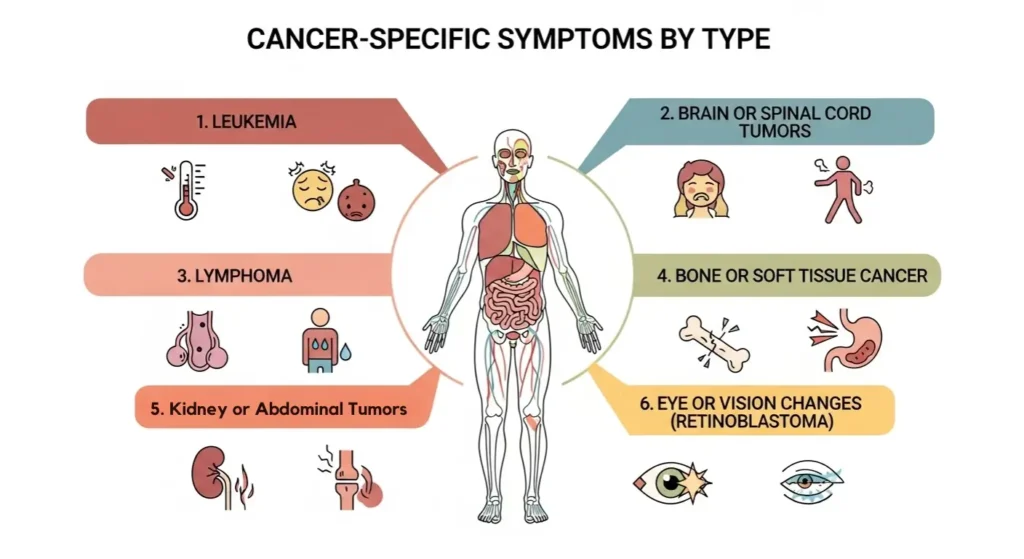
1. Leukemia
Leukemia in children is the most common childhood cancer. Because it affects the blood and bone marrow, where new blood cells are made, its symptoms are often related to blood cell counts.
- Pale skin, fatigue, and weakness (from a low red blood cell count).
- Easy bruising or bleeding, such as frequent nosebleeds or bleeding gums (from a low platelet count).
- Bone or joint pain.
- Swollen lymph nodes in the neck, groin, or elsewhere.
- Repeated infections and fevers (from a low white blood cell count).
2. Brain or Spinal Cord Tumors
Symptoms of a brain tumor in kids often depend on the tumor’s location and size. They can include:
- Frequent headaches, especially those that are worse in the morning or wake a child from sleep.
- Vomiting, often without feeling sick to the stomach (nausea).
- Sudden vision problems, like double vision or blurry vision.
- Balance problems, clumsiness, or trouble walking.
- Unexplained personality or behavior changes.
3. Lymphoma
Lymphoma is a cancer of the immune system. The most common sign is swelling in the lymph nodes.
- A painless lump or mass in the neck, armpit, or groin.
- Drenching night sweats.
- Unexplained fever that doesn’t go away.
- Weight loss and fatigue.
4. Bone or Soft Tissue Cancer
Bone cancer symptoms can sometimes be mistaken for growing pains or sports injuries.
- A lump or swelling on a bone, often in the arms or legs, that may or may not be painful.
- Bone pain that gets worse over time, especially at night.
- Limping or having trouble moving a limb.
- A bone that breaks without a significant injury.
5. Kidney or Abdominal Tumors (like Neuroblastoma or Wilms’ tumor)
These cancers can cause noticeable changes in a child’s belly. They are more common in younger children and cancer symptoms in toddlers often include these.
- A swelling or hard mass in the abdomen.
- Blood in the urine (may look pink, red, or brown).
- Loss of appetite or feeling full quickly.
- Pain in the side, back, or belly.
6. Eye or Vision Changes (Retinoblastoma)
This is a rare cancer of the eye, usually found in very young children.
- A white or unusual glow in the pupil when light is shined in the eye (like in a photograph with a flash).
- Crossed eyes (strabismus) or a sudden loss of vision.
When to See a Doctor
Reading this list can feel overwhelming, but remember: most of these symptoms will not be cancer. However, your peace of mind matters, and it is always better to be safe. You should schedule a visit with your child’s doctor if:
- Any of the symptoms listed above last for more than one or two weeks.
- Your child has an unexplained weight loss, persistent fatigue, or night sweats.
- You find a new lump or swelling anywhere on their body.
- Pain or fevers do not get better with standard care.
Always trust your instincts. As a parent, you know your child better than anyone. If you feel that something just isn’t right, it’s worth getting it checked out.
Diagnosis and What Happens Next
If your doctor is concerned, they will begin a process to find out what is causing the symptoms. This does not automatically mean your child has cancer. The tests are designed to find the cause, whatever it may be. The process may include:
- Blood tests to look at blood cell counts and other markers.
- Imaging scans like an X-ray, ultrasound, CT scan, or MRI to get a picture of what’s happening inside the body.
- A biopsy, where a small piece of tissue is removed from a lump or tumor and looked at under a microscope.
If a cancer diagnosis is made, a team of specialists will create a treatment plan. Children’s cancers often respond very well to treatment, especially when they are found early.
Supporting a Child and Family Emotionally
Facing the possibility of a serious illness is incredibly frightening for any family. It is okay to feel scared, angry, or overwhelmed. It is vital to seek emotional support for both your child and yourself. Remember, it’s okay to ask questions, seek a second opinion, and ask for help from friends, family, or professional counselors.
FAQs About Childhood Cancer Symptoms
How common is childhood cancer?
Childhood cancer is rare. While it is the leading cause of death by disease past infancy for children in the United States, the actual number of children diagnosed each year is small.
Can childhood cancer be cured?
Yes. Thanks to major advances in treatment, more than 80% of children with cancer now survive 5 years or more. Many childhood cancers are highly treatable, and survival rates continue to improve, especially when the cancer is found early.
Are these symptoms always cancer?
No. In fact, most of the time they are not. Symptoms like fever, tiredness, bruising, and swollen lymph nodes are far more likely to be caused by common childhood infections or injuries. The key is to watch for symptoms that are persistent, severe, or unexplained.
Does cancer in kids spread quickly?
Some types of childhood cancers can grow and spread quickly, which is why early diagnosis and treatment are so important. This is why you should never hesitate to see a doctor if you are concerned.
Can it be prevented?
Unlike many adult cancers, most childhood cancer symptoms and their causes are not linked to lifestyle or environmental factors. At this time, there is no known way to prevent most childhood cancers. The best defense is awareness and early detection.
Conclusion
Childhood cancer is a terrifying thought for any parent, but it is also very rare. Knowing the signs is about empowerment, not constant fear. It allows you to be an informed and proactive advocate for your child’s health. Trust your instincts, follow up on persistent symptoms, and remember that most of the time, it will be something simple and harmless. But when it’s not, your awareness and early action can be lifesaving.
Disclaimer
The information on HealthHintz is for educational purposes only and should not replace medical advice. Always consult a qualified healthcare professional if you have any concerns about your child’s health.