Boost Energy Drink: Is It Really Good for You?
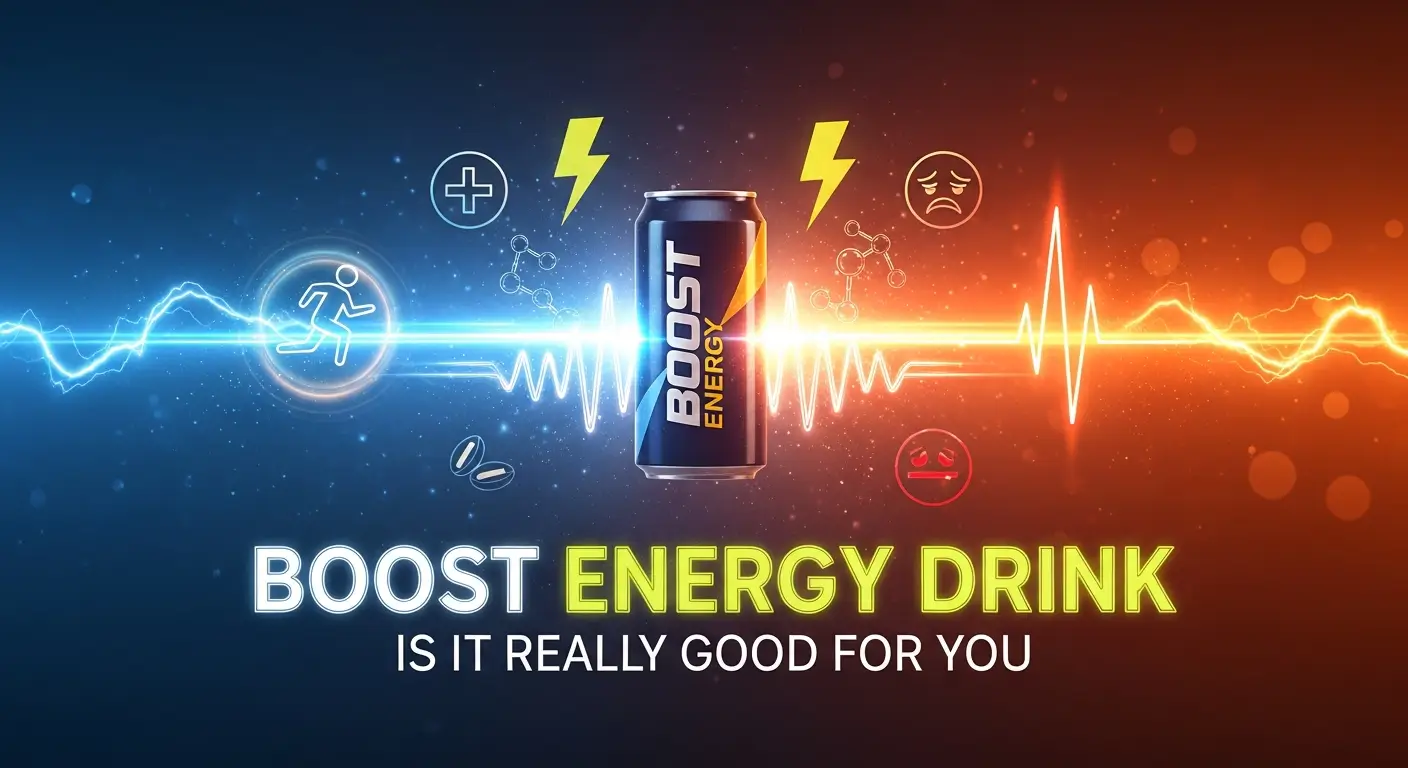
We’ve all had those days. The ones where your eyelids feel heavy, your focus is gone, and you’ll do just about anything for a quick pick-me-up. Whether you’re cramming for an exam, pushing through a tough workout, or just trying to survive the afternoon slump, reaching for an energy drink can feel like an easy solution. A can of Boost Energy Drink promises a quick hit of energy, focus, and vitality. But is it really helping your body, or could it be doing more harm than good?
The bright, colorful cans are everywhere, marketed as a quick fix for our busy, demanding lives. But before you make it a regular habit, it’s important to look past the marketing and understand what you’re really putting into your body. In this guide, we’ll break down the ingredients in a Boost Energy Drink, weigh the pros and cons, and explore healthier, more sustainable ways to feel energized.
Table of Contents
What Is Boost Energy Drink?
Boost Energy Drink is a popular caffeinated beverage designed to increase alertness, enhance physical performance, and fight fatigue. It’s part of a massive global market of energy drinks that appeal to students needing to pull an all-nighter, athletes looking for an edge, and busy professionals trying to power through a long day.
Available in a wide range of flavors, Boost and similar energy drinks are known for their immediate, powerful effect. They deliver a potent combination of stimulants and sugar that gives you that “boost” you’re looking for. But that instant gratification often comes with a hidden cost.
What’s Inside a Boost Energy Drink?
To understand if a Boost Energy Drink is good for you, we need to look at its key ingredients. While formulas can vary slightly, most energy drinks contain a similar cocktail of ingredients designed to stimulate your mind and body.
| Ingredient | Common Function | Potential Concern |
|---|---|---|
| Caffeine | A powerful stimulant that boosts alertness and concentration by blocking the brain signals that make you feel tired. | High doses can cause jitters, anxiety, a racing heart, digestive issues, and disrupt sleep patterns. |
| Sugar | Provides a rapid source of energy by quickly raising blood sugar levels. | Leads to a dramatic “energy crash” soon after. Contributes to weight gain, inflammation, and an increased risk of type 2 diabetes. |
| B Vitamins | Vitamins like B6 and B12 help your body convert food into energy (energy metabolism). | While essential, they are better absorbed from whole foods. The high doses in energy drinks are often more than your body needs. |
| Taurine | An amino acid that supports nerve growth and muscle function. | The long-term effects of the high levels of synthetic taurine found in energy drinks are still being researched. |
| Artificial Sweeteners | Used in sugar-free versions to provide sweetness without calories (e.g., sucralose, acesulfame potassium). | Some studies suggest they may negatively affect gut health and can still trigger cravings for sweet foods. |
| Preservatives & Flavorings | Used to extend shelf life and create different flavors. | Some individuals may have sensitivities to certain artificial colors, flavors, or preservatives. |
It’s clear that a Boost Energy Drink is formulated to give you a temporary jolt of alertness, not to provide sustainable, long-term energy. It’s a quick fix, not a foundational solution for fatigue.
What’s Healthier? The Pros and Cons of Boost Energy Drink
Let’s weigh the good against the bad. While energy drinks are often criticized, there are reasons why people keep reaching for them.
The Pros of Boost Energy Drink
- Quick Energy Lift: There’s no denying that it works—fast. The combination of caffeine and sugar provides a noticeable increase in energy and alertness within minutes.
- Convenience: It’s easy to grab a can from a store when you’re on the go and need an instant pick-me-up.
- Contains B Vitamins: These drinks are often fortified with B vitamins, which are important for energy production in the body.
- May Enhance Focus Temporarily: For short-term tasks that require intense concentration, the stimulant effect can be helpful.
The Cons of Boost Energy Drink
- High in Sugar and Empty Calories: A single can of a regular energy drink can contain more sugar than the recommended daily limit, leading to an energy crash and contributing to weight gain.
- High Caffeine Content: Too much caffeine can lead to anxiety, heart palpitations, high blood pressure, and digestive upset. It can also be addictive.
- The Inevitable Crash: The quick energy spike from sugar is always followed by a sharp drop in blood sugar, leaving you feeling even more tired and irritable than before.
- Poor Sleep Quality: Drinking a Boost Energy Drink, especially in the afternoon or evening, can severely disrupt your ability to fall asleep and get deep, restorative rest.
- Not Suitable for Everyone: These drinks can be dangerous for people with heart conditions, high blood pressure, diabetes, or anxiety disorders. They are also not recommended for children, teenagers, or pregnant women.
What Happens to Your Body After Drinking Boost
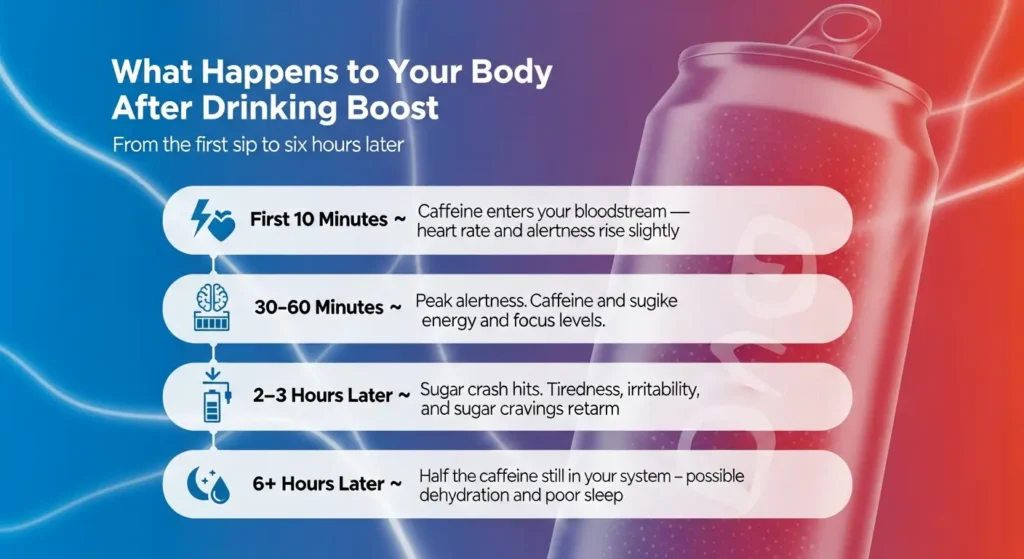
The journey of an energy drink through your body is a roller coaster of highs and lows. Here’s a typical timeline:
First 10 Minutes
The caffeine begins to enter your bloodstream. Your heart rate and blood pressure start to rise slightly. You might begin to feel a little more alert.
30–60 Minutes Later
This is when you feel the peak effects. The caffeine is fully absorbed, making you feel alert, focused, and energized. If the drink contains sugar, your blood sugar levels are also at their highest, contributing to this feeling of a “rush.”
2–3 Hours Later
The sugar crash begins. Your body has released a large amount of insulin to deal with the sugar spike, and now your blood sugar levels are plummeting. You might start to feel tired, irritable, and may even crave more sugar.
6+ Hours Later
About half of the caffeine has been cleared from your system (this is known as caffeine’s half-life). However, the other half is still circulating, which can continue to affect your body and disrupt your sleep later that night. You might also start to feel dehydrated, as caffeine is a diuretic.
Healthier Alternatives to Boost Your Energy
Instead of reaching for a Boost Energy Drink, consider these healthier options that provide sustained energy without the crash.
- Water with Lemon or Cucumber: Dehydration is one of the biggest causes of fatigue. Sometimes, all you need is a glass of water to feel more alert. Adding lemon or cucumber makes it more refreshing.
- Green Tea: Green tea contains a moderate amount of natural caffeine, but it also has an amino acid called L-theanine, which promotes a feeling of calm focus without the jitters.
- A Well-Balanced Smoothie: Blend a banana (for potassium and natural sugars), a handful of spinach (for iron), and a scoop of protein powder or nut butter. This provides real, lasting energy from whole foods.
- A Handful of Nuts and a Piece of Fruit: The combination of fiber, healthy fats, and protein from the nuts with the natural sugar from the fruit provides a steady release of energy.
- Herbal Teas: Peppermint tea can be invigorating, while ginger tea can aid digestion and provide a gentle lift.
Is Boost Energy Drink Better for Hair and Skin?
Your skin is often a reflection of what’s happening inside your body. The high sugar content in many energy drinks can lead to inflammation, which can trigger acne breakouts. Sugar can also break down collagen and elastin, the proteins that keep your skin firm and youthful.
Furthermore, the high levels of caffeine can act as a diuretic, causing your body to lose water and leading to dehydration. Dehydrated skin looks dull, dry, and can show fine lines more easily. While a Boost Energy Drink might contain B vitamins that are good for skin and hair, the negative effects of the sugar and caffeine likely outweigh this small benefit. Natural hydration from water, coconut water, or herbal teas is a much better choice for a healthy glow.
When to Avoid Boost Energy Drink
While an occasional energy drink is unlikely to cause harm for a healthy adult, there are certain times and situations where you should definitely avoid them.
- If you have a heart condition or high blood pressure. The stimulants can put dangerous stress on your cardiovascular system.
- If you are pregnant or breastfeeding. The high caffeine content is not safe.
- Before bedtime. It can cause insomnia and ruin your sleep quality.
- If you are sensitive to caffeine or have anxiety. It can easily trigger jitters, panic, and a racing heart.
- Before or during intense exercise. While some athletes use them, they can lead to dehydration and put extra strain on your heart.
Conclusion
A Boost Energy Drink can certainly provide the quick lift it promises, but it’s a short-term fix with potential long-term costs. It’s like taking out a high-interest loan on your energy—you get what you need now, but you’ll have to pay it back later, often with interest in the form of an energy crash and disrupted sleep.
For true, sustainable energy, the best approach is to focus on the fundamentals: a balanced diet, regular hydration, consistent sleep, and daily movement. Real energy comes from nourishing your body from the inside out—not from a can.
FAQ: Your Questions About Boost Energy Drink
Is a Boost Energy Drink safe to drink every day?
Drinking a Boost Energy Drink every day is not recommended. Daily consumption can lead to caffeine dependency, sleep problems, anxiety, and an increased risk of long-term health issues like weight gain and type 2 diabetes due to the high sugar content.
How much caffeine does a Boost Energy Drink contain?
The caffeine content can vary, but most standard energy drinks contain anywhere from 80 mg to 150 mg of caffeine per can. This is roughly equivalent to one to two cups of coffee.
Can Boost cause side effects?
Yes. Common side effects include jitters, anxiety, a racing heart, headaches, trouble sleeping, and digestive issues. After the initial energy surge, many people experience a significant “crash,” leaving them feeling more tired than before.
Is Boost better than coffee?
It depends on how you drink your coffee. A simple black coffee contains just caffeine and water. A Boost Energy Drink contains caffeine plus a large amount of sugar, B vitamins, and other additives. While coffee can also have side effects, it is generally a simpler, less processed source of caffeine.
Can a Boost Energy Drink make you gain weight?
Yes, the regular, non-sugar-free versions can definitely contribute to weight gain. They are often high in sugar and “empty calories,” meaning they provide energy but very little nutritional value.
What’s a good natural alternative to a Boost Energy Drink?
A fantastic natural alternative is green tea. It provides a gentler caffeine lift along with antioxidants. Other great options include a balanced smoothie, a piece of fruit with nuts, or simply a large glass of cold water.
Disclaimer
The information on HealthHintz is provided for educational and informational purposes only and should not be considered medical advice. Always consult a qualified healthcare professional before making any medical or health-related decisions, starting a new treatment, or changing your existing health plan.